GI Risks from NSAIDs: What You Need to Know Before Taking Them
When you reach for an NSAID, a class of pain relievers that includes ibuprofen, naproxen, and celecoxib, often used for arthritis, headaches, or muscle pain. Also known as nonsteroidal anti-inflammatory drugs, they work by blocking enzymes that cause pain and swelling—but they also shut down protective chemicals in your stomach lining. That’s why even a single dose can start damaging your gut, and long-term use turns this into a serious health threat.
The most common danger is gastrointestinal bleeding, a silent, life-threatening event that can happen without warning, even in healthy adults. It’s not just about heartburn or upset stomach—these drugs weaken the stomach’s natural defenses, letting acid eat through tissue and cause ulcers. Studies show that people taking NSAIDs daily have up to a 4x higher risk of internal bleeding compared to those who don’t. And it’s not just older adults: young people who take them for sports injuries or chronic pain are just as vulnerable. The risk jumps even higher if you’re also on blood thinners, steroids, or have a history of ulcers.
Not all NSAIDs are the same. COX-2 inhibitors, like celecoxib, were designed to reduce stomach damage by targeting only the inflammation-causing enzyme. But they’re not risk-free—they still carry GI dangers, and they come with their own heart risks. Meanwhile, older NSAIDs like ibuprofen and naproxen are cheaper and widely available, but they’re the top culprits behind hospital visits for stomach bleeding. Even OTC versions, taken regularly for back pain or menstrual cramps, add up over time. Many people don’t realize that taking two pills a day for months is just as dangerous as a prescription dose.
What can you do? First, ask if you really need them. For mild pain, acetaminophen is often safer for your gut. If you must take an NSAID, use the lowest dose for the shortest time possible. Always take it with food, and never mix it with alcohol. If you’re on long-term therapy, your doctor might recommend a proton pump inhibitor like omeprazole to protect your stomach—but that’s not a free pass to keep taking high doses. And if you notice black stools, vomiting blood, or sudden severe stomach pain, stop the drug and get help right away. These aren’t side effects you can ignore.
This collection of posts dives into the real-world impact of these drugs—not just the textbook risks, but how they affect people every day. You’ll find clear comparisons between NSAIDs and safer alternatives, real cases where people missed the warning signs, and practical advice on managing pain without wrecking your digestive system. Whether you’re taking one of these meds now or just thinking about it, the information here will help you make smarter choices—before something serious happens.
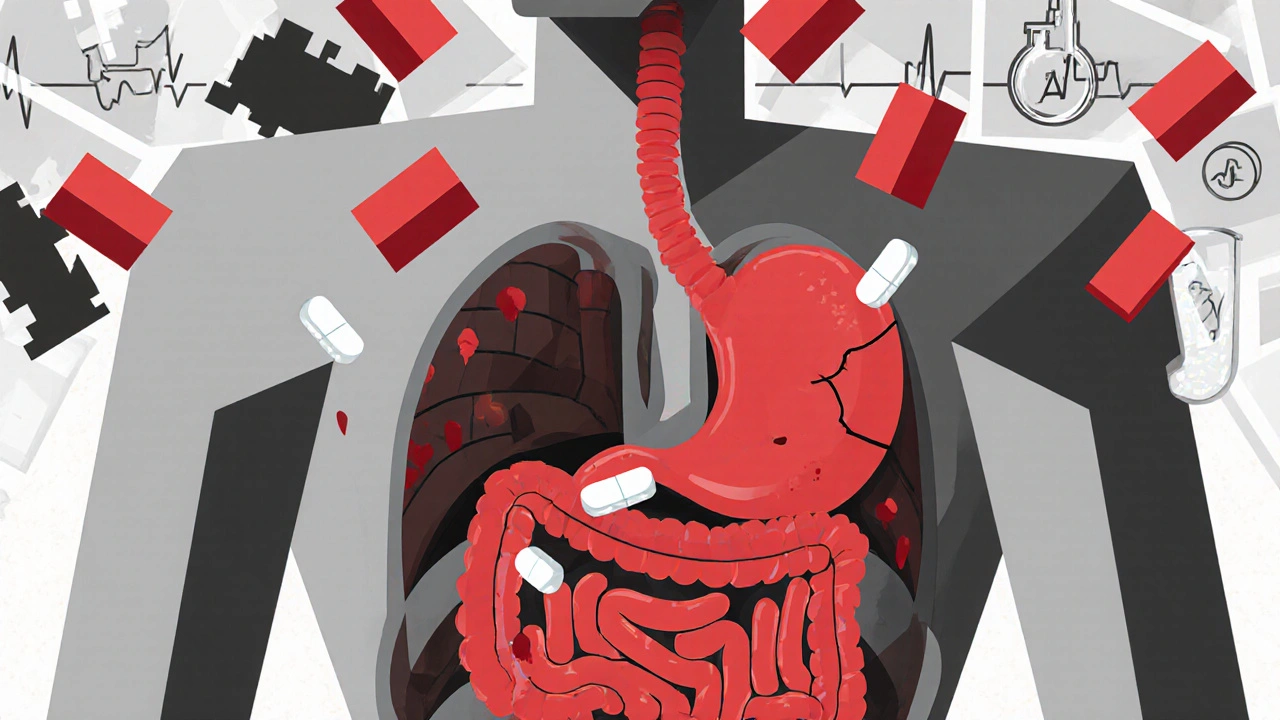
NSAID Safety: Understanding GI Risks, Kidney Effects, and Essential Monitoring
NSAIDs relieve pain but carry hidden risks to your stomach, intestines, and kidneys. Learn the real dangers, who's most at risk, and what tests you need to stay safe.