Medication Absorption Calculator
How Fatty Meals Boost Medication Absorption
Select a medication and meal type to see how fat affects absorption. For lipid-based formulations, absorption remains consistent regardless of food. For regular formulations, fatty meals significantly increase absorption.
Estimated Absorption Effect
Important: Absorption data based on clinical studies from the article. Individual results may vary. Always follow your doctor's specific instructions for your medication.
Lipid-based formulations reduce absorption variability by 68% compared to regular tablets (Gattefossé whitepaper, 2023).
Ever wonder why your doctor told you to take your medication with food-especially a fatty meal? It’s not just to avoid an upset stomach. For many modern drugs, fat isn’t just a side dish-it’s a critical part of how the medicine works. When you eat fatty foods, your body triggers natural processes that help certain medications get into your bloodstream faster and more completely. This isn’t guesswork. It’s science, and it’s behind some of the most effective drug formulations today.
Why Fat Matters for Some Medicines
Not all drugs behave the same way in your body. About 70% of new drugs being developed are poorly soluble in water. That means they don’t dissolve well in your gut, so they can’t be absorbed properly. These are often drugs used for cholesterol, cancer, fungal infections, and immune disorders. Without help, they pass through your system mostly unused.
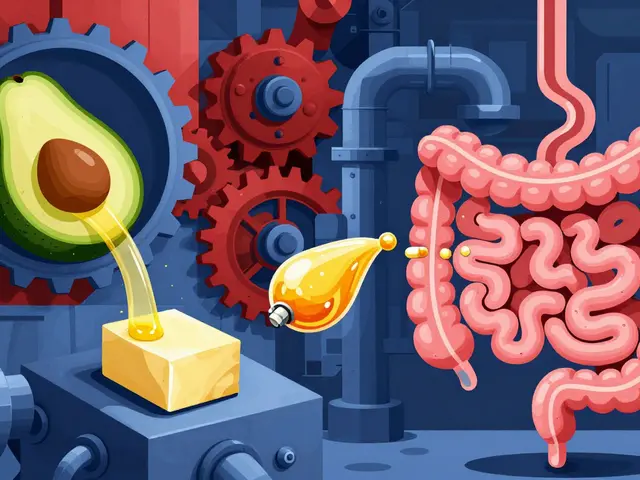
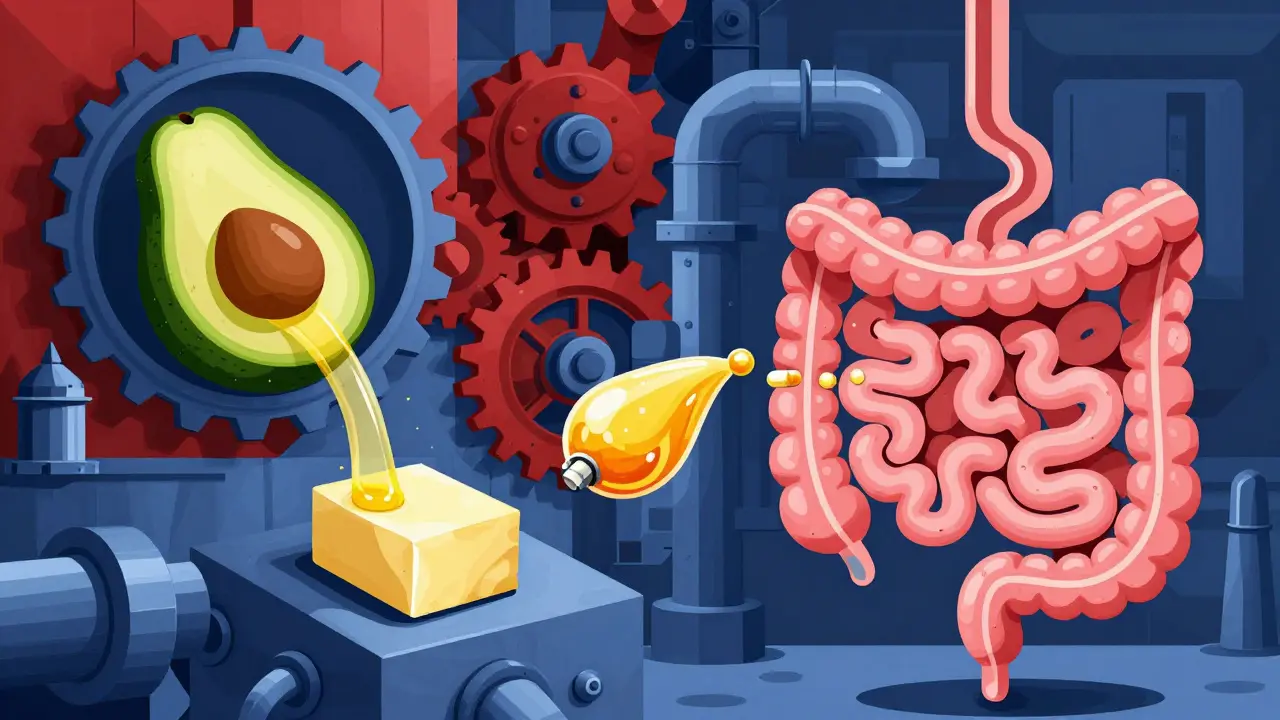
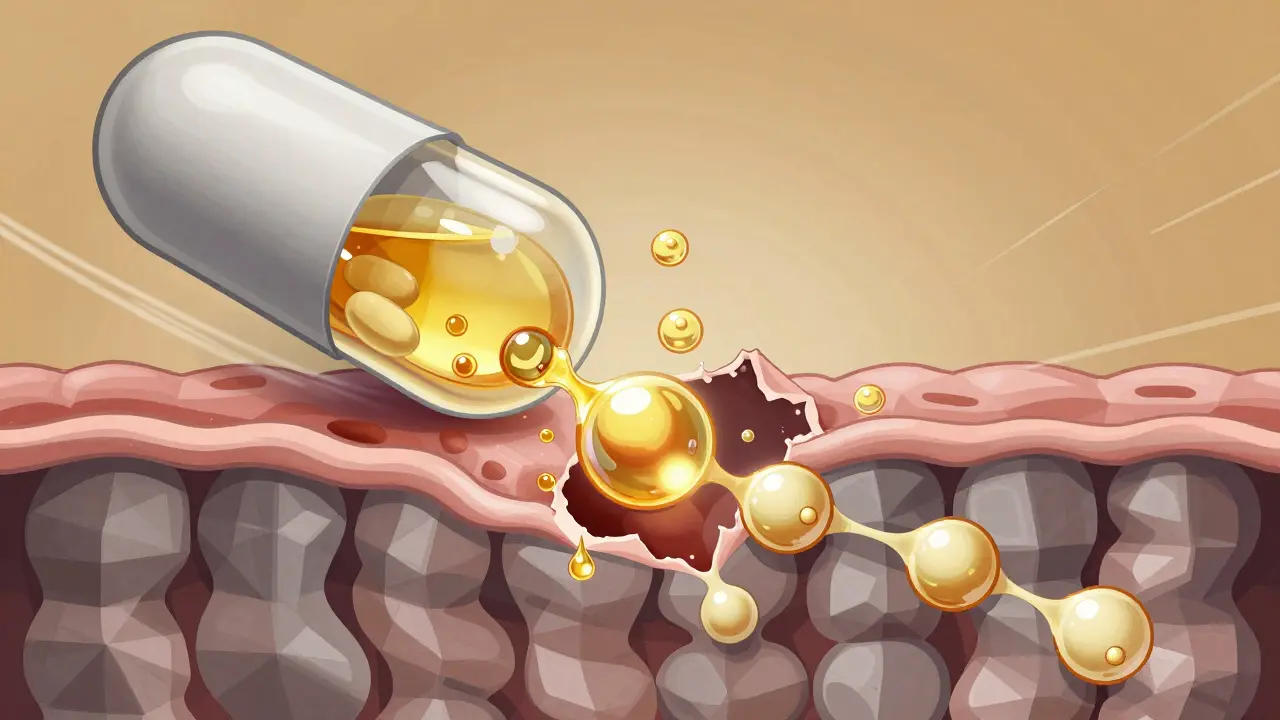
This is where fat comes in. When you eat fatty foods, your body releases bile and digestive enzymes. These break down the fat into smaller pieces, forming tiny structures called micelles. These micelles act like little taxis, picking up drug molecules and carrying them across the gut lining into your bloodstream. The result? Higher blood levels of the drug, meaning it works better at lower doses.
Take cyclosporine, a drug used after organ transplants. The original version, Sandimmune®, had unpredictable absorption. Patients needed to take it on an empty stomach or with a strict meal plan. The newer lipid-based version, Neoral®, uses oil and surfactants to mimic this natural fat-driven process. Studies show it boosts absorption by 20-30%, making dosing more reliable and reducing side effects like nausea and kidney stress.
How Lipid-Based Formulations Work
Pharmaceutical companies didn’t just rely on patients eating avocado toast. They built this knowledge into the drug itself. Lipid-based formulations are specially designed pills or capsules that contain oils, surfactants, and sometimes cosolvents. These ingredients are chosen to work like your body’s own fat-digesting system.
Here’s how they’re typically built:
- Medium-chain triglycerides (MCTs) like those from coconut oil-digested quickly and form micelles fast.
- Surfactants like Tween 80 or Cremophor EL-help mix oil and water, keeping the drug dissolved.
- Cosolvents like Transcutol HP-improve how well the drug stays dissolved during digestion.
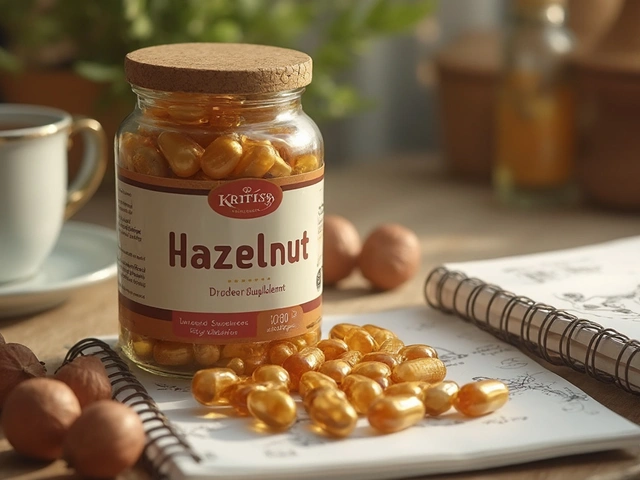
These ingredients are packed into soft gel capsules. When swallowed, they release their contents in the small intestine, where bile is most active. The mixture forms tiny droplets (100-300 nanometers wide) that protect the drug and carry it into the bloodstream.
This approach is called Self-Emulsifying Drug Delivery Systems (SEDDS). It’s not magic-it’s precision engineering. A 2023 study in Frontiers in Drug Delivery showed SEDDS can increase drug absorption by 2 to 4 times compared to regular tablets for poorly soluble drugs.
Real-World Examples: Drugs That Need Fat
Some medications simply don’t work well without fat. Here are three proven cases:
- Itraconazole (Sporanox®): An antifungal drug. The original capsule had erratic absorption. The lipid-based oral solution increases bioavailability by 2.8 times and removes the need to time meals precisely.
- Fenofibrate (Tricor®): Used to lower triglycerides. The lipid-based version increases absorption by 31% and allows once-daily dosing instead of three times a day. A 2022 study found 87% of patients had fewer stomach issues compared to older versions.
- Sirolimus and Everolimus: Immunosuppressants used after transplants. Their lipid-based forms reduce variability in absorption, which is critical for preventing organ rejection.
For these drugs, the difference between a good day and a bad day can come down to whether you ate a bit of butter, cheese, or avocado with your pill.
The Food Effect: Not Just a Side Note
The "food effect" isn’t a myth-it’s a measurable phenomenon. The FDA requires drug manufacturers to test how meals affect absorption. For lipid-based drugs, the effect is often positive: taking the drug with food improves absorption. For others, it’s the opposite.
But here’s the twist: lipid-based formulations actually reduce the food effect. That’s right. While a regular tablet might absorb 50% better with a fatty meal, a lipid-based version delivers consistent results whether you eat or not. That’s because the drug comes pre-packaged with its own "fat helpers."
A 2023 whitepaper from Gattefossé showed lipid-based formulations cut the variability caused by food by 68% compared to standard tablets. That means fewer surprises for patients and doctors.
Who Benefits Most?
This isn’t for every drug. It’s targeted. The Biopharmaceutics Classification System (BCS) groups drugs by solubility and permeability. Lipid-based systems are most effective for:
- Class II drugs: Low solubility, high permeability (like itraconazole, fenofibrate). These are the prime candidates.
- Class IV drugs: Low solubility, low permeability (like some antivirals). These benefit too, but less predictably.
Drugs in Class I (high solubility, high permeability)-like aspirin or metformin-don’t need this. They absorb fine on their own. And some drugs, like bisphosphonates (used for osteoporosis), actually need an empty stomach and acidic conditions to work. Fat can interfere with them.
So, if you’re on a medication that requires a fatty meal, it’s likely because your drug falls into one of these low-solubility categories. Your doctor didn’t pick it randomly.
Cost, Access, and Trade-Offs
There’s a downside: price. Lipid-based formulations are more expensive to make. They need specialized ingredients, complex manufacturing, and protective packaging (usually soft gel capsules). The cost can be 25-35% higher than a regular tablet.
For example, Sporanox oral solution costs about $1,200 for a 30-day supply. The generic capsule? Around $300. That’s a big gap. Many patients switch back to the cheaper version, even if it means more side effects or unpredictable results.
And it’s not just cost. Some people have trouble digesting fat due to conditions like gallbladder removal, Crohn’s disease, or cystic fibrosis. In these cases, even lipid-based drugs might not work as well. As Dr. Gordon Amidon from the University of Michigan points out, "Human digestion varies too much to assume one size fits all."
Still, for many, the trade-off is worth it. Reddit users in r/pharmacy report: "Switching to Neoral eliminated my need to time meals around my transplant meds." Another said: "Tricor doesn’t give me the stomach cramps I had with the old version."
What’s Next? Smart Pills and Personalized Fat
The field isn’t standing still. Researchers are now designing "smart" lipid capsules that adjust drug release based on real-time gut conditions. MIT published a prototype in October 2023 that senses pH and enzyme levels to time drug release exactly when fat digestion peaks.
Also, new formulations like Vybar® (approved by the FDA in 2022) deliver 45% more drug than older versions-with no food effect at all. That’s the holy grail: maximum absorption, zero guesswork.
And sustainability is becoming a concern. Many oils used today come from fish or synthetic sources. The European Federation for Pharmaceutical Sciences is pushing for plant-based alternatives, like algae or engineered oils, to reduce environmental impact.
What Should You Do?
If you’re on a medication that’s known to work better with food:
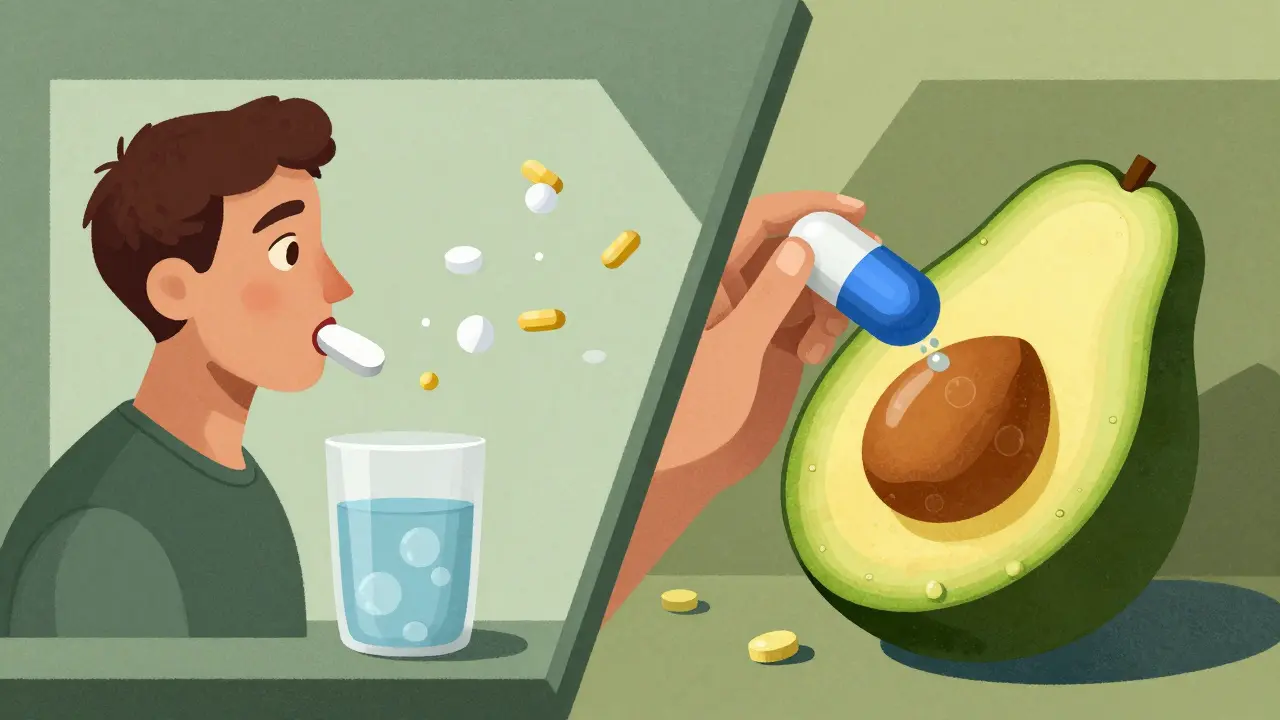
- Follow your pharmacist’s advice. Don’t skip the fat.
- Use healthy fats: avocado, olive oil, nuts, fatty fish. You don’t need fries.
- Don’t assume all "with food" means the same thing. Some drugs need high-fat meals; others just need any meal.
- If cost is an issue, ask about generics-but ask if they’re lipid-based. Sometimes the cheaper version doesn’t have the same delivery system.
If you’re on a lipid-based formulation and your doctor says you can take it with or without food, that’s because the science has done its job. The drug is engineered to work reliably, no matter what’s on your plate.
Why do some medications need to be taken with fatty foods?
Some medications dissolve poorly in water, making them hard for the body to absorb. Fatty foods trigger the release of bile and digestive enzymes, which form tiny structures called micelles that trap the drug molecules and carry them into the bloodstream. This boosts absorption by 20-300% for drugs that are poorly water-soluble, like cyclosporine or fenofibrate.
Are lipid-based medications better than regular pills?
For poorly water-soluble drugs (BCS Class II and IV), yes. They offer more consistent absorption, fewer side effects, and often allow for lower or less frequent dosing. For drugs that dissolve easily (BCS Class I), there’s no benefit-and sometimes a drawback. Lipid-based versions also cost more and require special packaging like soft gel capsules.
Can I take lipid-based medications without food?
Many lipid-based formulations are designed to work reliably with or without food because they contain their own fats and surfactants. For example, Tricor® and Neoral® show consistent absorption regardless of meals. But always check your prescription label-some still require food for optimal effect.
What kinds of fats work best with these medications?
Medium-chain triglycerides (MCTs)-found in coconut oil, butter, and full-fat dairy-are most effective because they digest quickly and form micelles fast. But any dietary fat helps: avocado, olive oil, nuts, eggs, and fatty fish are good choices. Avoid trans fats and excessive fried foods, which can cause inflammation and disrupt digestion.
Why are lipid-based medications so expensive?
They require complex ingredients like specialized oils, surfactants, and cosolvents, and must be packaged in soft gel capsules to protect the formulation. Manufacturing is more complex, requiring precise mixing and stability testing. This increases production costs by 25-35% compared to standard tablets. Generic versions often lack the lipid delivery system, which is why they’re cheaper but sometimes less effective.
Do lipid-based formulations work for everyone?
Not always. People with conditions that affect fat digestion-like gallbladder removal, cystic fibrosis, Crohn’s disease, or chronic pancreatitis-may not benefit as much. Bile production is key to forming micelles, and if it’s low, even lipid-based drugs may not work optimally. Always discuss your digestive health with your pharmacist or doctor.
The connection between food and medicine is deeper than we used to think. Fat isn’t just calories-it’s a delivery system. And for millions taking life-saving drugs, it’s the difference between a treatment that works-and one that doesn’t.