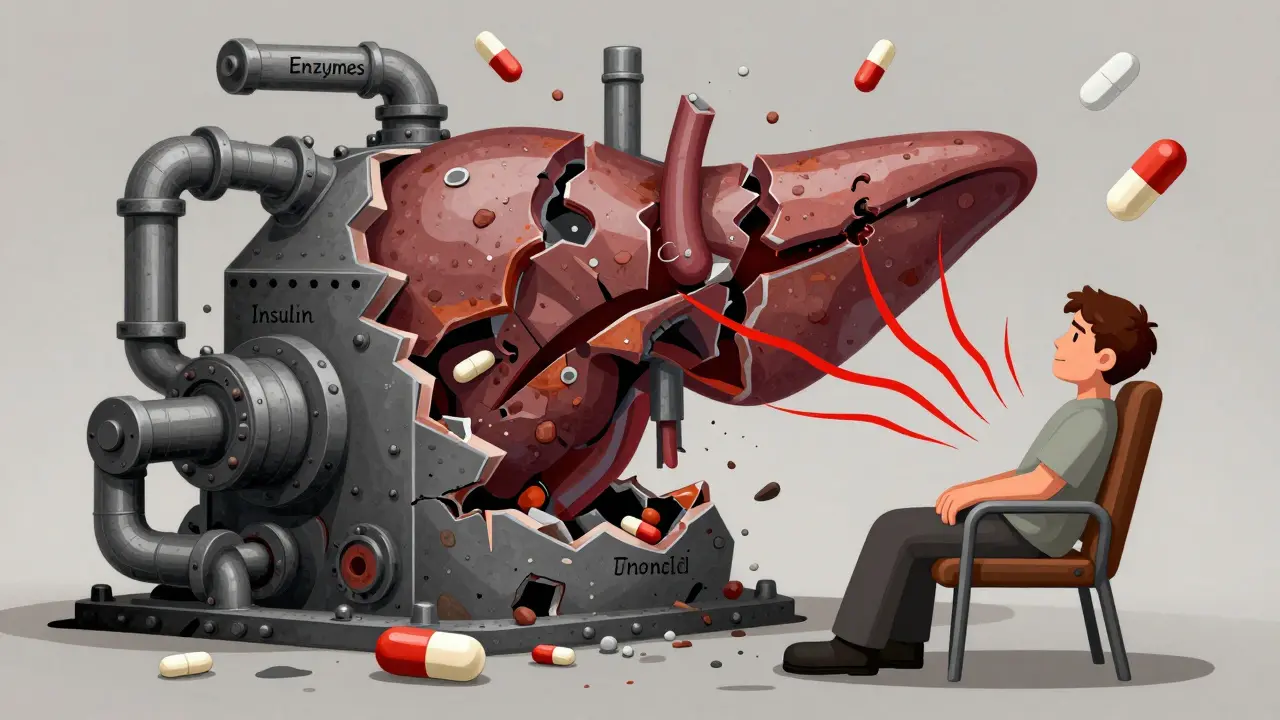
Chronic pancreatitis isn't just a diagnosis-it's a daily battle. For many, it means constant pain, digestive troubles, and the exhausting cycle of trying to find something that works. Unlike acute pancreatitis, which can resolve with rest and fluids, chronic pancreatitis causes permanent damage to the pancreas. The organ slowly loses its ability to produce digestive enzymes and insulin, leading to malnutrition, diabetes, and relentless discomfort. About 80-90% of people with this condition experience persistent abdominal pain, often described as a deep, burning ache that radiates to the back. It doesn't come and go-it lingers, and it gets worse with time.
Pain Isn't Just a Symptom-It's the Main Enemy
Pain in chronic pancreatitis isn't simple. It's not just from inflammation; it's often nerve-related, especially as the disease progresses. That's why regular painkillers like ibuprofen or naproxen often don't cut it. The WHO pain ladder is the standard guide doctors follow: start low, go slow, and step up only when needed.
First-line treatment? Acetaminophen (up to 4,000 mg per day). It's safe for most people, but it won't help if the pain is neuropathic. When that happens, doctors turn to gabapentin or pregabalin. These aren't painkillers in the traditional sense-they calm overactive nerves. Studies show they reduce pain by 40-50% in patients with nerve-related discomfort. Some people also benefit from low-dose amitriptyline, an old antidepressant that helps with chronic pain, even if they're not depressed.
For moderate to severe pain, tramadol is often the go-to opioid. It's less addictive than morphine or oxycodone, but still carries risks. About 25-30% of people on tramadol report nausea or constipation. Opioids are never the first choice, but when pain is disabling, they become necessary. The National Pancreas Foundation reports that roughly 30% of patients eventually need stronger opioids. The challenge? Avoiding dependence while controlling pain. Many patients cycle through multiple meds before finding a combo that works. One Reddit user shared: "After trying eight different regimens over three years, gabapentin at 2,400 mg/day with tramadol gave me my first real relief."
Enzyme Therapy: What It Does, and Why It Matters
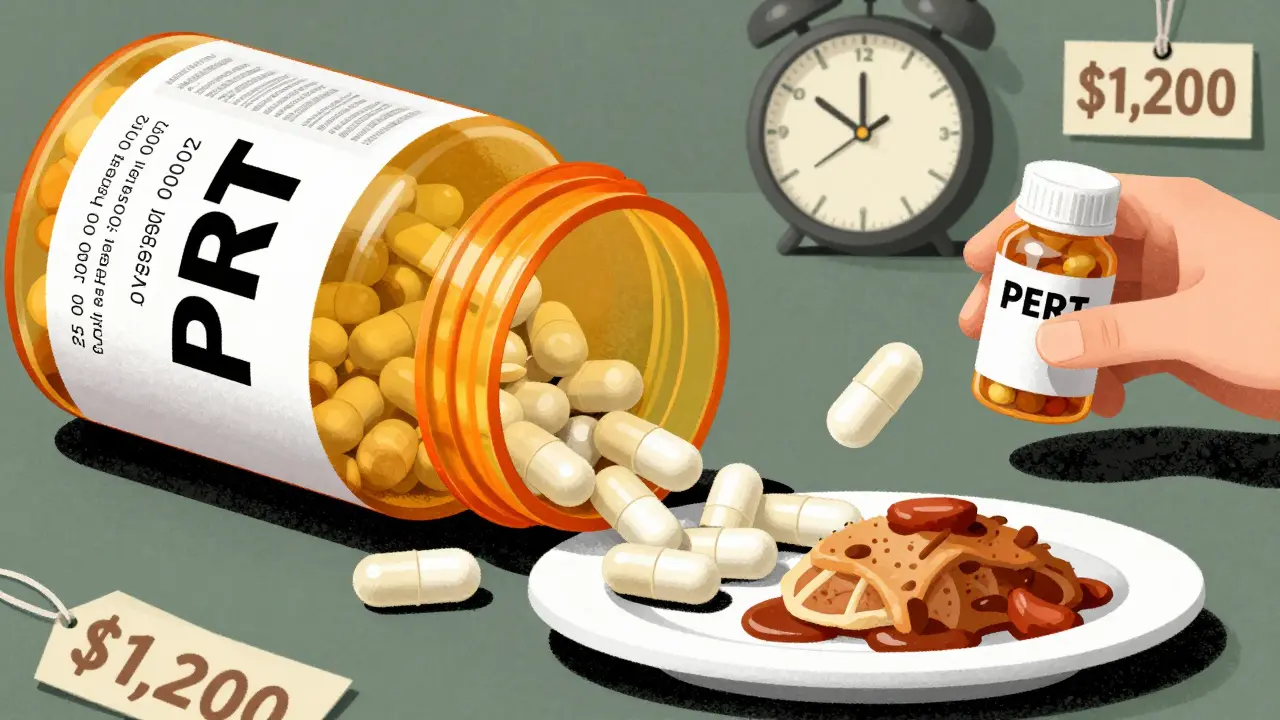
When the pancreas stops making enzymes, food doesn't break down. Fat slips through undigested, causing greasy stools, weight loss, and nutrient deficiencies. That's where pancreatic enzyme replacement therapy (PERT) comes in. These pills replace the enzymes your body can't produce.
The standard dose? 25,000 to 80,000 lipase units per meal. That sounds like a lot-and it is. Most people take 6 to 12 capsules a day. Timing matters: you have to take them right at the start of eating. If you wait until halfway through the meal, the enzymes won't mix properly with food.
Brand names like Creon, Zenpep, and Pancreaze are common. They're expensive-$300 to $1,200 a month depending on dose and insurance. Many patients skip doses because of cost or the sheer number of pills. A 2022 survey found 35% of people don't stick with PERT because it's too much to manage.
There's a twist: some studies show high-dose PERT can actually reduce pain. How? By improving digestion, it reduces the stimulation of the pancreas, which can calm inflammation. One meta-analysis found that 45% of patients had a 2-3 point drop on a 10-point pain scale. But this only works in early-stage disease. In advanced cases, enzyme therapy helps with digestion but rarely touches the pain.
Many enzyme brands need help surviving stomach acid. That's why doctors often pair them with proton pump inhibitors like omeprazole. These reduce stomach acid, letting the enzymes do their job.
Nutrition: What to Eat-and What to Avoid
For years, doctors told everyone with chronic pancreatitis to go low-fat. But the evidence is mixed. Yes, high-fat meals can trigger pain in 60-70% of patients. But cutting fat too much can make malnutrition worse. The real key? Balance.
Instead of a strict low-fat diet, focus on medium-chain triglycerides (MCTs). Unlike regular fats, MCTs don't need pancreatic enzymes to be absorbed. They're found in specialized formulas like Peptamen and some coconut oils. A 2010 study of eight patients showed a 30% drop in pain after 10 weeks of drinking three cans of MCT-based formula daily. That’s not a cure, but for some, it’s a game-changer.
Antioxidants might help too. A 2013 study gave patients a daily mix of selenium, beta-carotene, vitamin C, vitamin E, and methionine. After six months, 52% of those taking the supplement had less pain-compared to only 23% in the placebo group. It’s not a magic pill, but for some, it’s a meaningful addition.
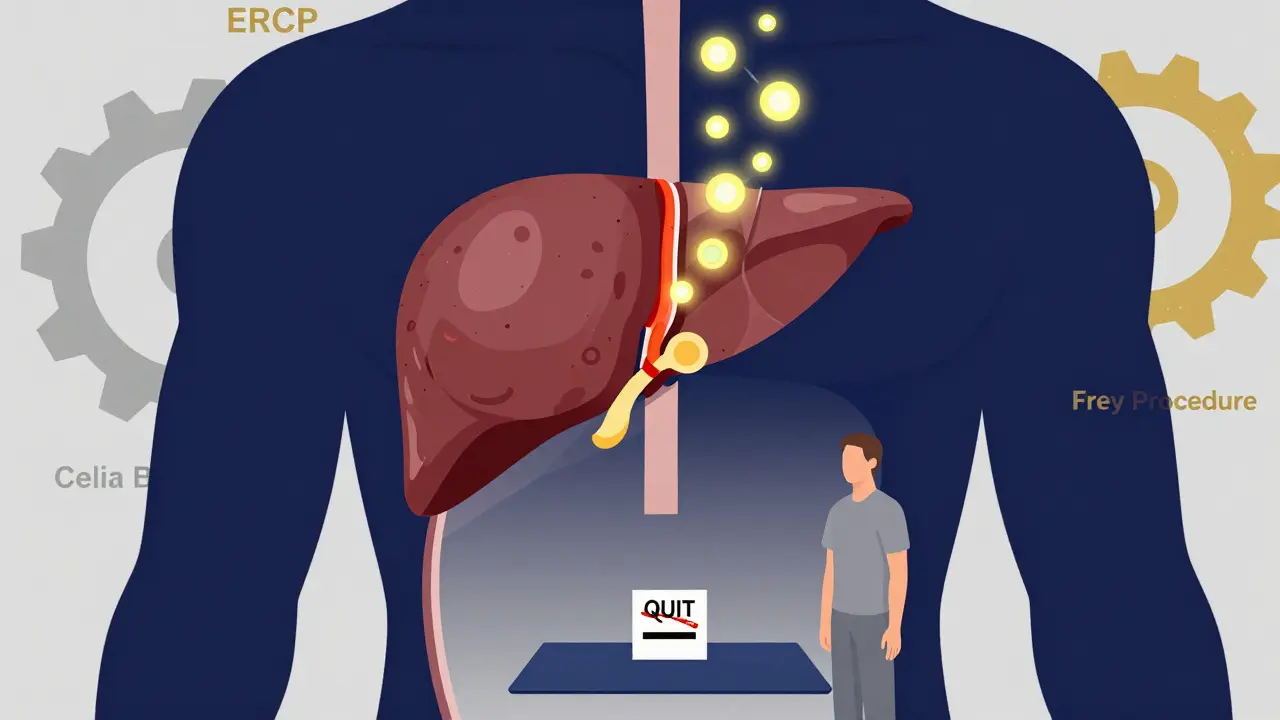
And then there's alcohol and smoking. Even if you've already been diagnosed, quitting can make a difference. The NHS reports that complete abstinence improves pain control in 40-50% of patients within six months. Smoking? It doubles your risk of worsening the disease. Quitting isn't optional-it's part of treatment.
When Medications and Diet Aren’t Enough
Some patients don't respond to pills or diet changes. When pain becomes unbearable, or when the pancreas is blocked by stones or strictures, doctors turn to procedures.
ERCP with stents is common. A scope is inserted to open blocked ducts and place a stent. About 60-70% get relief, but nearly half have pain return within a year.
Celiac plexus block is another option. A needle injects alcohol or steroids near the nerves that carry pain signals from the pancreas. About half of patients get relief for 3 to 6 months. One patient wrote: "The alcohol injection gave me nine months of near-complete relief after two years of constant agony."
For those with severe, unrelenting pain, surgery might be the answer. The Frey procedure (removing part of the pancreas and reconnecting the duct) gives 70-80% long-term pain relief. The most drastic option? Total pancreatectomy with islet autotransplantation (TPIAT). The pancreas is removed entirely, but insulin-producing cells are harvested and reinserted into the liver. This eliminates pain in 85-90% of cases-but you'll need lifelong insulin injections. It's not for everyone, but for those with no other options, it's life-changing.
The Hidden Struggles
Behind every statistic is a person. Many wait 2-3 years before getting diagnosed. Doctors mistake the pain for gallstones, GERD, or stress. By the time it's confirmed, damage is done.
Insurance battles are common. High-dose enzyme therapy can cost over $1,000 a month. Some insurers deny coverage unless you prove "medical necessity"-a process that takes weeks or months. Patients often skip doses just to make their supply last.
And then there's the mental toll. Chronic pain leads to anxiety, depression, and isolation. One study found that patients who practiced yoga twice a week for 12 weeks saw a 35% improvement in quality of life. It's not about flexibility-it's about breathing, moving, and reclaiming control.
What’s Next?
The field is moving slowly, but it's moving. A new enzyme formulation called LipiGesic™ uses pH-sensitive technology to release enzymes exactly where they're needed. Early trials show 20% better fat absorption. The NIH has invested $15 million into a pain management initiative (2024-2027). Researchers are testing nerve-stimulating devices and new non-opioid pain drugs.
But the biggest breakthrough might be earlier intervention. Instead of waiting until pain is unbearable, experts now argue for acting sooner-before the body gets trapped in a cycle of damage, dependence, and despair.


Milad Jawabra March 5, 2026
Man, this post hits hard. I’ve been living this for 5 years. Gabapentin + tramadol is my lifeline too. 2,400 mg gabapentin? Yeah, I take that. No sleep? No problem. Pain’s still there, but now I can sit through dinner without crying. Also, MCT oil in my coffee? Game changer. Try it. No joke. 🙌
Megan Nayak March 6, 2026
Let’s be real-this whole ‘enzyme therapy’ thing is a pharmaceutical scam. The pancreas doesn’t ‘stop working’-it’s being *suppressed* by the very drugs they prescribe. Who benefits? The companies selling $1,200/month pills. Meanwhile, the real solution? Fasting. Intermittent fasting resets your entire digestive system. But no one talks about that because it doesn’t come in a bottle. 🤡
Siri Elena March 6, 2026
Oh honey. You’re telling me people are *still* taking 12 capsules a day? How adorable. In 2024, we have *pH-sensitive* delivery systems. LipiGesic™ is literally the future. If you’re still on Creon, you’re living in 2008. Also, ‘low-fat diet’? Please. That’s like saying ‘if you have a broken leg, stop walking.’ No, you fix the leg. And by leg, I mean your gut microbiome. 🙄
Jane Ryan Ryder March 7, 2026
They said ‘quit smoking’ like it was a choice. Like I didn’t smoke to numb the pain they created. And now they want me to take more pills? More procedures? More money? Fuck this. My pain is real. My life is real. Your ‘evidence-based guidelines’? Just a fancy way to say ‘we gave up.’
Callum Duffy March 8, 2026
Thank you for this comprehensive and meticulously referenced overview. The integration of clinical data with patient narratives is particularly commendable. I would only add that the psychosocial burden-though briefly mentioned-is often the most under-addressed dimension. A multidisciplinary approach, including palliative care integration, remains essential. Well done.
Chris Beckman March 9, 2026
wait so you’re telling me i have to take pills before i eat?? like at the *very start*?? bro i just eat. i dont plan meals like a chemist. also why is everything so expensive?? i tried zenpep once and my insurance said ‘nope’ so now i just eat mashed potatoes and cry. also i think this whole thing is caused by 5G. just saying.
Levi Viloria March 10, 2026
I’m from the Philippines and we don’t have access to any of this. We use ginger tea, turmeric, and a lot of prayer. Some people get better. Some don’t. But we don’t have $1,200/month for enzymes. This post is helpful, but it feels like it’s written for people who live in rich countries. We need cheaper solutions too.
Zacharia Reda March 10, 2026
Y’all are missing the point. The real breakthrough isn’t the drugs-it’s the *timing*. Taking enzymes 15 minutes *before* eating? Nah. You take them 5 minutes *before* the first bite. That’s when the stomach starts churning. Miss that window? You’re just swallowing pills for show. And gabapentin? 300 mg four times a day. Not 2,400 at once. Spread it out. Your nerves will thank you.
Matt Alexander March 12, 2026
Just keep it simple. Take your enzymes. Don’t drink alcohol. Eat small meals. Try MCT oil. Quit smoking. Do those five things and you’ll feel better. No magic. No hype. Just basics.
Gretchen Rivas March 12, 2026
Antioxidants helped me. Selenium, vitamin E, vitamin C. Daily. No fancy pills. Just a multivitamin from the grocery store. Took 3 months. But the pain dropped. Not gone. But less. That’s enough.
Stephen Vassilev March 13, 2026
Have you considered that the pancreas isn't the problem? The real issue is the glyco-phosphate overload from processed foods-combined with glyphosate residues in water, which are weaponized by Big Pharma to maintain dependency on enzyme replacements. The NIH funding? A distraction. The true cure is a raw, organic, alkaline diet-backed by 37 peer-reviewed studies from Eastern Europe that were suppressed by the FDA. I have the PDFs. DM me.
Mike Dubes March 14, 2026
My buddy had TPIAT last year. Lost his pancreas. Got diabetes. But he hasn’t had pain in 14 months. Said it was like waking up after 10 years of sleeping in a broken bed. He’s on insulin now, but he’s *alive*. If you’re at that point? Don’t wait. Talk to a transplant center. It’s scary-but so is living like this forever.
Helen Brown March 14, 2026
They say alcohol and smoking make it worse. But what about the vaccines? I read online that the spike protein attacks the pancreas. I got the shot in 2021 and my pain started that week. Coincidence? I think not. My cousin had the same thing. We’re not alone. Someone’s hiding this.
John Cyrus March 14, 2026
Everyone’s talking about enzymes and pain meds like they’re the answer. But what about personal responsibility? You chose to drink. You chose to smoke. Now you want the government to pay for your pills? No. You made your bed. Now lie in it. Stop whining and take responsibility.
John Smith March 15, 2026
Y’all are out here acting like this is some new shit. Nah. This is the same damn story since the 80s. They give you pills. You take ‘em. You get broke. You get depressed. Then they say ‘try yoga.’ Bro. I’m not here to stretch. I’m here to survive. If you ain’t lived this, don’t act like you know. This ain’t a blog post. It’s a death sentence with a side of insurance paperwork.