Supplement Safety & Interaction Checker
Instructions: Select a supplement ingredient or a label "red flag" below to see potential risks and safety warnings based on the article guidelines.
Select an Ingredient or Label Feature:
Please select an item from the list to view safety details.
Knowledge based on DSHEA and FDA analysis.You might think that because a product is labeled "natural," it's automatically safe to take with your daily medications. That is a dangerous assumption. In reality, the gap between what a prescription drug label tells you and what a supplement label reveals can be a matter of life and death. While a prescription medication is required by law to list potential conflicts, many supplements leave you completely in the dark.
The core problem is a regulatory mismatch. In the U.S., the Dietary Supplement Health and Education Act (DSHEA) is a 1994 law that treats supplements differently from drugs, meaning manufacturers don't have to prove their product is safe or list drug interactions before selling it. This leaves the responsibility of safety entirely on your shoulders. If you don't know how to dig through the fine print, you're gambling with your health.
Quick Guide to Reading Labels
Before you buy or swallow a new pill, follow this quick checklist to identify potential risks:
- Find the Supplement Facts Panel: Look for the boxed area. If it's missing or looks unprofessional, put it back.
- Check the Serving Size: Many people miss this. If a bottle says "1000mg of Vitamin C" but the serving size is 3 capsules, you're actually taking 3000mg.
- Scan for "Proprietary Blends": Be wary of these. They often hide the exact amount of each ingredient, making it impossible to know if you're taking a dose that could interact with your meds.
- Look for Third-Party Seals: Look for the USP (United States Pharmacopeia) mark. Certified products are significantly more accurate in their labeling than non-certified ones.
The Big Difference: Drug Labels vs. Supplement Labels
Understanding why these labels look different helps you realize where the "blind spots" are. Prescription and over-the-counter (OTC) drugs follow strict rules. For instance, an OTC label must use the "Drug Facts" format, which includes a dedicated "Warnings" section. According to FDA data, about 89% of OTC drugs include these warnings because they are legally required.
Supplements, however, use a Supplement Facts Panel. While this tells you what's inside, it rarely tells you what it does to your other medications. A 2021 FDA analysis found that only 12.7% of popular supplements actually included drug interaction warnings. Compare that to 100% for prescription drugs. You aren't just reading different formats; you're dealing with completely different levels of transparency.
| Feature | Prescription Drugs | OTC Medications | Dietary Supplements |
|---|---|---|---|
| FDA Pre-market Approval | Required | Required (via Monograph) | Not Required |
| Mandatory Interaction Warnings | Yes (100%) | Yes (~89%) | No (Optional) |
| Standardized Format | Prescribing Information | Drug Facts Panel | Supplement Facts Panel |
| Black Box Warnings | Used for severe risks | Rarely used | Not applicable |
Dangerous Interactions You Need to Know
Since the labels often fail you, you need to know the most common "red flag" ingredients. Some of the most frequent conflicts involve blood thinners and heart medications.
For example, Warfarin (a common blood thinner) is notoriously sensitive. Vitamin K-containing supplements, like certain green tea extracts, can reduce its effectiveness by 30-50%, potentially leading to clots. Similarly, CoQ10 can shorten prothrombin time by 15-25%, again messing with how your blood clots.
Then there's St. John's Wort. This supplement is a major offender because it speeds up how your liver processes drugs. The American Heart Association has noted that it can drop the blood levels of digoxin by an average of 26%, which can cause heart treatment to fail entirely. Even high doses of Vitamin C (over 1,000 mg/day) can interfere with certain antiretroviral medications by changing the pH levels in your gut.
Dealing with the "Proprietary Blend" Trap
One of the most frustrating parts of reading supplement labels is the "proprietary blend." This is where a company lists a group of ingredients but gives one total weight for the whole mix. This is often used to hide the fact that the most expensive (or most potent) ingredient is barely present, or conversely, that a dangerous amount is included.
Consumer Reports found that 58% of protein supplements use this tactic. If you are taking medication for a condition like diabetes or high blood pressure, a proprietary blend is a gamble. You cannot cross-reference a "blend" with an interaction checker because you don't know the actual dosage of the individual components.
Practical Steps to Stay Safe
Since you can't rely on the label alone, you have to create your own safety system. Don't just trust the marketing claims on the front of the bottle; the truth is always in the fine print-or missing entirely.
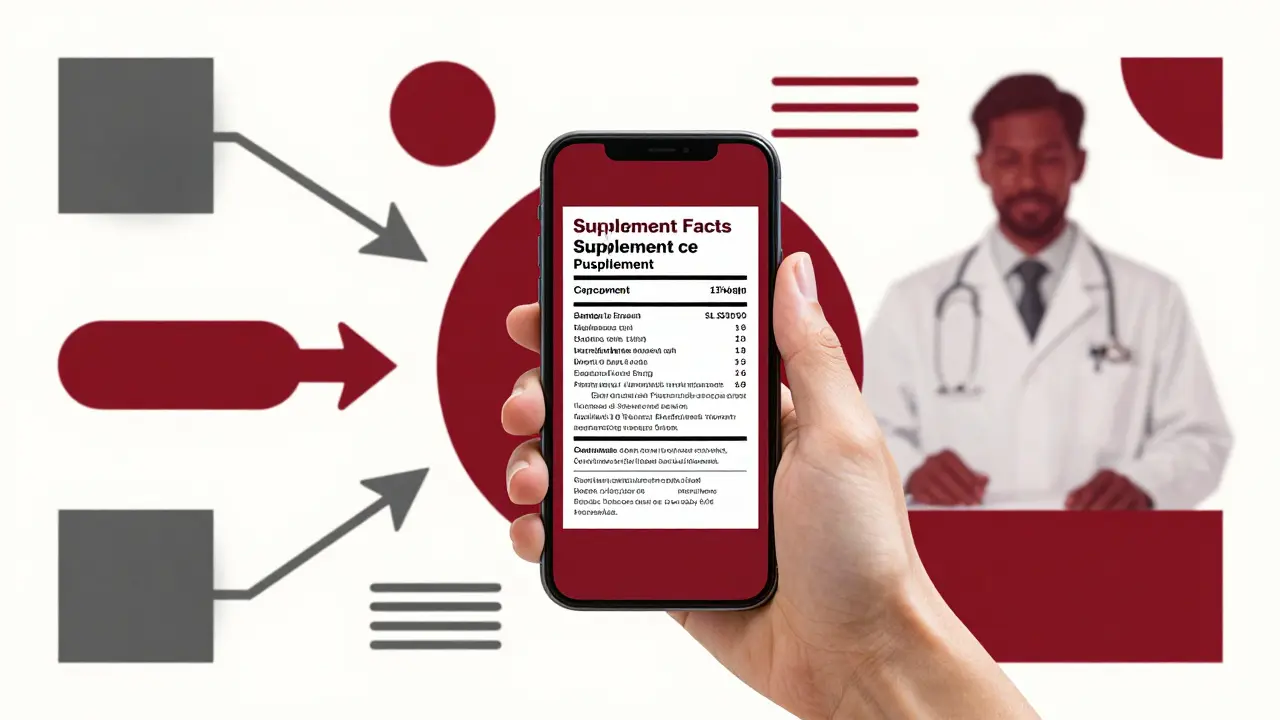
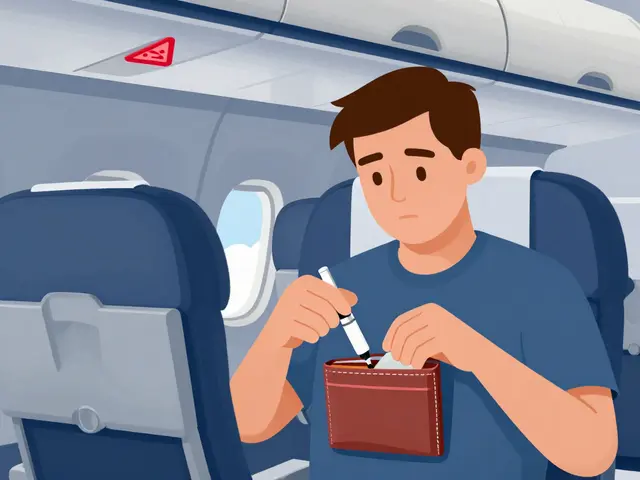
- Photograph Your Labels: Instead of trying to remember the names of five different herbs, take a clear photo of the "Supplement Facts" panel. Show these to your doctor or pharmacist. They can see patterns that you might miss.
- Use Digital Checkers: Tools like the Medscape Drug Interaction Checker analyze thousands of drug pairs. Enter every single ingredient listed on your supplement label, not just the main one.
- The 15-Minute Rule: Spend a few minutes specifically researching the "Warnings" section of your prescription meds. If your drug label says "Avoid use with antioxidants," and your supplement is full of Vitamin E and C, that's your signal to stop and call your doctor.
- Be Skeptical of "Natural": Remember that some supplements are essentially unapproved drugs. Red yeast rice, for instance, contains monacolin K-the exact same active ingredient found in the prescription drug lovastatin. If you take both, you're essentially overdosing on a statin.
Does the FDA approve supplements for safety before they are sold?
No. Unlike prescription drugs, the FDA does not approve dietary supplements for safety or efficacy before they hit the market. Under DSHEA regulations, the manufacturer is responsible for ensuring the product is safe, and the FDA generally only intervenes after a product is already being sold and reports of harm emerge.
Why don't supplement labels list drug interactions?
Because they aren't legally required to. Drug labels are governed by the Federal Food, Drug, and Cosmetic Act, which mandates interaction warnings. Supplements fall under a different, more lenient framework where interaction warnings are voluntary. Only a small percentage of supplement brands choose to include them.
What is a "Black Box Warning" on a drug label?
A Black Box Warning is the FDA's most serious safety alert. It is a prominent box on the prescribing information that alerts healthcare providers and patients to serious or life-threatening risks associated with the medication. You will never see a "Black Box Warning" on a dietary supplement because they aren't regulated as drugs.
Can "natural" supplements cause a dangerous drop in blood sugar?
Yes. Some supplements can enhance the effect of diabetes medications. For example, combining milk thistle with metformin has been reported to cause severe hypoglycemia (dangerously low blood sugar), in some cases dropping glucose levels to critical lows like 42 mg/dL.
How can I tell if a supplement label is accurate?
Look for third-party certification marks like USP or NSF. These organizations test the products to ensure that what is on the label is actually in the bottle and that there are no harmful contaminants. Independent testing shows USP-certified products have much higher accuracy rates than non-certified brands.
Next Steps for Different Users
For Chronic Medication Users: Before adding any supplement, create a comprehensive list of your current prescriptions and take it to your pharmacist. Pharmacists are often better trained in drug-supplement interactions than general practitioners.
For New Supplement Users: Start with a single supplement at a time. If you introduce five new pills at once and feel dizzy or sick, you'll have no idea which one is causing the reaction or interacting with your meds.
For Caregivers: Audit the supplement cabinets of elderly parents. Many seniors take a cocktail of prescriptions and supplements without realizing they are canceling each other out or creating toxic combinations.




dwight koyner April 9, 2026
The emphasis on pharmacist consultation is absolutely correct. Many patients overlook the fact that pharmacists have specialized training in pharmacology and pharmacokinetics, making them far better equipped to identify potential interactions than a general practitioner who may only spend a few minutes with a patient. I would also suggest checking the 'Inactive Ingredients' list, as certain fillers or binders can occasionally cause allergic reactions or unexpected interactions in highly sensitive individuals.
Nathan Kreider April 11, 2026
This is so helpful for everyone!
jack hunter April 12, 2026
clueless ppl realy believe the fda gives a damn about safety lol its all just a game of control anyway. why trust a governemnt agency that sells out to big pharma every singel day. the real danger isnt the supps its the system tryin to tell u what to think about your own body
Danielle Kelley April 13, 2026
Exactly! The FDA is just a puppet for Big Pharma. They want us terrified of 'natural' options so we keep buying their overpriced, toxic prescriptions. This whole 'warning' thing is just another way to steer us away from things that actually work and keep us dependent on the system!
Grace Lottering April 14, 2026
Control is the goal. Labels are lies. Wake up.
Toby Sirois April 16, 2026
Actually, it is basic common sense. If you aren't researching your own health, you are just lazy. I've seen so many people take garbage supplements because they can't be bothered to read a simple book. It is honestly sad how people just want a magic pill without doing the actual work of understanding biology. You have to take ownership of your life or you'll just end up as another statistic in a medical journal because you were too slow to realize that 'natural' doesn't mean 'safe'. It's really not that hard if you have a brain.
Brady Davis April 17, 2026
Oh wow, I had no idea that a tiny leaf could almost kill me. Truly shocking that the government doesn't regulate things. What a surprise. I'm just absolutely devastated by this revelation.
Nikhil Bhatia April 18, 2026
Too much text. Just go to a doctor.
Jamar Taylor April 19, 2026
Let's stay positive and just take it one step at a time! Using a checklist like this is a great way to build a healthy habit. You've got this, everyone! Just keep moving forward and stay safe!
Stephen Luce April 19, 2026
I really appreciate the tip about photographing the labels. I do that for my dad since he can't read the tiny print anymore and it saves so much time at the clinic.
Jay Vernon April 20, 2026
Thanks for the info! 🌟 Be safe out there everyone! 👍
Timothy Burroughs April 21, 2026
People in this country have become so soft they need a manual to read a bottle. Back in the day we just knew what worked but now you got people blindly following a list. This is why the American spirit is dying we dont trust our own gut anymore just some piece of paper from the fda
Jitesh Mohun April 22, 2026
stop complaining and just use the tools provided if you are too dumb to read the label then you deserve the risk honestly just read the damn book or use a checker
Ruth Swansburg April 22, 2026
This information is vital. Please share this with your family members immediately. We must prioritize health safety through diligence.
Ethan Davis April 23, 2026
This is just a distraction from the real issue. The DSHEA is a joke because it lets the companies hide the additives they use to make you addicted to the supplement in the first place. They don't care about your drug interactions, they care about the subscription model. It's all a scam to keep us sick and paying for 'wellness' while the actual cure is kept under lock and key by the elites. Don't just look for USP seals, look for who owns the company producing the seal.