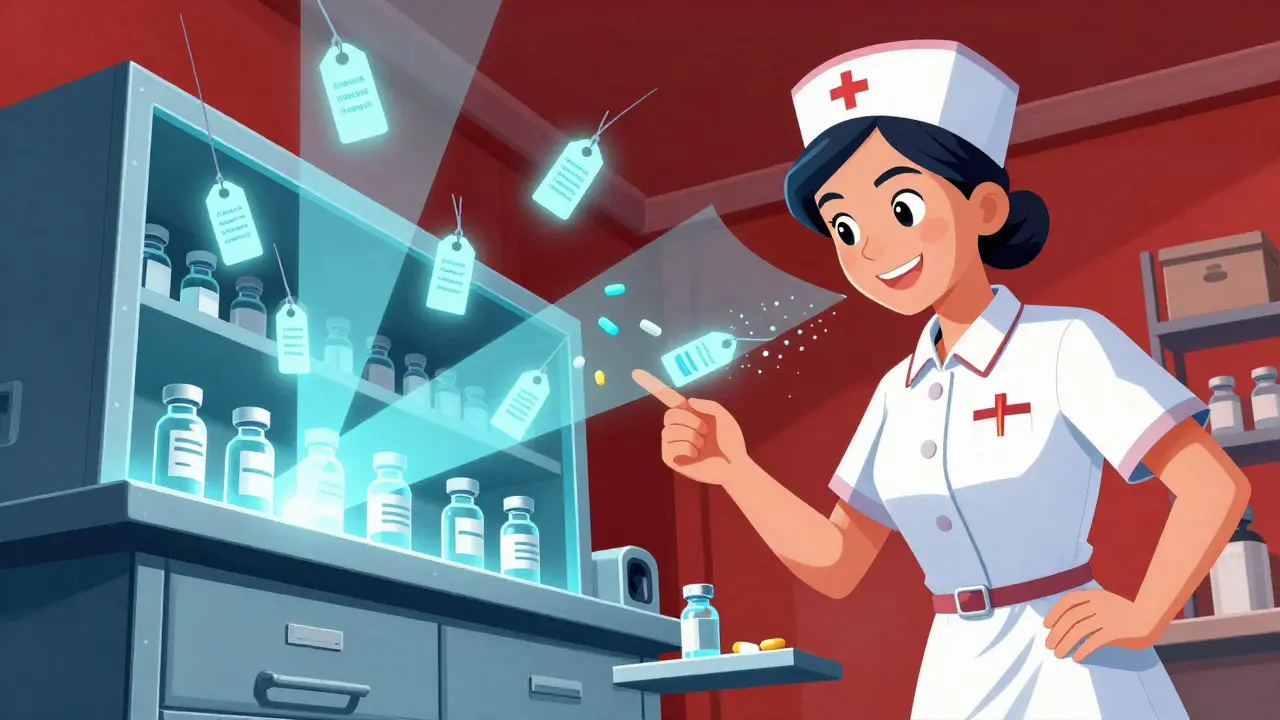
Every year, millions of doses of medication are thrown away because they expired - and worse, some end up being taken by patients who don’t realize they’re past their prime. In hospitals, clinics, and even home medicine cabinets, expired drugs are a silent risk. But technology is changing that. Today, you don’t have to rely on handwritten labels, sticky notes, or memory to know when your pills, injections, or inhalers are no longer safe. There are real, working systems in place that automatically track expiration dates, warn you before it’s too late, and even stop you from using something that shouldn’t be taken.
What’s Really Happening Behind the Scenes
It’s not magic. It’s radio waves, barcodes, and smart software working together. The most advanced systems use RFID (Radio Frequency Identification) tags. These tiny chips are stuck onto medication packaging - vials, blister packs, syringes - and they broadcast a unique signal. When you put a tray of meds into a smart cabinet or scan a cart with a handheld reader, the system reads all of them at once. No more manually checking each bottle’s expiration date. One scan. Done.
For example, KitCheck is used in over 900 hospitals across the U.S. and Europe. Their system doesn’t just track expiration - it alerts staff when a medication is within two days of expiring. If something is about to go bad, the system blocks it from being dispensed. It also knows exactly how many of each drug are in stock, down to the last tablet. Hospitals using this system report a 15-20% drop in expired medication waste. That’s thousands of dollars saved every month.
How eMAR Systems Keep Long-Term Care Safe
Not every setting needs RFID. In nursing homes, assisted living centers, and agencies serving people with intellectual and developmental disabilities, eMAR (Electronic Medication Administration Record) systems are the go-to solution. These are digital versions of the old paper charts nurses used to fill out by hand.
With eMAR, every time a nurse gives a pill, they scan the patient’s wristband and the medication’s barcode. The system logs who took what, when, and if it was expired. If the medication’s expiration date has passed, the system won’t let them check it off. It also syncs with pharmacy systems to auto-generate refill requests. No more missed refills. No more last-minute scrambles to replace expired insulin or seizure meds.
eVero is one of the leading eMAR platforms. It’s designed for facilities that serve vulnerable populations. It includes biometric login (fingerprint or facial recognition) to ensure only authorized staff can administer meds. And because it’s cloud-based, administrators can check inventory from a tablet in their office - or even from home.
Automated Dispensing Cabinets: The Smart Medicine Lockers
Think of Automated Dispensing Cabinets (ADCs) as high-tech vending machines for medicine. They’re found in hospital pharmacies, ERs, and even operating rooms. Each drawer holds specific drugs, and only authorized staff can open them with a badge or PIN.
What makes them smart? Every time a medication is taken, the cabinet automatically logs:
- Which drug was removed
- What lot number it came from
- When it expires
- Who took it
When a drug nears its expiration date, the cabinet sends an alert to the pharmacy. Some even auto-reorder replacements. This cuts down on human error - no more forgetting to check the date on a box tucked behind others. TouchPoint Medical reports that pharmacists using ADCs cut their inventory checks from 4-6 hours down to under 30 minutes.
Mobile Apps for EMS and Home Use
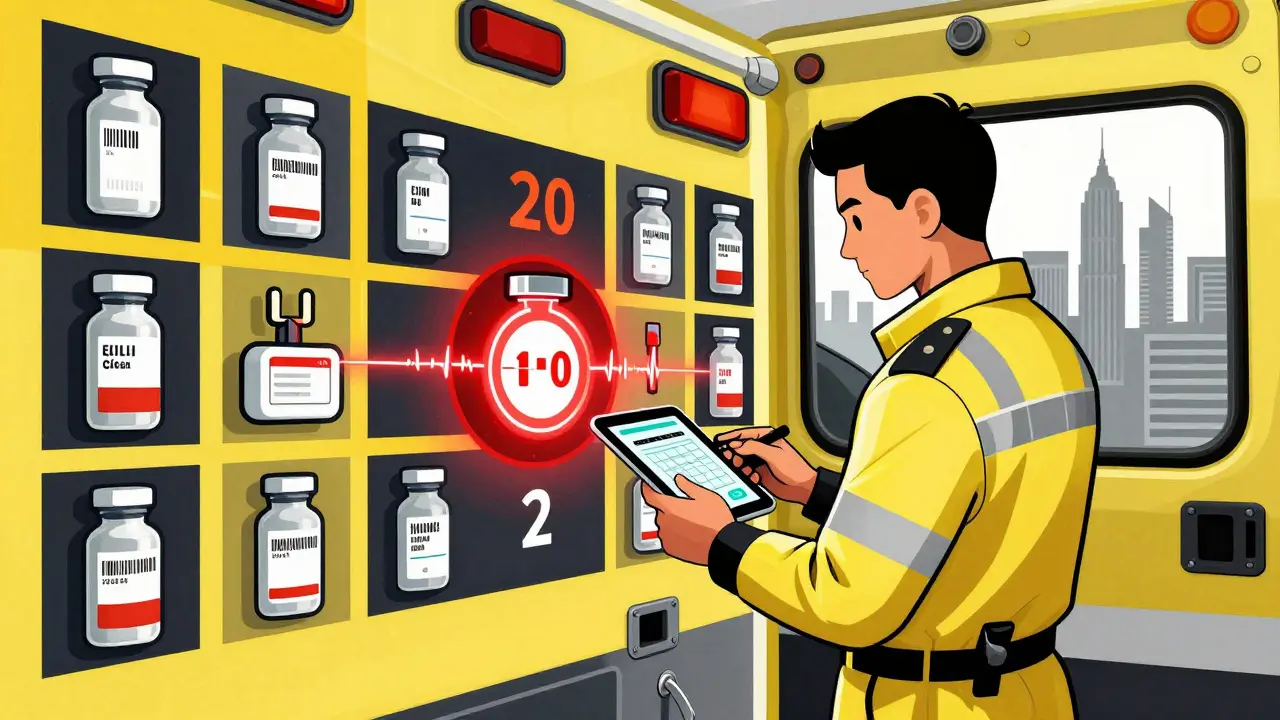
You don’t need a hospital to use this tech. Emergency services like fire departments and paramedic teams use LogRx, a mobile app that runs on iPhones and Android phones. Paramedics carry medications in their ambulances - epinephrine, naloxone, aspirin - and those have short shelf lives. LogRx scans the barcode on each vial and tracks expiration dates in real time. When one is about to expire, the app sends a push notification. It also helps teams stay compliant with DEA regulations for controlled substances like opioids.
One UK EMS team, Elite EMS, said using LogRx cut their admin time by 60%. They no longer have to manually log every drug in a spreadsheet. And because it’s mobile, they can check expiration dates while on the road.
Supply Chain Tracking: From Factory to Fridge
Some systems go even further. DrugXafe tracks medications from the manufacturer all the way to the patient. Each product gets a unique electronic code (EPC) that moves with it through shipping, warehousing, and hospital storage. If a recall happens - say, a batch of blood pressure pills is found to be contaminated - DrugXafe can instantly tell you exactly which cabinets, rooms, or patients received that batch. It also blocks sales if a product is expired, even if someone tries to scan it manually.
This kind of end-to-end tracking is becoming mandatory under the U.S. Drug Supply Chain Security Act. But it’s not just for big hospitals. Pharmacies serving homebound patients are starting to adopt similar tools to ensure what they deliver hasn’t been sitting in a warehouse for months.
What You Need to Get Started
Implementing any of these systems isn’t plug-and-play. But it’s simpler than you think if you plan ahead.
Here’s a realistic timeline for a mid-sized clinic:
- Assessment (2-4 weeks): Figure out what you’re tracking - just controlled substances? All meds? Which departments need it most?
- Hardware/Software Setup (1-3 weeks): Install scanners, cabinets, or download apps. Most systems work with existing Wi-Fi - no new wiring needed.
- Staff Training (2-6 weeks): Don’t rush this. People hate change. Show them how it saves time. Use videos, hands-on demos, and peer champions.
- Integration Testing (2-4 weeks): Make sure the system talks to your pharmacy software, EHR, or inventory database. If it doesn’t, you’ll get double entries or missed alerts.
Total time? About 8 to 17 weeks. That’s less than half a year. And the payoff? Less waste, fewer errors, and peace of mind.
Common Pitfalls - And How to Avoid Them
Not every rollout goes smoothly. Here’s what usually goes wrong - and how to fix it:
- Staff resistance: 62% of hospitals report pushback. Solution? Involve staff early. Let them test the system. Reward early adopters.
- Legacy system clashes: If your pharmacy software is from 2010, it might not talk to new scanners. Solution? Choose vendors that offer middleware or API integration.
- Tagging delays: RFID systems need each item labeled. For a facility with 500+ meds, that’s 80+ hours of work. Solution? Do it in phases - start with high-risk drugs first.
- False alerts: If the system isn’t calibrated right, it might warn you about meds that are still good. Solution? Test with known-expired and known-good items during setup.
What’s Coming Next
The field is moving fast. By 2027, Gartner predicts 45% of U.S. hospitals will use RFID-based tracking - up from just 25% today. Here’s what’s on the horizon:
- AI predictions: Systems like Intelliguard Health are testing AI that predicts which meds are most likely to expire based on usage patterns. It doesn’t just react - it prevents.
- Blockchain integration: For high-value or controlled drugs, blockchain is being tested to create tamper-proof logs from manufacturer to patient.
- Manufacturer pre-tagging: More drug companies are starting to tag medications before they leave the factory. This cuts implementation time for hospitals by 70%.
- Home integration: Some systems now sync with smart pill dispensers for patients on long-term therapy. If a pill expires, it won’t dispense - and your doctor gets notified.
Is This Worth It for Smaller Practices?
Yes - but choose wisely. A full RFID system might cost $50,000-$200,000. That’s not realistic for a small clinic. But a mobile app like LogRx costs less than $1,000 a year. An eMAR system for a nursing home? Often under $5,000 annually. You don’t need to go all-in. Start with one area: your controlled substance cabinet. Or your insulin fridge. Track those first. Expand later.
The data doesn’t lie: hospitals using these systems save $120,000-$300,000 a year in reduced waste and labor. That’s not just money - it’s lives. Expired meds can cause allergic reactions, treatment failures, and even death. Technology doesn’t just make tracking easier. It makes it safer.
Can I use technology to track expiration dates at home?
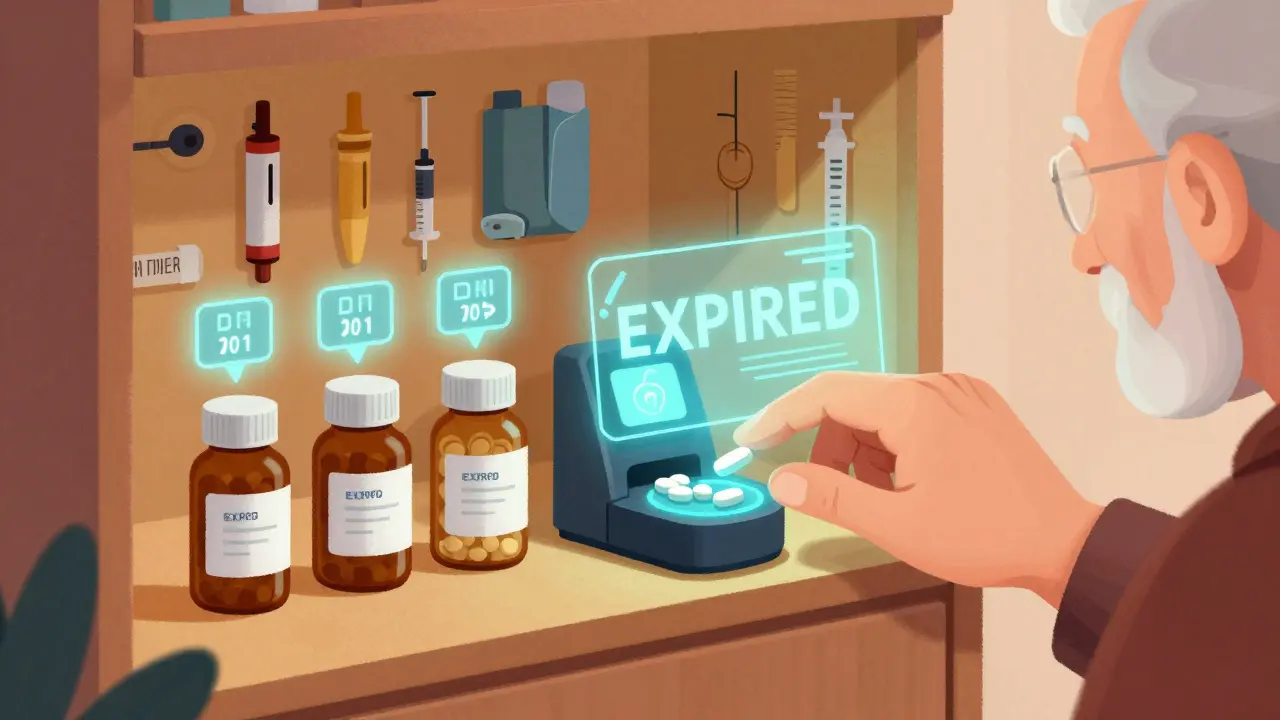
Yes. While most advanced systems are designed for hospitals and pharmacies, consumer-friendly tools exist. Apps like LogRx and Medisafe allow you to scan barcodes on your prescription bottles and set alerts for expiration dates. Some smart pill dispensers even auto-notify you when a medication is about to expire or has been taken incorrectly. These are especially helpful for seniors managing multiple medications.
Are RFID tags safe on medication?
Absolutely. RFID tags used in pharmaceutical tracking are passive - they don’t emit radiation or heat. They only respond when scanned by a reader. The tags are sealed under protective layers and don’t interact with the medication inside. They’ve been tested and approved by the FDA and EU regulatory bodies for use on all types of drugs, including liquids and injectables.
Do these systems work with insulin and other refrigerated meds?
Yes. Many systems, including KitCheck and eVero, are designed to work with refrigerated units. Special RFID readers can scan medications inside cold storage without opening the door. The system tracks not just expiration, but also temperature history - so if insulin was exposed to heat, the system flags it as potentially compromised, even if the date is still valid.
What happens if a medication expires while in use?
In a properly configured system, the medication is blocked from being dispensed. For example, if a nurse tries to pull an expired epinephrine auto-injector from an ADC, the drawer won’t open. In eMAR systems, the screen will show a red warning and prevent the admin from marking the dose as given. This creates a hard stop - no exceptions. It’s a safety feature, not a suggestion.
How accurate are these systems compared to manual checks?
Manual checks are only 65-75% accurate. Studies show staff miss expired meds 1 in 4 times during routine inventory. RFID and barcode systems achieve 99-100% accuracy. Texas Children’s Hospital found their manual counting missed 37 expired items in a single week. After switching to RFID, they hit zero errors for six months straight.
Technology isn’t replacing pharmacists or nurses. It’s giving them superpowers. No more digging through cabinets. No more guessing if that vial is still good. Just a quick scan - and instant, reliable answers. Whether you’re running a hospital, a paramedic unit, or just managing meds for a loved one, this isn’t futuristic. It’s here. And it’s working.



Katy Shamitz March 8, 2026
Oh honey, I love how we’re finally getting serious about this. My grandma almost died because someone gave her expired blood pressure pills. I swear, if we had this tech in her nursing home, she’d still be here. I cried when I read about the RFID tags-finally, someone’s protecting our elders like they matter. Thank you for writing this. 💔❤️
Nicholas Gama March 10, 2026
RFID? Really? They’re tracking pills like contraband. Next thing you know, Big Pharma’s logging every swallow. This isn’t safety-it’s surveillance with a side of profit.
Mary Beth Brook March 10, 2026
We’ve had this tech for a decade. Why are we still talking about it like it’s new? America’s falling behind. If we invested in domestic RFID manufacturing instead of outsourcing to China, we’d lead this space. Stop being lazy. Start building.
George Vou March 11, 2026
idk man i think all this scanning is overkill. my mom just writes dates on post its and it works fine. why do we need a whole system? feels like tech for techs sake
Scott Easterling March 12, 2026
So... you’re telling me a machine won’t let someone take expired meds? Wow. I’m so scared of what happens if the system glitches. What if it blocks insulin? What if it’s hacked? Who’s to blame when someone dies because a barcode didn’t scan? I’m not trusting a computer with my life.
Mantooth Lehto March 13, 2026
This is the most important thing I’ve read all year. 😭 I’ve been managing my mom’s meds since she got dementia. I used to panic every time I opened the cabinet. Now I use Medisafe. It’s like a guardian angel with a barcode scanner. I’m not crying because I’m weak-I’m crying because I’m finally at peace. Thank you.
Melba Miller March 15, 2026
I work in a rural clinic. We can’t afford KitCheck. But we started with LogRx on two phones. One for the RN, one for the PA. We scan everything now-even the OTC stuff. We’ve cut waste by 40%. No one believed us until they saw the receipts. It’s not glamorous. But it’s real. And it’s working. We didn’t wait for a $100k system. We just started. You don’t need permission to do the right thing.
Neeti Rustagi March 17, 2026
While the technological advancements detailed herein are indeed commendable, one must not overlook the foundational ethical imperative: patient safety must remain paramount. The integration of automated systems must be accompanied by rigorous training, transparent protocols, and unwavering accountability. One cannot delegate human responsibility to silicon, no matter how sophisticated the algorithm. The human element-compassion, vigilance, discernment-remains irreplaceable. Let us not mistake efficiency for wisdom.
Dan Mayer March 17, 2026
you say RFID tags are safe but did you know they can be cloned? and if some hacker gets access to the system they could swap expiration dates. i mean think about it-imagine someone giving you a fake insulin that looks legit. this is how people die. they’re not telling you the whole story.
Janelle Pearl March 18, 2026
I read this and thought about my sister who’s on 12 meds. She forgets half of them. I started using Medisafe last year. She doesn’t even know I’m watching. But I get alerts when she misses a dose… or when something’s about to expire. It’s quiet. It’s gentle. It doesn’t yell. It just… holds space. I don’t need to fix everything. I just need to know she’s safe. This isn’t tech. It’s love with a barcode.