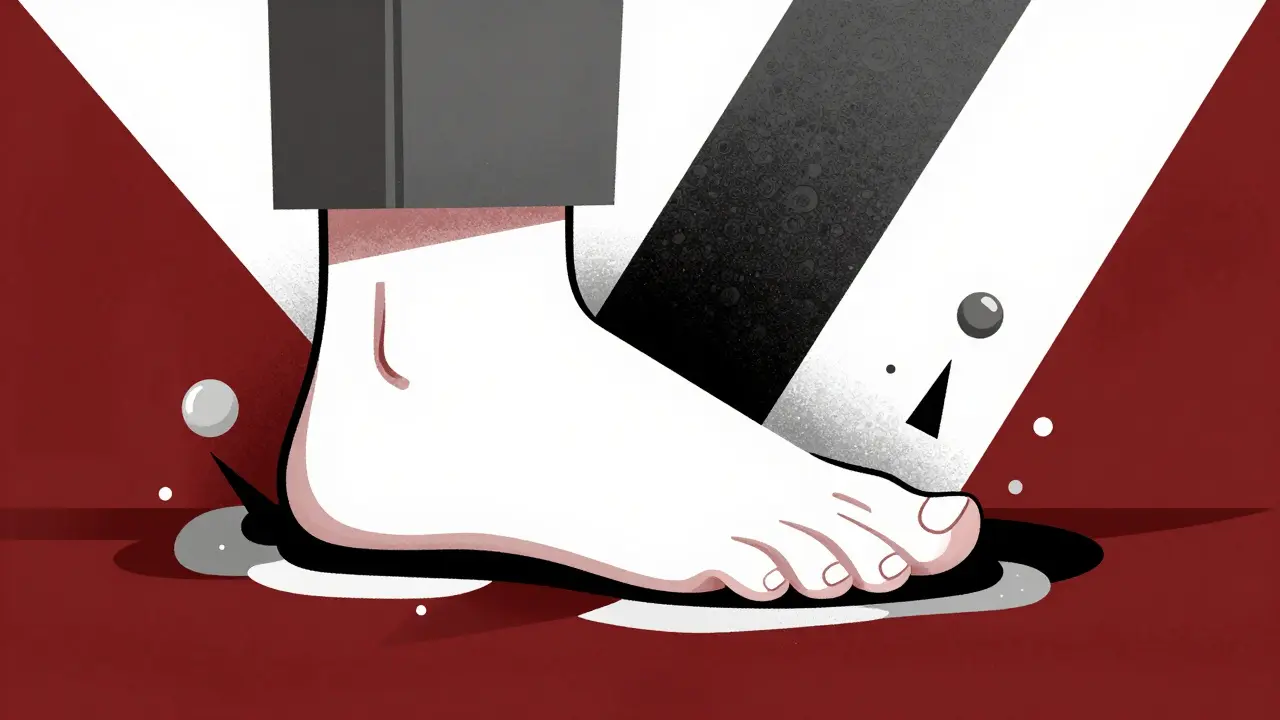
It starts as a slight itch between your toes, and before you know it, you're dealing with peeling skin and a smell that just won't quit. Athlete's foot is a fungal infection known as tinea pedis, caused by dermatophytes that thrive in the warm, damp environments of your shoes. It's incredibly common-roughly 15% to 25% of people deal with it at some point. The good news? You don't always need a doctor's appointment to fix it. Most mild to moderate cases can be cleared up with the right OTC athlete's foot treatment found at your local pharmacy.
Quick Guide to OTC Antifungal Options
Not all antifungal products are created equal. Depending on whether your skin is dry and scaly or soggy and white, you'll want a different formulation. Most people stick to creams, but sprays and powders have their place too.
| Active Ingredient | Common Brand | Typical Efficacy | Treatment Duration | Best For |
|---|---|---|---|---|
| Terbinafine | Lamisil AT | Highest (~83%) | 1-2 Weeks | Fast results, easy dosing |
| Clotrimazole | Lotrimin | High (~74%) | 2-4 Weeks | Mixed infections (yeasts/molds) |
| Tolnaftate | Tinactin | Moderate (~67%) | 4 Weeks | Prevention & interdigital moisture |
| Miconazole | Micatin | High (~74%) | 2-4 Weeks | General fungal infections |
Which Active Ingredient Should You Choose?
If you want the fastest route to clear skin, Terbinafine is a powerful fungicidal agent that kills the fungus by inhibiting squalene epoxidase, often showing results within 24 to 48 hours. It's widely considered the gold standard for uncomplicated cases because it's usually a once-daily application. You don't have to remember to apply it every few hours, which means more people actually finish their treatment.
On the other hand, Clotrimazole is an imidazole antifungal that inhibits ergosterol synthesis, which stops the fungus from growing. While soon-to-be-clear skin takes a bit longer (usually 3 to 5 days to see a difference), it's often better for "mixed" infections where you might have a combination of mold and yeast. If your infection is stubborn or covers the entire sole of your foot-what doctors call "moccasin-type" fungus-a longer course of clotrimazole might actually be more effective than a short burst of terbinafine.
Then there's Tolnaftate, an older ingredient. While it doesn't kill the fungus as aggressively as terbinafine, it's excellent for keeping your feet dry. It's the most cost-effective choice for people who get athlete's foot repeatedly and want a powder they can sprinkle in their shoes every single morning to prevent a comeback.
How to Apply Treatment for Maximum Results
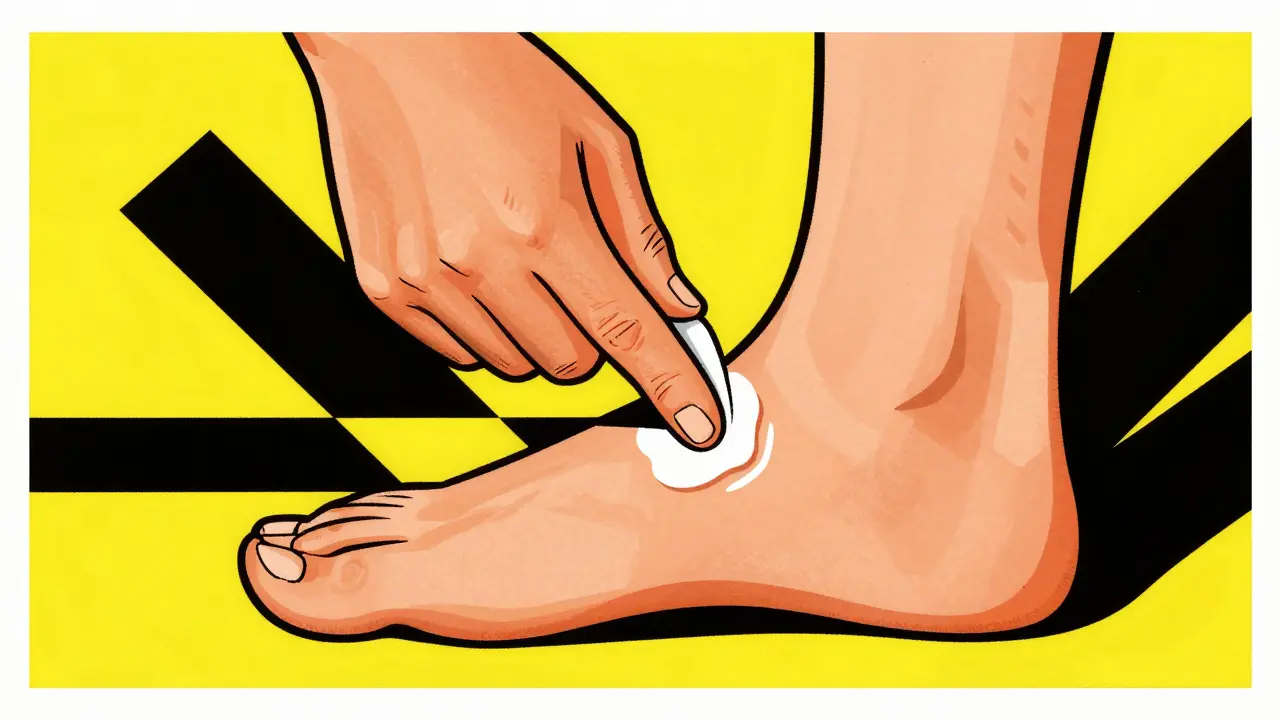
Applying the cream is the easy part; doing it correctly is where most people mess up. If you just slap some cream on damp feet, you're essentially trapping moisture, which is exactly what the fungus loves. Follow this specific protocol to ensure the medicine actually penetrates the skin.
- Deep Dry: Wash your feet with soap and water. Use a towel, or better yet, a hairdryer on a cool setting, to get the skin between your toes completely dry.
- The "Border" Rule: Apply a thin layer of the antifungal to the infected area. Don't just hit the peeling skin-apply the cream to about one inch of the healthy skin surrounding the infection. This catches the "invisible" edges of the fungus.
- Treat Both Feet: Even if only one foot looks itchy, treat both. Fungal spores are hitchhikers; they're likely on both feet even if only one is showing symptoms.
- The Overlap Period: Do not stop the moment the skin looks normal. Continue applying the treatment for at least one week after the symptoms vanish. Stopping too early is the #1 reason why infections return.
Choosing the Right Formulation: Cream, Spray, or Powder?
The delivery method matters just as much as the active ingredient. Your choice should depend on where the infection is located and your daily routine.
- Creams: Best for dry, scaly patches. They provide the most direct contact and are generally the most effective for clearing active lesions.
- Powders: Ideal for the "soggy" areas between the toes. Powders absorb excess moisture while delivering the medication, making them great for preventing the skin from macerating (turning white and mushy).
- Sprays: Perfect for convenience and hard-to-reach areas. If you're an active person who needs to treat their feet quickly before heading out, a spray is the easiest to maintain.

Preventing the Fungus from Returning
Treating the skin is only half the battle. If you put your cured feet back into a pair of fungus-infested sneakers, you're just inviting the infection back. You need to treat your environment as well as your skin.
First, rotate your shoes. Try not to wear the same pair two days in a row. This gives the shoes 24 to 48 hours to air out and dry completely, which can reduce fungal growth by nearly 80%. Second, ditch the old cotton socks for moisture-wicking materials, and change them at least twice a day if your feet sweat. Finally, never walk barefoot in public showers or gym locker rooms. A simple pair of flip-flops can reduce your risk of picking up a new infection by 85%.
When to Stop Using OTC Products and See a Doctor
Most cases resolve with drugstore options, but some situations require a prescription. You should head to a clinic if you notice pus, extreme redness, or if the area feels hot to the touch-these are signs of a bacterial superinfection.
High-risk individuals, especially people with diabetes or those with weakened immune systems, should skip the OTC route and see a professional immediately. Because diabetes can affect circulation and nerve sensation in the feet, a simple fungal infection can quickly turn into a severe ulcer if not managed by a doctor.
If you've used a terbinafine or clotrimazole product consistently for two weeks and see zero improvement, your infection might be resistant or too deep for a cream. In those cases, a doctor might prescribe oral medications like fluconazole or high-strength topical solutions like ciclopirox.
How long does it usually take for athlete's foot to clear up?
With a strong OTC treatment like terbinafine, you may see significant improvement in 7 to 14 days. However, other treatments like clotrimazole or tolnaftate can take 2 to 4 weeks of consistent application to fully resolve the infection.
Can I use an antifungal cream if my skin is broken or bleeding?
It is generally not recommended to apply OTC creams to deeply cracked or bleeding skin without consulting a professional, as it can cause irritation or introduce a secondary bacterial infection. If your skin is weeping, a doctor might suggest soaking your feet in a solution like aluminum acetate before applying medication.
Is it normal for the itching to get worse before it gets better?
Mild tingling or a slight increase in sensitivity can happen as the skin begins to heal, but intense burning or increased swelling is not normal. If the area becomes more painful or starts oozing, stop the treatment and see a healthcare provider.
Do I need to throw away my shoes after a fungal infection?
You don't usually need to toss your shoes, but you must treat them. Use an antifungal powder containing tolnaftate inside your shoes daily during and after treatment. This prevents the dormant spores in the fabric from reinfecting your feet.
Can I use a steroid cream for the itching?
Be very careful here. Using a steroid cream (like hydrocortisone) on a fungal infection can actually make the fungus grow faster by suppressing your skin's local immune response. Always use a dedicated antifungal agent rather than a steroid unless directed by a doctor.







Quinton Bangerter April 21, 2026
Typical corporate health narrative. They want you buying these "gold standard" chemicals every two weeks while ignoring the fact that the pharmaceutical industry literally profits from the recurrence of these infections. Have you ever considered that the moisture isn't the problem, but rather the synthetic materials in the shoes they force us to wear? It is an absolute farce that we trust these labels over natural ancestral remedies. I've seen the data, and the efficacy rates are likely inflated by biased trials funded by the very companies making the creams. Pure manipulation.
Arthur Luke April 23, 2026
I appreciate the breakdown of the different active ingredients. It is quite interesting how a simple change in the chemical structure allows for targeting different types of fungal growth.
Mike Beattie April 24, 2026
The pathology here is basic, but the failure to address the systemic microbiome is glaring. If you're dealing with chronic tinea pedis, you're likely seeing a manifestation of subcutaneous dysbiosis. Using a topical fungicide is just treating the symptom, not the etiology. You need to look at your internal flora and possibly integrate a probiotic regimen to handle the fungal load from the inside out. Most people just want a quick fix, but the pharmacological approach often ignores the underlying bioavailability of the drug in the stratum corneum.
Lesley Wimbush April 26, 2026
Oh honey, please tell me you're not actually wearing old cotton socks. Like, truly? It is just so tragic that some people still haven't upgraded to merino wool or high-end synthetics. I mean, I'm happy to help you get your life together, but the thought of damp cotton is just giving me the ick. Get a grip on your wardrobe and your feet will follow!
Aaron McGrath April 27, 2026
STOP SLACKING ON THE DRYING PROCESS! If you aren't using a hairdryer on those toes, you're just feeding the beast! Get that moisture-wicking gear ON NOW! No excuses! Push through the discomfort and hit that treatment protocol with 110% effort or don't even bother! Let's get those feet cleared up and back in the game! BOOM!
julya tassi April 29, 2026
I never knew about the steroid cream thing! 😮 That's actually kind of scary that it could make it worse. Thanks for the warning! 😊
Lucy Kuo April 30, 2026
It is an absolute tragedy that so many individuals suffer in silence due to the perceived indignity of a foot infection. One must approach this with the utmost grace and diligence, ensuring that every step of the recovery process is handled with precision. The notion that a simple pair of flip-flops can safeguard one's health is truly a beacon of hope for those venturing into the perils of public gym facilities. It is simply heartwarming to see such accessible guidance provided for the betterment of all.
Grace Grace May 2, 2026
I tried the cream but I think I mised a spot and now it is back!! 😩 This is so frustating!! I will try the hairdryer trick now and hope for the best!!
caesar simpkins May 4, 2026
Man, it's just wild how something so small can ruin your whole day. Just take a breath and follow the steps, you'll get through it.
William Young May 5, 2026
Just a reminder to be patient with yourselves during the healing process. It takes time.