Ever wonder if your sleep tracker is actually telling the truth? You wake up feeling groggy, but your watch says you slept eight hours. Or maybe you feel fine, yet the screen shows a chaotic mess of light sleep and frequent awakenings. This disconnect is exactly why actigraphy has become the gold standard for understanding rest outside the lab. Unlike simple pedometers that just count steps, actigraphy uses motion sensors to estimate when you are truly asleep versus awake, providing a window into your biological rhythms without the hassle of hospital visits.
The core problem with self-reporting is bias. We often overestimate how well we slept or underestimate how long it took us to fall asleep. Actigraphy removes this human error by relying on objective data from accelerometers in your wrist-worn device. However, it is not magic. It has specific strengths, notable limitations, and a learning curve that many users ignore until they get frustrated with their data. Let's break down how this technology works, what it can actually tell you, and how to use it without letting the numbers stress you out.
What Is Actigraphy and How Does It Work?
Actigraphy is a non-invasive method of monitoring human rest-activity cycles using wrist-worn devices equipped with accelerometers. The concept dates back to the 1980s, when researchers at the University of Pittsburgh and Stanford University first developed bulky instruments to track movement. Today, this technology lives inside sleek smart rings and fitness trackers. The fundamental principle is simple: humans move less when they sleep than when they are awake. By measuring these micro-movements in three dimensions (tri-axial acceleration), algorithms translate physical stillness into estimates of sleep and wake periods.
Modern devices sample this data at high frequencies. For instance, clinical-grade tools like the GENEActiv device capture raw data at 100Hz, meaning they record 100 measurements per second. Consumer wearables like the Oura Ring or Fitbit Charge operate similarly but process this data through proprietary algorithms to generate user-friendly metrics. These metrics typically include Total Sleep Duration, Sleep Onset Latency (how long it takes to fall asleep), Sleep Efficiency (the percentage of time in bed actually spent sleeping), and Wake After Sleep Onset (WASO). While these numbers sound precise, remember they are estimates derived from motion, not direct brainwave readings.
Actigraphy vs. Polysomnography: The Key Differences
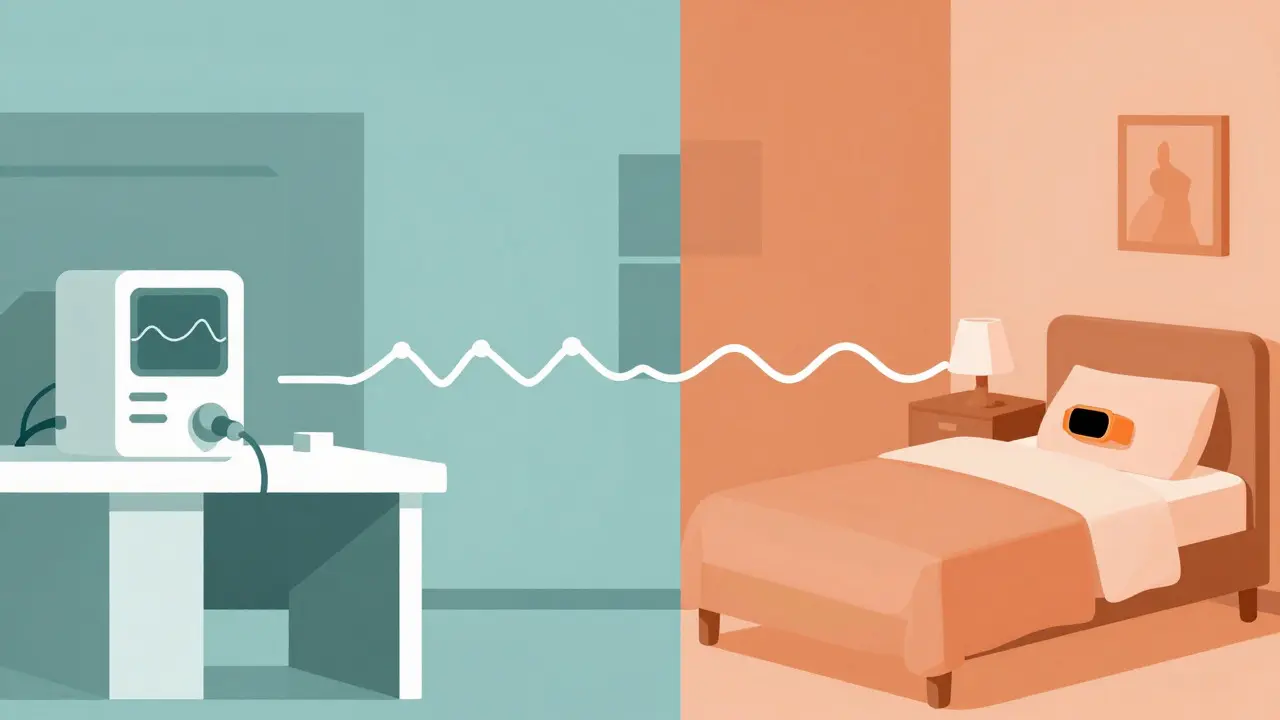
If you have ever been referred for a sleep study, you likely heard about polysomnography (PSG). PSG is the clinical benchmark, measuring brain waves, oxygen levels, heart rate, and muscle activity while you sleep in a lab. It is highly accurate, with agreement rates of 95-99% for determining sleep states. But it comes with major downsides: it is expensive, requires an overnight stay in a clinical setting, and only captures one or two nights of data. That snapshot might not reflect your typical week, especially if you suffer from "first-night effect" where people sleep worse in unfamiliar environments.
Actigraphy fills the gap left by PSG. It allows for long-term monitoring in your natural environment. You can wear the device for weeks or even months, capturing patterns that a single night of lab testing would miss. This makes it particularly valuable for identifying circadian rhythm irregularities, such as delayed sleep phase syndrome, or cases of paradoxical insomnia where patients believe they haven't slept at all despite objective evidence showing otherwise. While actigraphy agrees with PSG only 75-90% of the time for basic sleep/wake determination, its ability to provide continuous, real-world data makes it indispensable for treatment monitoring rather than initial diagnosis.
| Feature | Actigraphy (Wearables) | Polysomnography (Lab Study) |
|---|---|---|
| Accuracy for Sleep/Wake | Moderate (75-90%) | High (95-99%) |
| Duration of Monitoring | Weeks to Months | 1-2 Nights |
| Environment | Home/Natural | Clinical Lab |
| Cost | $99 - $299 (Consumer) / $1,200+ (Clinical) | $1,500 - $3,000+ |
| Best For | Treatment monitoring, circadian rhythms, trends | Diagnosing apnea, parasomnias, specific disorders |
Understanding the Metrics: What the Numbers Mean
When you open your sleep app, you are greeted with a dashboard of numbers. It is easy to get overwhelmed, but focusing on a few key metrics helps you understand your sleep health without obsessing over every detail.
- Sleep Efficiency: This is calculated as (Total Sleep Time / Time in Bed) x 100. A score above 85% is generally considered good. If you spend nine hours in bed but only sleep seven, your efficiency is roughly 78%. Low efficiency often indicates difficulty falling asleep or staying asleep.
- Sleep Onset Latency: This measures how long it takes you to drift off after turning off the lights. An average of 10-20 minutes is normal. If it takes longer than 30 minutes consistently, it may signal insomnia or poor sleep hygiene.
- Wake After Sleep Onset (WASO): This tracks how much time you spend awake after initially falling asleep. Occasional brief awakenings are normal, but WASO exceeding 30-45 minutes per night can disrupt sleep architecture and lead to daytime fatigue.
- Total Sleep Duration: While adults need 7-9 hours, individual needs vary. Your wearable will show you your personal baseline. Deviations from this baseline are more informative than comparing yourself to the general population.
A critical limitation to keep in mind is "motionless wake." If you lie perfectly still while reading in bed or watching TV, the accelerometer may interpret this as sleep. Conversely, if you toss and turn while awake, it might register as light sleep. Newer algorithms are improving this by integrating other data points like heart rate variability and temperature, but the trade-off between sensitivity (detecting true sleep) and specificity (detecting true wake) remains a challenge. Studies show specificity for detecting true wake ranges from 26.9% to 77%, meaning there is always some margin of error.
Choosing the Right Device for Home Tracking
The market for sleep tracking wearables has exploded, with options ranging from basic fitness bands to premium smart rings. Your choice should depend on whether you want casual wellness insights or clinically relevant data for a doctor.
Consumer Wearables, such as the Fitbit Charge 5 or Garmin watches, are accessible and affordable, typically ranging from $99 to $299. They offer convenient features like battery life lasting 4-7 days and Bluetooth connectivity for syncing data to your phone. According to Dr. Michael Grandner, Director of the Sleep and Health Research Program at the University of Arizona, newer consumer models now show 85-90% agreement with research-grade actigraphs for total sleep time. However, marketing claims often overstate diagnostic capabilities, so treat these devices as wellness tools rather than medical instruments.
For those seeking higher precision, Smart Rings like the Oura Ring Generation 3 have gained popularity. Priced around $299, they offer water resistance up to 50 meters and sophisticated sensor arrays that track temperature changes alongside motion. This multimodal approach helps distinguish between actual sleep and motionless wake more effectively than older devices. On the other end of the spectrum, clinical-grade actigraphs like the Philips Respironics Actiwatch Spectrum Plus cost significantly more ($1,200-$1,800) and are usually prescribed by specialists. These devices often require specialized software for analysis and are used in formal treatment protocols.
Best Practices for Accurate Data Collection
Even the best device gives you garbage data if you don't use it correctly. To get reliable results, follow these practical guidelines:
- Wear it on the non-dominant wrist: Most studies recommend wearing the device on your left wrist if you are right-handed. Misplacement can reduce accuracy by up to 22% because dominant hand movements create more noise in the data.
- Be consistent with wear time: Remove the device for no more than two hours per day. Taking it off for showering is fine, but removing it for extended periods reduces data validity by 18% according to recent whitepapers. Consistency is key for establishing a baseline.
- Track for at least 7-14 days: One night of data tells you very little. Sleep varies naturally due to stress, diet, and social activities. A minimum of one to two weeks allows you to see weekly patterns and separate anomalies from trends.
- Keep a sleep diary: Note down caffeine intake, alcohol consumption, exercise, and any stressful events. Correlating these notes with your wearable data helps you identify triggers for poor sleep quality.
Dr. Cathy Goldstein, Associate Professor of Neurology at the University of Michigan, emphasizes that actigraphy provides valuable real-world data but should complement, not replace, clinical evaluation. Use the trends over weeks, not the numbers from a single bad night. Day-to-day variation of 30-45 minutes is normal and not clinically significant.
Common Pitfalls and How to Avoid Them
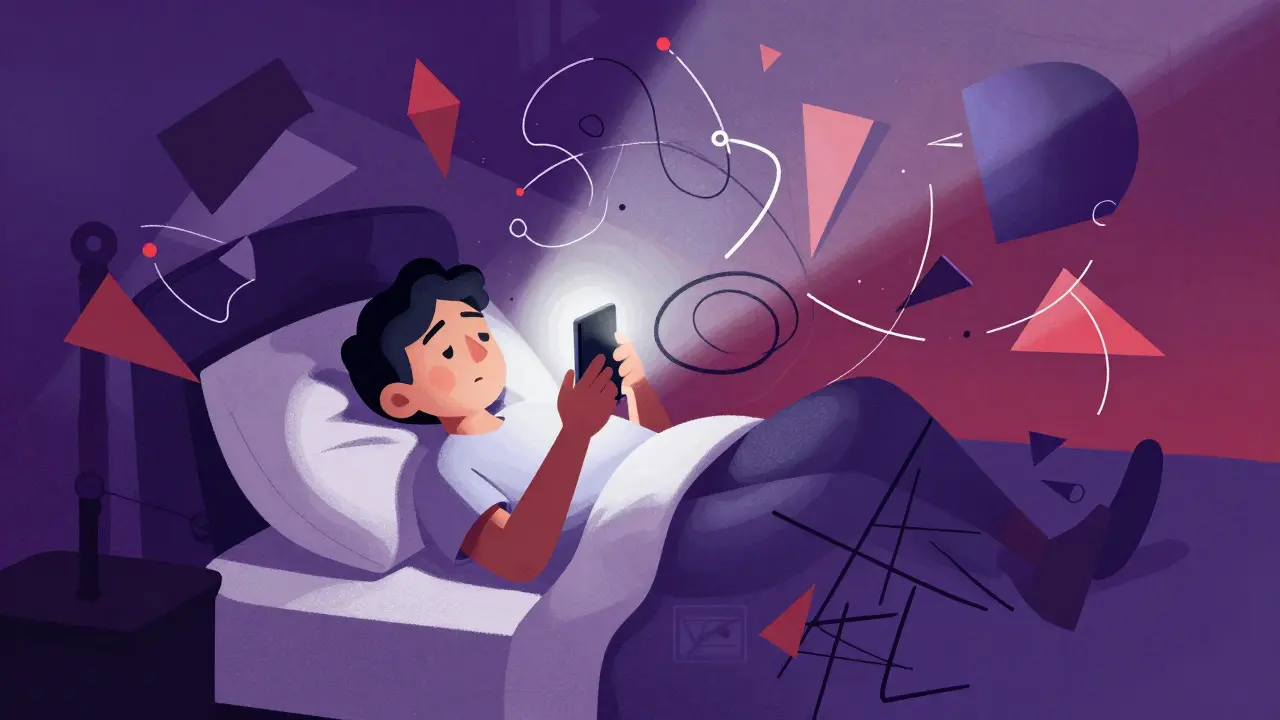
One of the biggest risks of using sleep trackers is developing "orthosomnia," a term coined by Dr. Phyllis Zee to describe sleep anxiety triggered by tracking data. If you check your watch immediately upon waking and see a low score, you might feel anxious, which ironically makes it harder to fall asleep that night. To avoid this, try limiting how often you check your data. Some experts suggest reviewing your sleep stats once a week rather than daily.
Another pitfall is ignoring context. A low sleep efficiency score after a night of partying is expected and not a sign of disorder. Similarly, a high score during a vacation doesn't mean you have cured chronic insomnia. Always look at the broader picture. Additionally, be mindful of data privacy. As noted by security researcher Alex Birsan, most consumer sleep apps transmit raw data without end-to-end encryption. While rare, data breaches can expose sensitive health information. Read the privacy policies of your chosen app and consider using local storage options if available.
Frequently Asked Questions
Is actigraphy accurate enough to diagnose sleep apnea?
Generally, no. While actigraphy can detect disruptions in sleep continuity, it does not directly measure breathing pauses or oxygen desaturation, which are hallmarks of sleep apnea. For a definitive diagnosis of sleep apnea, polysomnography or a home sleep apnea test (HSAT) with respiratory sensors is required. Actigraphy is better suited for monitoring insomnia, circadian rhythm disorders, and treatment progress.
Which wrist should I wear my sleep tracker on?
Most clinicians and manufacturers recommend wearing the device on your non-dominant wrist. If you are right-handed, wear it on your left wrist. This minimizes movement artifacts caused by everyday tasks, leading to more accurate sleep and wake detection.
How long do I need to wear a device to get useful data?
The Sleep Foundation recommends wearing actigraphy devices for 7 to 14 consecutive days to establish a reliable baseline. Shorter periods may capture outliers rather than your typical sleep pattern. Longer durations, such as 30 days, are beneficial for identifying seasonal changes or the impact of lifestyle modifications.
Do smart rings work better than fitness bands for sleep?
Smart rings often provide slightly more detailed data due to their closer proximity to blood vessels, allowing for better heart rate and temperature monitoring. However, for basic actigraphy (motion-based sleep tracking), modern fitness bands are quite comparable. The choice often comes down to comfort, battery life, and preference for additional features like readiness scores or menstrual cycle tracking.
What is orthosomnia?
Orthosomnia is a condition where individuals become overly obsessed with achieving perfect sleep scores, leading to anxiety and ironically worsening their sleep quality. It is a recognized side effect of intensive sleep tracking. Experts advise focusing on overall trends and subjective feelings of restfulness rather than chasing perfect nightly metrics.