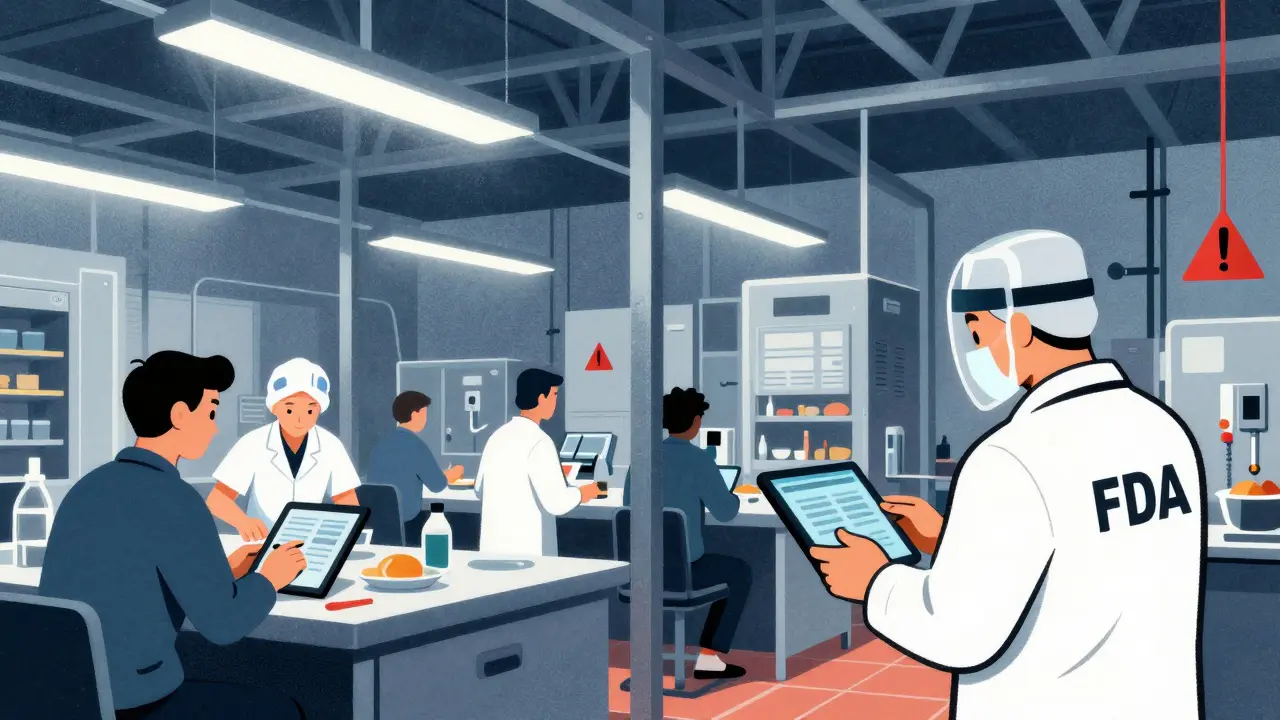
The U.S. Food and Drug Administration doesn’t just watch over food made in America. About 15% of everything Americans eat comes from overseas - from spices in India to seafood in Vietnam, baby food in China, and olive oil in Italy. And if you’re running a factory that sends food to the U.S., you’re now under a much stricter microscope. Starting in 2024, the FDA stopped giving foreign facilities advance notice of inspections. No more warning calls. No more time to clean up, rearrange, or hire translators. If you’re not ready at 8 a.m. on a Tuesday, you’re in violation.
Why the FDA Changed the Rules
For years, American food plants were inspected without warning. Inspectors showed up unannounced, walked through the facility, checked records, and took photos - all without giving the company a heads-up. Meanwhile, foreign factories got weeks of notice. They could schedule the inspection for a slow day, clean the floors, train staff on scripted answers, and even arrange for interpreters. The FDA called it a "double standard." And in May 2024, they ended it. The goal? To make sure every facility - whether in Ohio or Osaka - follows the same rules. If a plant in the U.S. can’t hide problems because inspections are random, then neither can a plant in Bangladesh. The FDA’s new policy says: if you want to sell food in America, you must be ready to show compliance at any moment, day or night, no excuses.What Gets Inspected and How
The FDA doesn’t inspect every single foreign facility. There are over 300,000 registered food plants outside the U.S. That’s too many for 1,200 inspectors to cover. So they use a risk-based system. Three things decide who gets picked:- What you make - High-risk foods like sprouts, shellfish, or infant formula get priority. Low-risk items like canned beans get less attention.
- How you make it - Processes with more steps, chemicals, or temperature controls are riskier. A facility that pasteurizes milk gets more scrutiny than one that just repackages nuts.
- Your record - If your products were denied entry into the U.S. before, you’re on the list. Repeat offenders get flagged fast.
The Legal Power Behind the Inspection
The FDA doesn’t just ask for access. They can demand it - and punish you if you refuse. Under the Federal Food, Drug, and Cosmetic Act (FDCA), the agency has legal authority to enter any facility producing food for U.S. consumption. If you block them, delay them, or hide records, you’re breaking U.S. law. Here’s what counts as a violation:- Refusing entry to an inspector
- Delaying the inspection by claiming "the manager is in a meeting"
- Redacting parts of documents or deleting digital files
- Turning off cameras or shutting down production during inspection
- Limiting where inspectors can go - like saying "you can’t go in the warehouse"
What Foreign Facilities Must Do Now
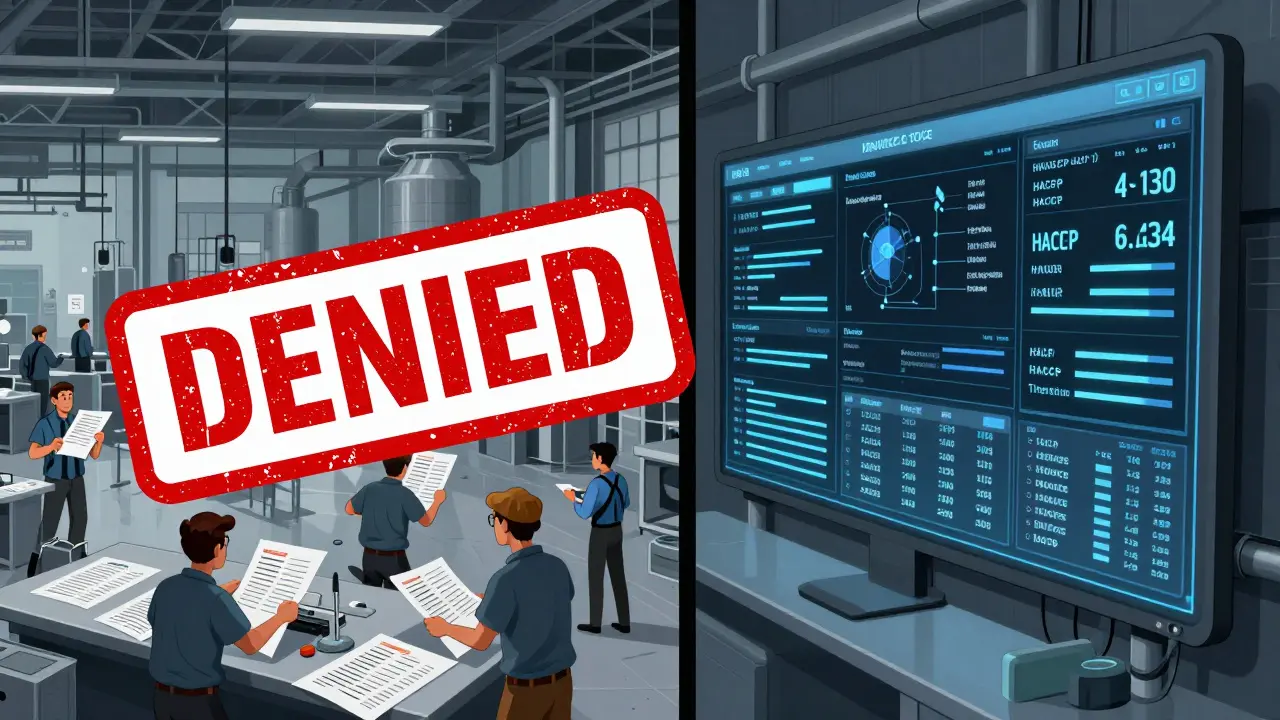
You can’t prepare for an inspection anymore. So you have to be ready all the time. That means changing how you run your business.- Keep records digital and always accessible - Paper files in a locked cabinet won’t cut it. Your HACCP plans, cleaning logs, and test results must be available instantly - even on weekends.
- Hire bilingual staff permanently - No more calling a translator when you hear the FDA is coming. Someone on your team must be fluent in English and trained to answer questions about your processes.
- Run weekly mock inspections - Pretend an inspector just walked in. Can your team produce records in 10 minutes? Can they explain how you control pathogens in your production line? If not, fix it.
- Don’t rely on contractors - If your quality control is outsourced, the FDA will still hold you responsible. You need direct control over your systems.
Who’s Struggling - and Why
Small factories, family-owned businesses, and those in countries with weak food safety infrastructure are feeling the squeeze. A plant in Thailand that exports coconut milk might have a great product but no IT system to store digital records. A factory in Pakistan might have trained staff who speak only Urdu. These aren’t excuses under U.S. law - but they’re real challenges. Some companies are adapting. Larger exporters - like Nestlé or Danone - have global compliance teams and digital platforms that sync data across countries. Smaller players? Many are dropping the U.S. market entirely. Others are hiring U.S.-based consultants to help them get ready. The FDA admits the system isn’t perfect. With 300,000 facilities and only 1,200 inspectors, they can’t cover everyone. But they’re using data smarter. They’re tracking shipment denials, lab test results, and even social media complaints to find the worst offenders.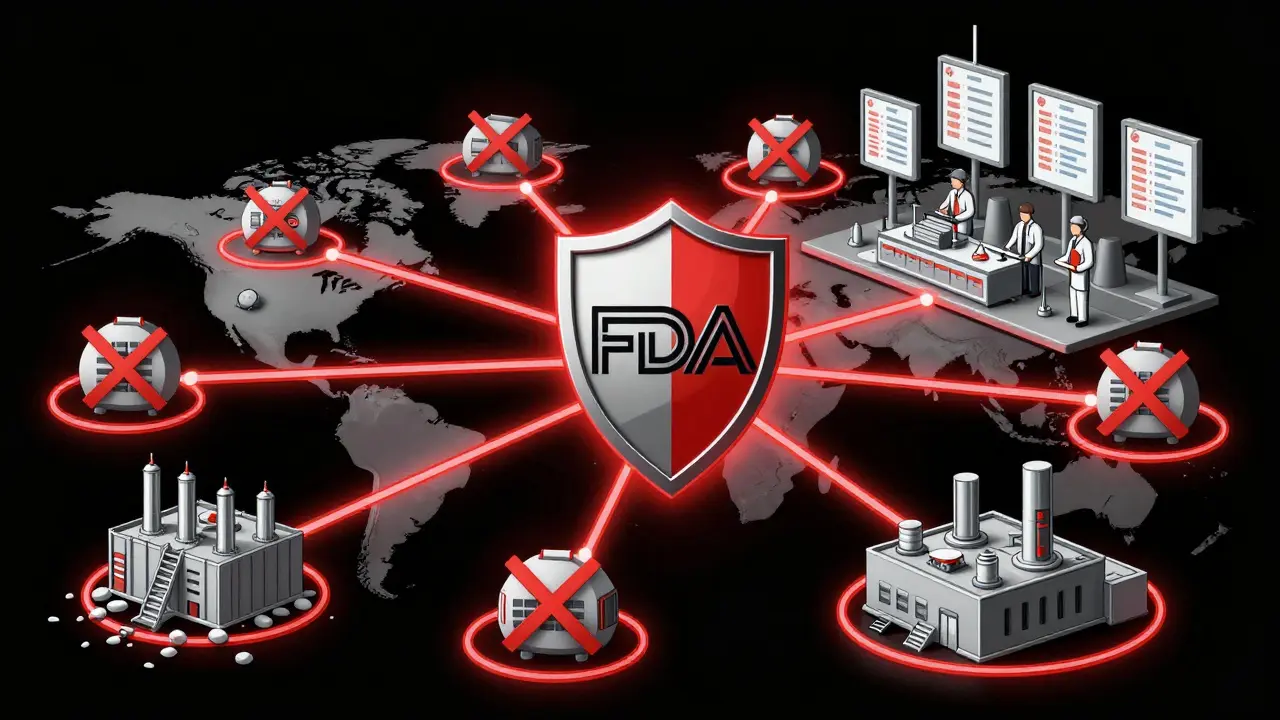




Vince Nairn January 7, 2026
So now they just show up at 8am like a surprise party no one asked for? 🤦♂️ I get the logic but man this is gonna crush small exporters who can't afford 24/7 compliance teams. The FDA's got power but zero empathy for the guy in Bangladesh trying to keep his family's spice shop alive.
Kamlesh Chauhan January 8, 2026
This is why I hate America always acting like the world’s food police 🙄 we make perfect chai here and they think we’re poisoning their babies? They don’t even know what real food safety is they eat frozen pizza for breakfast
Mina Murray January 9, 2026
Let me guess the real reason is they’re scared of Chinese baby food and Indian spices because they can’t control the narrative anymore. This isn’t about safety it’s about control. You think they inspect their own meatpacking plants this rigorously? Nah. This is just another way to protect Big Ag and scare off competition. And don’t even get me started on how they’ll use this to justify tariffs later.
Rachel Steward January 10, 2026
The irony is thick here. The FDA claims they’re leveling the playing field but they’re actually creating a new kind of colonialism. They’re imposing American bureaucratic standards on cultures that have fed their populations safely for centuries using traditional methods. No one’s asking for a permit to ferment fish in Norway or age cheese in Italy. But suddenly a family-run coconut oil plant in Sri Lanka is a national security threat because their digital logs aren’t encrypted in AES-256? This isn’t food safety-it’s cultural imperialism dressed up in compliance jargon.
Jonathan Larson January 10, 2026
While the policy may appear rigid, it reflects a necessary evolution in global food governance. The integrity of the U.S. food supply chain cannot be contingent upon the administrative capacity of foreign producers. Consistency in enforcement is not a sign of arrogance but of responsibility. The challenge lies not in the rule itself, but in the support structures that must accompany its implementation-training, technology transfer, and phased adaptation for SMEs. Without such measures, the policy risks becoming punitive rather than protective.
Alex Danner January 11, 2026
I’ve seen this up close. A buddy runs a small seafood export in Vietnam. He had to buy a whole new server system, hire a bilingual QA guy who speaks English and knows FDA forms inside out, and now does mock inspections every Friday. His costs went up 40%. He’s still in. But his cousin’s spice company in Kerala? They just gave up. No one helped them. No grants. No templates. Just a letter saying ‘you’re not compliant’ and boom-gone. This isn’t fairness. It’s a market purge disguised as regulation.
Katrina Morris January 12, 2026
i think this is actually kind of cool? like if you wanna sell here you gotta play by the rules right? i mean we dont let people drive without licenses so why should food be different? i hope they help small farms though not just punish them
steve rumsford January 13, 2026
so the fda just shows up at some guy’s factory in nepal and he’s like ‘uhhh my translator is on vacation’ and they shut him down? bro that’s wild. imagine if your boss just walked into your house at 8am and started looking through your fridge and laptop. you’d call the cops. but apparently if you’re in bangladesh you just gotta be ready 24/7? this feels like a scam to make big companies look better
LALITA KUDIYA January 14, 2026
i love how america thinks they own food safety 🤭 we’ve been making safe spices for 5000 years and now you want our digital logs? my uncle’s factory uses paper and his grandkids eat it too. but sure lets make him buy a cloud server and hire a lawyer just to sell chili powder to your grocery store
Poppy Newman January 15, 2026
This is actually kinda terrifying but also… kind of fair? 🤔 I mean if I’m eating something from halfway across the world, I want to know it’s not made in a shed with no running water. But the lack of support for small producers? That’s the real tragedy. 🌍💔
Anthony Capunong January 16, 2026
If you can’t meet American standards, you don’t belong in the American market. Period. We don’t let foreign cars in if they don’t meet safety rules. We don’t let foreign drugs in if they’re not FDA-approved. Why should food be any different? This isn’t discrimination-it’s protection. If you want to sell here, you play by our rules. No exceptions. No excuses. America comes first.