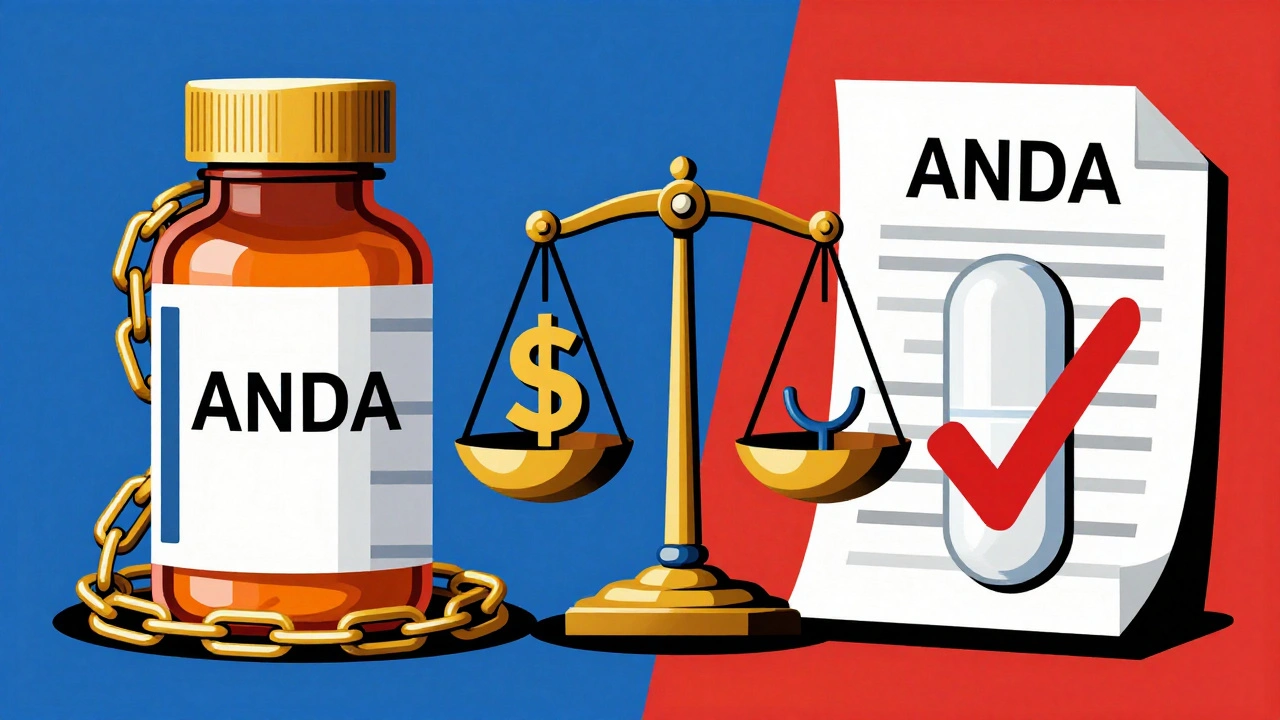
The Hatch-Waxman Act didn’t just change how drugs are approved in the U.S.-it reshaped the entire healthcare system. Before 1984, if you wanted to make a generic version of a brand-name pill, you had to start from scratch. That meant running full clinical trials, proving safety and effectiveness all over again-even though the original drug had already been approved by the FDA. It cost about $2.6 million (in 1984 dollars) and took years. Most companies couldn’t afford it. As a result, generics made up only 19% of prescriptions. Today, they make up over 90%. That shift didn’t happen by accident. It happened because of one law.
What the Hatch-Waxman Act Actually Did
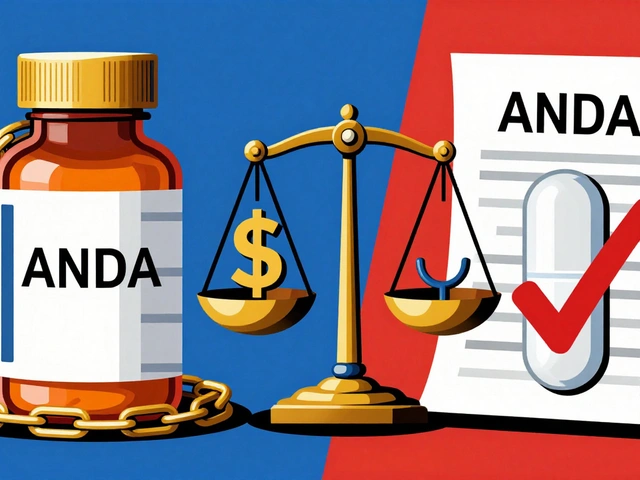
The full name is the Drug Price Competition and Patent Term Restoration Act of 1984. It’s named after its two sponsors: Senator Orrin Hatch and Representative Henry Waxman. But it’s not about politics. It’s about balance. The law had two goals: protect innovation and speed up access to cheap drugs. It didn’t favor big pharma or generic makers-it gave both a fair shot. Before Hatch-Waxman, generic companies had no legal shortcut. They couldn’t use the brand-name drug’s data. They had to build their own evidence from the ground up. The Act changed that by creating the Abbreviated New Drug Application, or ANDA. This is the paperwork generic manufacturers now file. It doesn’t need new clinical trials. Instead, it proves one thing: bioequivalence. That means the generic version delivers the same amount of medicine into your bloodstream at the same rate as the brand-name drug. The FDA requires the blood concentration levels to be within 80-125% of the original. That’s not a guess. It’s science.The Orange Book: The Secret Map to Generic Approval
The FDA doesn’t just approve drugs. It keeps a public list called the Orange Book-officially titled Approved Drug Products with Therapeutic Equivalence Evaluations. Every brand-name drug that’s approved gets listed here, along with every patent tied to it. If a patent expires, the generic can enter. If it’s still active, the generic applicant has to deal with it. Here’s where it gets tricky. When a company files an ANDA, they must choose one of four paragraph certifications about the patents:- Paragraph I: No patents listed.
- Paragraph II: Patents have expired.
- Paragraph III: We’ll wait until the patent expires.
- Paragraph IV: This patent is invalid-or we won’t break it.
How Generic Companies Win-and Lose
Getting to market isn’t easy. Filing an ANDA costs between $5 million and $10 million. It takes 3 to 4 years. And if you file a Paragraph IV certification, there’s a 90% chance you’ll get sued. The brand-name company gets a 30-month automatic stay on approval. That’s a legal pause. The lawsuit can take 31 months on average. In practice, that means the generic drug might not hit shelves until years after the patent was supposed to expire. That’s where “pay-for-delay” comes in. Sometimes, the brand company pays the generic maker to delay their entry. It sounds illegal-and in many cases, it is. The FTC has challenged dozens of these deals. But they’re hard to prove. The law doesn’t ban them outright. It just gives the government tools to investigate. On the flip side, the first generic to file gets a huge advantage. Once their 180-day exclusivity starts, they can capture up to 80% of the market. Prices drop by 80-90%. A drug that costs $300 a month might fall to $20. That’s life-changing for people on Medicare, Medicaid, or without insurance.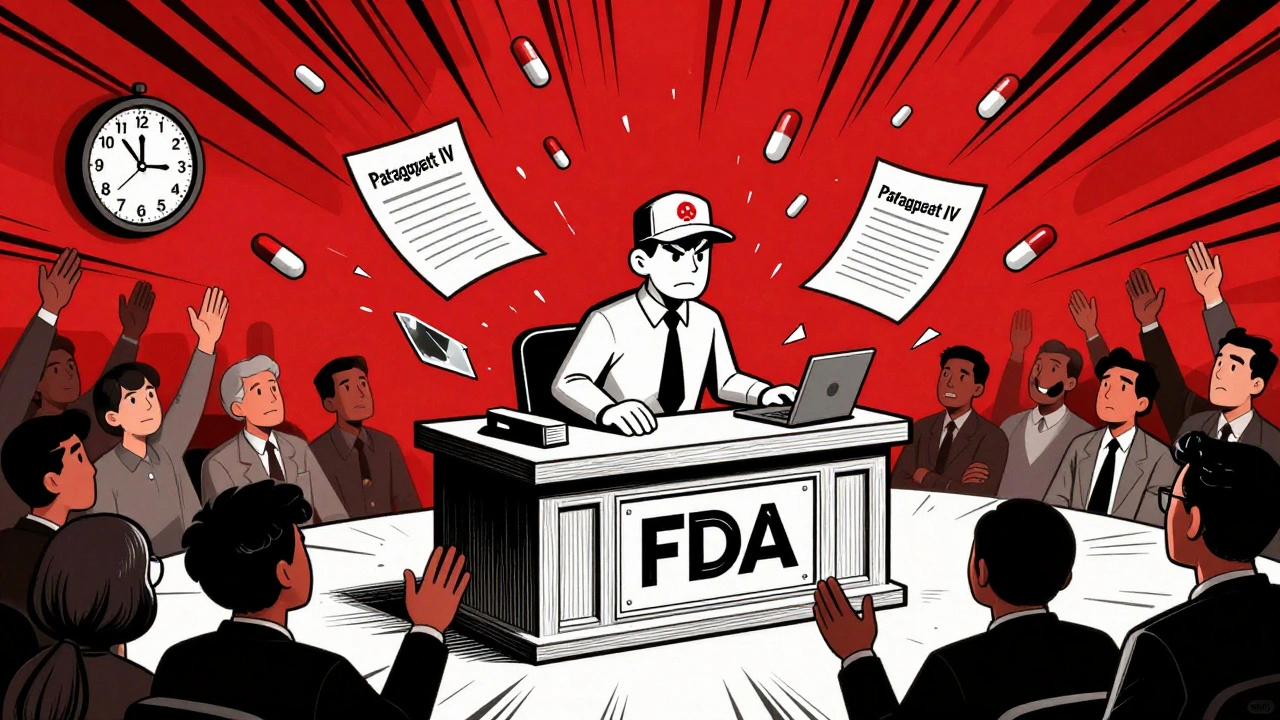
Why This Law Saves Billions
The numbers don’t lie. Over the past decade, generic drugs have saved the U.S. healthcare system $1.7 trillion. That’s $158 billion a year. The Congressional Budget Office says it. The FDA says it. Even PhRMA, the big pharma lobby, admits it. In 2023, the FDA approved 746 new generic drugs. That’s more than two every day. And the average review time? Down from 36 months in 2012 to just 18 months today-thanks to the Generic Drug User Fee Amendments (GDUFA). The system is faster, leaner, and more predictable. But the real win is in prescriptions. In 1984, 19% of prescriptions were generic. Today, 78% of Medicare Part D prescriptions are filled with generics. That saves the average Medicare beneficiary $3,200 a year. For many, that’s the difference between taking their medicine or skipping doses.Where the System Falls Short
The Hatch-Waxman Act was built for small-molecule pills-like aspirin, statins, or antibiotics. It wasn’t designed for biologics-complex drugs made from living cells, like insulin or rheumatoid arthritis treatments. That’s why Congress passed the Biologics Price Competition and Innovation Act (BPCIA) in 2010. It created a separate approval path for biosimilars, but it’s slower and less competitive. Fewer biosimilars enter the market, and prices don’t drop as fast. Another problem? “Patent thickets.” Brand companies file dozens of secondary patents-on packaging, dosing schedules, or inactive ingredients-to keep generics out. One drug might start with one patent and end up with 3.5 by the time generics try to enter. The law doesn’t stop this. It just gives generics a way to challenge each one. And then there’s the issue of drug shortages. In 2023, 283 generic drugs were in short supply. Many are old, cheap, low-margin drugs made overseas. When a factory fails inspection, or a supplier cuts back, there’s no backup. The system works great for high-volume drugs. But for the ones that barely make a profit? It’s fragile.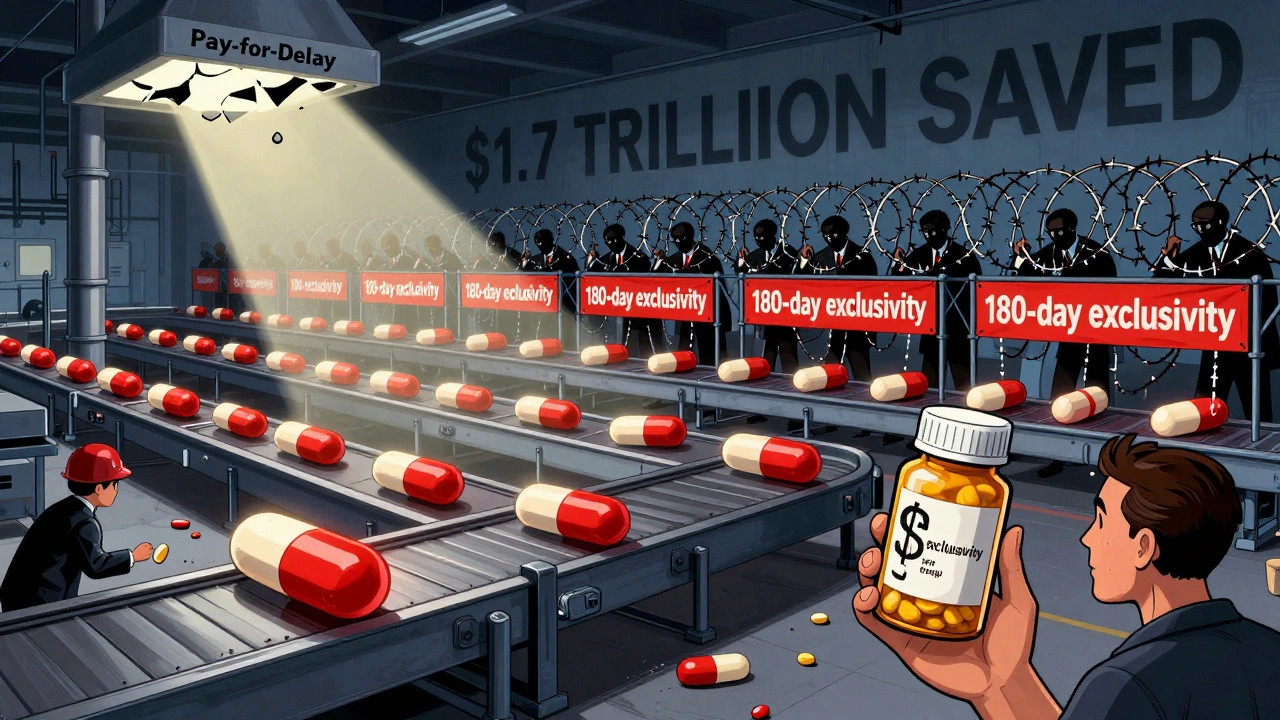
What’s Next for Generic Drugs?
The FDA is pushing harder to stop “refusal to supply” practices. Some brand companies refuse to sell samples to generic makers-so the generics can’t test bioequivalence. The CREATES Act of 2019 made this illegal. The FDA is now fining companies that block access. Congress is also looking at reforming patent challenges. There’s pressure to shorten the 30-month stay, limit patent thickets, and make pay-for-delay deals easier to prosecute. The goal? More generics, faster. Meanwhile, the industry is adapting. Companies like Teva, Viatris, and Sandoz now have entire teams dedicated to Hatch-Waxman strategy. They track patents, time filings, and prepare for litigation. It’s not just science anymore. It’s legal chess.Why This Matters to You
You might never hear the name “Hatch-Waxman Act.” But if you’ve ever filled a prescription for a $5 generic instead of a $300 brand-name drug, you’ve felt its impact. It’s the reason your insulin, blood pressure pill, or antibiotic costs what it does. It’s the reason your elderly parent can afford their meds. It’s why the U.S. spends less on drugs than any other developed country. The system isn’t perfect. It’s complex. It’s fought over in courtrooms and Congress. But it works. It’s the reason 90% of brand-name drugs face generic competition within a year of patent expiration. And it’s the reason the U.S. generic drug market is now worth $70 billion. The Hatch-Waxman Act didn’t just lower prices. It gave people back control over their health.What is the Hatch-Waxman Act?
The Hatch-Waxman Act, officially the Drug Price Competition and Patent Term Restoration Act of 1984, is a U.S. federal law that created a streamlined pathway for generic drug approval while extending patent protection for brand-name drugs. It allows generic manufacturers to use the brand’s safety data via the Abbreviated New Drug Application (ANDA), cutting development time and cost, and introduces incentives like 180-day exclusivity for first-to-file generic challengers.
How does the ANDA process work?
The ANDA process lets generic drugmakers prove their product is bioequivalent to a brand-name drug without repeating clinical trials. They must show identical active ingredients, strength, dosage form, and route of administration. They also submit pharmacokinetic data proving the generic delivers the same amount of drug into the bloodstream at the same rate, with 90% confidence intervals between 80% and 125% of the brand’s levels.
What is the Orange Book and why does it matter?
The Orange Book is the FDA’s official list of approved drug products with their therapeutic equivalence ratings and associated patents. Generic manufacturers must check it to know which patents are active. If a patent is listed, the generic applicant must certify whether it’s expired, invalid, or won’t be infringed. This determines if they can enter the market and whether they risk a lawsuit.
What is Paragraph IV certification?
Paragraph IV certification is a legal challenge filed by a generic drugmaker claiming that a brand-name drug’s patent is invalid or won’t be infringed. This triggers a 45-day window for the brand company to sue. If they do, the FDA can’t approve the generic for up to 30 months. But the first filer gets 180 days of market exclusivity, making it a high-stakes race.
Why do generic drug prices drop so much after approval?
When the first generic enters the market, it often captures 80% of sales within a year. Competition drives prices down 80-90% compared to the brand. After multiple generics enter, prices stabilize at 10-20% of the original cost. This is the direct result of Hatch-Waxman’s incentive structure: fast entry, high volume, low margins.
Does the Hatch-Waxman Act apply to biologics?
No. The Hatch-Waxman Act was designed for small-molecule drugs like pills and injections. Biologics-complex drugs made from living cells-are covered under a separate law, the Biologics Price Competition and Innovation Act (BPCIA) of 2010. The BPCIA process is longer, more complex, and has fewer incentives for competition, which is why biosimilars enter the market slower and cost more than traditional generics.
What are pay-for-delay deals?
Pay-for-delay deals happen when a brand-name drugmaker pays a generic company to delay launching its cheaper version. These are anti-competitive agreements that keep prices high. While not always illegal, they’ve been challenged by the FTC and Congress. The Supreme Court has ruled they can violate antitrust laws if they’re unreasonable.
How has the Hatch-Waxman Act affected healthcare costs?
Over the past decade, generic drugs enabled by Hatch-Waxman have saved the U.S. healthcare system $1.7 trillion. The Congressional Budget Office estimates annual savings of $158 billion. In 2023, generic drugs accounted for 90% of prescriptions but only 23% of total drug spending. This system keeps medications affordable for millions of Americans.



Larry Lieberman December 7, 2025
This is wild. I had no idea generics were this regulated. 🤯 The 180-day exclusivity thing is straight-up mafia-level strategy. Someone’s gotta be camping outside the FDA with a sleeping bag and a thermos.
Sabrina Thurn December 9, 2025
The ANDA pathway is a masterclass in regulatory efficiency. By leveraging the innovator’s safety and efficacy data via bioequivalence, the FDA reduces redundant clinical burden while maintaining therapeutic equivalence thresholds within the 80–125% Cmax and AUC confidence interval. It’s not just cost-effective-it’s scientifically rigorous.
iswarya bala December 10, 2025
this law saved my dads life honestly. he takes blood pressure meds and they used to cost 300$ now its like 5$ 💙
Lisa Whitesel December 10, 2025
Let’s be real. The system is rigged. Pay-for-delay? Patent thickets? You call this competition? Big Pharma just writes the rules and the FDA nods along. And don’t get me started on how they game the Orange Book with 300 patents on a single pill.
Rich Paul December 11, 2025
bro the ANDA process is literally just proving you can copy a pill and call it yours. 90% of the time the inactive ingredients are different but no one cares because it 'works'. the real win is how they exploit paragraph iv like it's a video game leaderboard. first to file = free money for 6 months. genius. or scam? you decide.
Ruth Witte December 12, 2025
Imagine if we applied this model to everything-like generics for laptops or cars 😭 Imagine a $200 iPhone clone that works just as good. We could end poverty in 5 years. 🚀❤️
Ryan Brady December 12, 2025
This whole thing is why America still leads. We don’t just make drugs-we engineer systems to crush monopolies and save lives. No other country has the guts to do this. Keep it up, USA. 🇺🇸🔥
Andrea Beilstein December 13, 2025
There’s a quiet poetry in how this law balances innovation with access. The patent term restoration isn’t a gift to pharma-it’s a covenant. You get time to profit so you can risk billions on research. But then you let the rest of us in. That’s not capitalism. That’s civilization.
Katherine Rodgers December 13, 2025
so the first generic company to file a paragraph iv gets 180 days of monopoly... and the brand pays them to delay? so its a monopoly then a payola deal? wow. just wow. this is like a bad episode of house of cards but with more pills
Raja Herbal December 15, 2025
In India we make half the world’s generics. You guys have the law. We have the factories. And yet somehow, your insulin still costs more than our rent. 🤷♂️
Iris Carmen December 15, 2025
i just looked up my blood pressure med and its a generic made in bangladesh. its 3 bucks. i used to pay 120. i feel like i won the lottery. also my cat is fine. no side effects. so yeah. hatch-waxman = hero
Noah Raines December 17, 2025
The 30-month stay is a joke. It’s not a legal pause-it’s a corporate delay tactic. I’ve seen generics approved in 18 months after litigation ends. That’s 18 months of people overpaying. That’s not justice. That’s greed in a lab coat.
Delaine Kiara December 18, 2025
I swear to god if one more person says 'it's not perfect but it works' I'm going to scream. It's not 'working'-it's surviving. The system is held together by duct tape, lawsuits, and the sheer will of pharmacists who refuse to let people die because they can't afford their meds. And don't even get me started on the 283 drug shortages last year. That's not a glitch. That's a collapse waiting to happen.
Angela R. Cartes December 19, 2025
I mean... it's fine. I guess. Like, I get it's important. But honestly? I just take my pill. 🤷♀️
Courtney Black December 19, 2025
The real tragedy isn’t the pay-for-delay deals or the patent thickets-it’s that the people who need these drugs the most are the ones least likely to understand how they got here. They don’t know about ANDAs or Paragraph IV or bioequivalence. They just know they can’t afford the brand. And somehow, in a country that spends $1.7 trillion on healthcare, that’s still the most radical thing about this whole system: the fact that a pill can be cheaper than a latte and still save your life. And that’s not just policy. That’s grace.