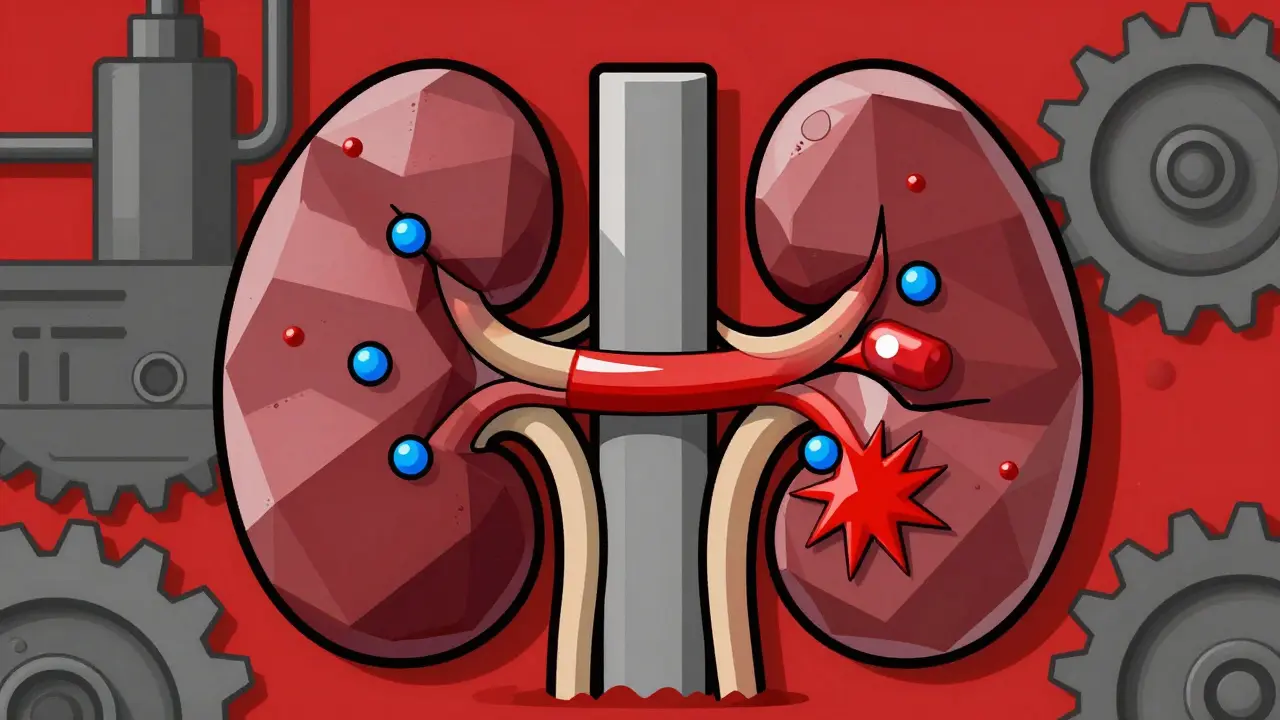
Lithium & NSAID Risk Assessment Tool
This tool helps you understand your personal risk of kidney damage and lithium toxicity when taking NSAIDs while on lithium therapy. Please provide information about your situation below to get a personalized risk assessment.
Personal Risk Factors
Your Risk Assessment
When you're on lithium for bipolar disorder, you're already managing a delicate balance. Your mood stabilizes, but your body is working hard to keep lithium levels just right. Now add a common painkiller like ibuprofen or naproxen - and suddenly, that balance can shatter in days, sometimes hours. This isn't a rare side effect. It's a well-documented, predictable, and dangerous interaction that sends thousands to the hospital every year. The problem? Most people - including many doctors - don't realize how fast and how hard this combo can hit the kidneys.
How Lithium and NSAIDs Work Together to Hurt Your Kidneys
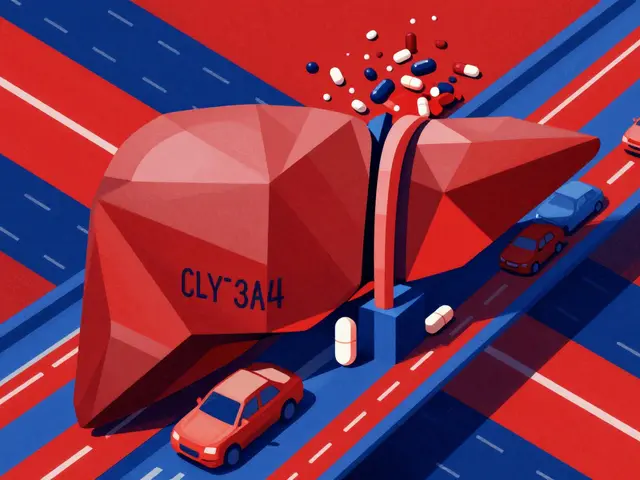
Lithium doesn't just float around in your blood. Your kidneys filter it out every day. That’s why doctors check your lithium levels regularly - too high, and you get toxicity; too low, and your mood crashes. NSAIDs - the class of drugs that includes ibuprofen, naproxen, and diclofenac - block enzymes in your kidneys called COX-1 and COX-2. These enzymes make prostaglandins, chemicals that help keep blood flowing to your kidneys. When NSAIDs block them, your kidneys get less blood. That means they can't filter lithium as well. The result? Lithium builds up. Studies show lithium levels can jump 25% to 60% within just 48 hours of starting an NSAID. That’s not a small bump. That’s enough to push someone from a safe level of 0.6 mmol/L into the toxic range of 1.5 mmol/L or higher. And it doesn’t take long. One patient in a 2022 case series started taking ibuprofen for a headache and was hospitalized with confusion, tremors, and kidney failure three days later. But it’s not just about lithium levels. The damage is double-layered. Lithium itself is toxic to kidney cells. It interferes with how those cells handle water and salt. NSAIDs make it worse by cutting off blood flow. Together, they create a perfect storm: less lithium getting cleared, and more damage happening where it’s supposed to be cleared. This isn’t just a temporary spike - it can lead to permanent kidney damage, especially if you’re over 65, have high blood pressure, or already have reduced kidney function.Not All NSAIDs Are Created Equal
If you’re told to avoid NSAIDs while on lithium, it’s easy to think, “But I just need a little pain relief.” The truth? Some NSAIDs are far riskier than others. Indomethacin is the worst offender - it can spike lithium levels by 40% to 60%. Piroxicam isn’t far behind. Ibuprofen and naproxen? They’re still dangerous, raising levels by 20% to 30%. Even aspirin, which many assume is safe, can increase lithium levels by up to 15% if taken regularly. Celecoxib (Celebrex) is often marketed as a “kidney-friendly” NSAID, but it’s not safe with lithium. In people with existing kidney issues, it still pushes lithium levels up by 10% to 15%. That’s enough to tip someone into toxicity. The only NSAID with minimal interaction is low-dose aspirin used for heart protection - and even then, caution is needed. The bottom line: if you’re on lithium, no NSAID is truly safe. The risk isn’t about the dose - it’s about the class. Even one pill can be enough.What Happens When Toxicity Strikes
Lithium toxicity doesn’t always start with a bang. It creeps in. Early signs are easy to miss: slight hand tremors, mild nausea, or feeling more tired than usual. These are often blamed on stress, aging, or the bipolar disorder itself. But if you’ve recently taken an NSAID - even a single dose - these symptoms could be your body screaming for help. As levels climb, symptoms get worse: muscle weakness, slurred speech, confusion, blurred vision, and severe diarrhea. At toxic levels, you can develop seizures, coma, or permanent brain damage. Kidney damage is just as serious. Acute kidney injury (AKI) is common. A 2023 study found that lithium users who took NSAIDs were over three times more likely to suffer AKI than those who didn’t. The highest risk? The first 30 days after starting the NSAID. Worse, this damage can stick around. In one study of 17 hospitalized patients with lithium-NSAID toxicity, 35% ended up with permanent kidney damage - a drop in kidney function of 40% or more. That’s not reversible. That’s a lifelong condition.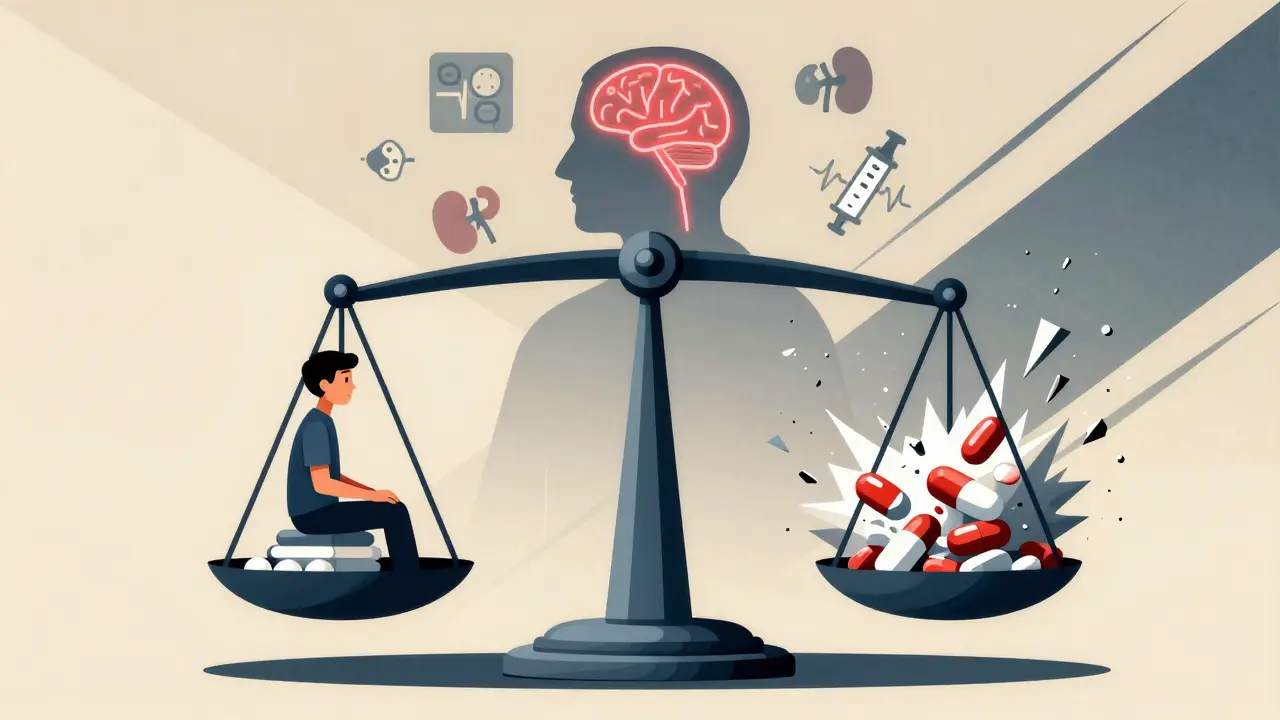
Who’s Most at Risk - And Why
This isn’t just a problem for young adults. The biggest group hit by lithium-NSAID toxicity is older adults. Why? Because kidneys naturally slow down as we age. By 65, most people have lost 30% to 50% of their kidney function compared to their 20s. That means even a small drop in blood flow from an NSAID can push lithium into the danger zone. Patients with diabetes, high blood pressure, or heart failure are also at higher risk. These conditions already strain the kidneys. Adding NSAIDs and lithium? It’s like turning up the pressure on a worn-out pipe. Another hidden risk? Seeing multiple doctors. A 2023 study found that nearly half of lithium users who got an NSAID prescription had seen three or more providers in the past year. One doctor knows about your lithium. The other - the one you saw for your back pain - doesn’t. They write the prescription. You take it. No one connects the dots. And it’s not just patients who are unaware. A national survey found that only 58% of primary care doctors correctly identified NSAIDs as high-risk for lithium users. That’s a scary gap.What to Use Instead of NSAIDs
You need pain relief. You don’t need kidney failure. So what’s safe? Acetaminophen (Tylenol) is the clear first choice. It doesn’t affect kidney blood flow or lithium clearance. Studies show no significant change in lithium levels when taken with acetaminophen. But don’t go overboard - stick to 3,000 mg per day max to avoid liver damage. If acetaminophen isn’t enough, tramadol is a second-line option. It’s not perfect - it can cause dizziness and constipation - but it doesn’t harm the kidneys the way NSAIDs do. Start low: 25 mg once a day, and increase slowly under supervision. For severe, short-term pain - like after surgery - some doctors may allow a very brief (3- to 5-day) course of an NSAID. But only if:- You’re well-hydrated (drink 3 liters of water a day)
- Your lithium level is checked before and 48 hours after starting
- Your kidney function is monitored weekly
- You’re not over 65 or already have kidney issues
What Your Doctor Should Be Doing
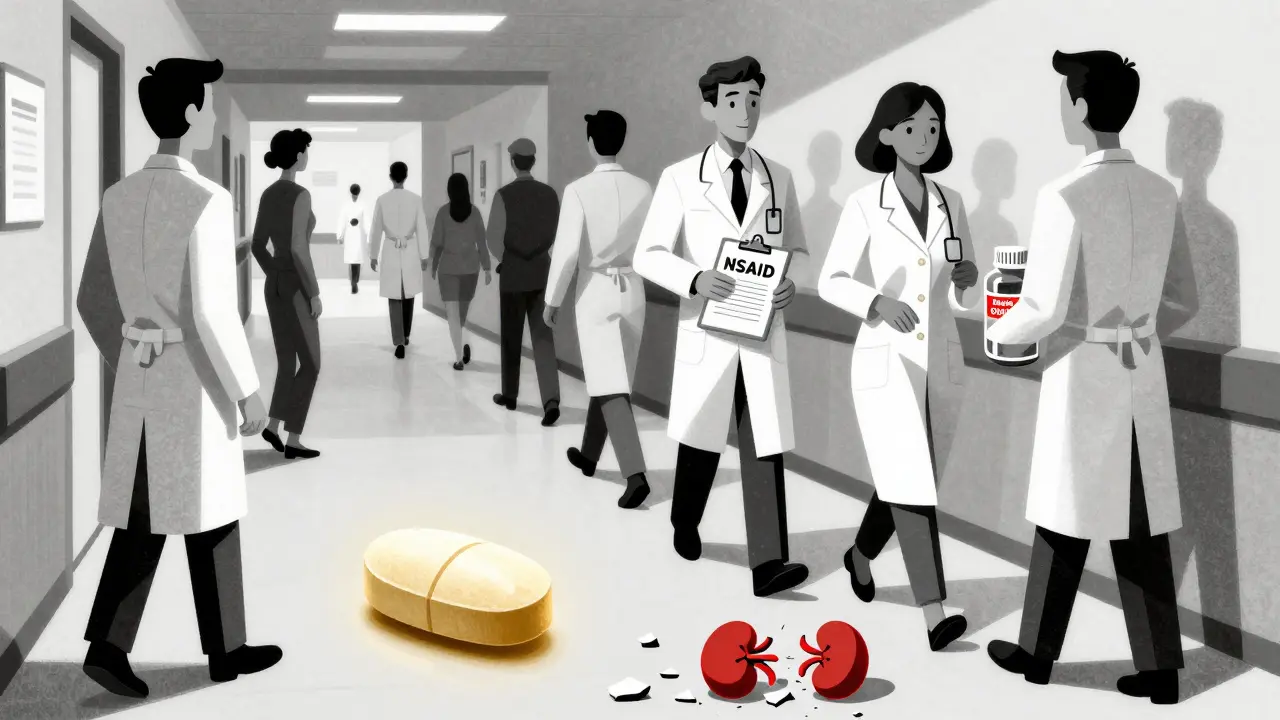
If you’re on lithium, your doctor should be treating NSAID use like a red alert. The American Society of Nephrology and the European Psychiatric Association both say the same thing: avoid NSAIDs completely if possible. If you absolutely need one, you need close monitoring. That means:- Checking your lithium level 48 to 72 hours after starting any NSAID
- Testing your kidney function (creatinine and eGFR) at least once a week during the first month
- Reducing your lithium dose by 25% to 50% if you’re on an NSAID long-term
- Documenting the risk in your chart and giving you a written warning
What You Can Do Right Now
If you’re on lithium:- Never take an NSAID without talking to your psychiatrist or nephrologist first
- Keep a list of all your medications - including over-the-counter pills - and share it with every doctor you see
- Ask: “Is this safe with lithium?” before accepting any new prescription or OTC drug
- Know the early signs of toxicity: tremors, confusion, nausea, frequent urination, or dizziness
- If you’ve taken an NSAID and feel off, get your lithium level checked immediately - don’t wait
The Bigger Picture
This isn’t just about one drug interaction. It’s about how our healthcare system fails patients. Electronic alerts in hospitals often miss this risk. Prescriptions get written by doctors who don’t know the full picture. Patients are left to connect the dots themselves. The FDA added a boxed warning to lithium labels in 2021. The European Medicines Agency now recommends hard stops in prescribing systems. But adoption is uneven. In some places, co-prescribing has dropped by over 60%. In others, it’s barely budged. And the need is growing. More than 65% of long-term lithium users are now over 50. Most have arthritis, back pain, or other chronic conditions. They need relief. But they can’t afford to lose their kidneys. The answer isn’t to stop using lithium - it’s one of the most effective drugs for preventing suicide in bipolar disorder. The answer is to stop treating NSAIDs like harmless painkillers. They’re not. Not when lithium is in the mix.What’s Next?
Researchers are testing new drugs that protect kidney blood flow without interfering with lithium clearance. Early results look promising. But until then, the safest choice is simple: avoid NSAIDs. Use acetaminophen. Talk to your doctor. Monitor your levels. Stay hydrated. Your kidneys can’t warn you when they’re failing. But you can. And you should.Can I take ibuprofen if I’m on lithium?
No, you should avoid ibuprofen while on lithium. It can raise lithium levels by 20% to 30%, increasing your risk of toxicity and kidney damage. Even a single dose can be dangerous, especially if you’re older or have existing kidney issues. Use acetaminophen instead for pain relief.
How quickly can lithium toxicity happen with NSAIDs?
Lithium toxicity can develop within 24 to 72 hours of starting an NSAID. The highest risk is in the first 30 days. Symptoms like tremors, confusion, nausea, or dizziness should be treated as medical emergencies if you’ve taken an NSAID recently.
Is celecoxib safe with lithium?
No, celecoxib is not safe with lithium. While it’s less risky than other NSAIDs, it still increases lithium levels by 10% to 15%, especially in people with reduced kidney function. It should be avoided unless absolutely necessary and only under close medical supervision.
What pain reliever is safest with lithium?
Acetaminophen (Tylenol) is the safest option. It doesn’t affect lithium levels or kidney function. Stick to no more than 3,000 mg per day to protect your liver. Tramadol may be used for stronger pain, but only under doctor supervision.
How often should lithium levels be checked if I take an NSAID?
If you must take an NSAID, lithium levels should be checked 48 to 72 hours after starting it, and again after one week. Kidney function tests (creatinine and eGFR) should be done weekly for at least four weeks. Your doctor may also reduce your lithium dose by 25% to 50% during this time.
Can the kidney damage from lithium and NSAIDs be reversed?
Sometimes, if caught early, kidney function can improve after stopping the NSAID and adjusting lithium. But in many cases - especially with repeated exposure or in older adults - the damage is permanent. Studies show up to 35% of patients with severe toxicity develop lasting kidney impairment.
Why don’t doctors always warn patients about this?
Many doctors, especially those outside psychiatry, aren’t trained to recognize this interaction. A national survey found only 58% of primary care providers knew NSAIDs were high-risk with lithium. Electronic alerts often fail to catch it, and patients may not mention OTC painkillers during visits. This creates dangerous gaps in care.
Are there any new treatments to prevent this interaction?
Yes. A 2023 clinical trial tested a new drug that protects kidney blood flow without affecting lithium clearance. Early results showed an 87% reduction in lithium level spikes. While not yet available, this points to future options. Until then, avoiding NSAIDs remains the only proven strategy.


Jason Xin January 30, 2026
I’ve been on lithium for 12 years. Never touched an NSAID. Learned the hard way after my cousin ended up in the ER with tremors and confusion. Doc said it was a 40% spike in lithium after one ibuprofen. Scary stuff. I just take Tylenol now. No drama.
Also, if you’re over 50 and on lithium? Don’t even think about it. Your kidneys aren’t what they used to be. Period.
Yanaton Whittaker January 31, 2026
AMERICA NEEDS TO STOP BEING SO WEAK. If you can’t handle a little pain without breaking your kidneys, maybe you shouldn’t be on lithium in the first place. NSAIDs are LEGAL, they’re CHEAP, and they WORK. Stop being a liability. Take responsibility. Or move to Sweden and cry about it.
🔥💊 #FreePainRelief
Kathleen Riley February 1, 2026
It is an incontrovertible fact that the pharmacokinetic interplay between lithium and nonsteroidal anti-inflammatory agents constitutes a profound and underappreciated threat to renal homeostasis. The prostaglandin-mediated vasodilatory mechanism, essential for glomerular perfusion, is pharmacologically inhibited by COX-1/2 suppression-thereby precipitating a cascade of tubular dysfunction and reduced lithium clearance.
One is compelled to interrogate the epistemological foundations of modern prescribing practices, wherein symptom management is prioritized over systemic integrity. The commodification of analgesia has eclipsed the sanctity of physiological balance. One must ask: at what cost do we normalize pharmacological negligence?
Holly Robin February 2, 2026
EVERYTHING IS A LIE. The FDA doesn't care. Your doctor doesn't care. Big Pharma paid off the guidelines. They want you dependent. They want you sick. Acetaminophen? That's just the gateway drug. Wait till you find out Tylenol causes liver damage AND it's linked to autism in kids born to moms who took it while pregnant. NSAIDs? They're the scapegoat. The real villain? Lithium itself. It's a mind control chemical. They put it in the water to keep us docile. You think this is about kidneys? Nah. It's about control.
YOU WERE NEVER TOLD THE TRUTH. SHARE THIS BEFORE THEY DELETE IT.
⚠️ #LithiumIsTheDrug #BigPharmaLies #WakeUpSheeple
Shubham Dixit February 3, 2026
India has 1.4 billion people and we still manage to have better medical awareness than this. In our villages, grandmas know that ibuprofen and mood stabilizers don’t mix. They use turmeric, ginger, and rest. No pills. No hospital bills. No confusion. Here in the West, you have PhDs prescribing painkillers like candy and then blaming the patient when things go wrong. You have technology that can track your mood, your sleep, your heart rate - but you can’t build an alert system that says, ‘Hey, this guy is on lithium, don’t give him naproxen.’
This isn’t a medical problem. This is a cultural failure. You treat your body like a machine you can upgrade with apps, but you forget it’s a living organism that remembers every mistake. We need to go back to wisdom, not just data. We need to listen to elders, not just algorithms.
KATHRYN JOHNSON February 3, 2026
Stop. Just stop. This is not a suggestion. This is a medical emergency waiting to happen. If you are taking lithium and have taken any NSAID in the last 30 days - even one pill - you are at risk. You need a creatinine test today. You need a lithium level checked. Do not wait for symptoms. Symptoms mean it’s already too late. Your doctor should have warned you. If they didn’t, find a new one. This is not negotiable.
Sazzy De February 3, 2026
My mom’s on lithium and she took ibuprofen for her knee last year. Didn’t know any better. Got really dizzy one morning. Thought it was just old age. Turns out her lithium was sky high. She’s fine now, but we had to go to the ER.
Just tell people. Just say it plain. Don’t overcomplicate it. If you’re on lithium, don’t take ibuprofen. Tylenol is fine. If you’re not sure, ask. It’s not a dumb question. It’s a life saver.
Love you guys. Stay safe.
Gaurav Meena February 4, 2026
Bro, I’m from India and I’ve seen so many people suffer because they don’t know this. My uncle was on lithium for bipolar and took diclofenac for back pain. Ended up in ICU for 10 days. Kidneys nearly gave out.
But here’s the thing - it’s not just about avoiding NSAIDs. It’s about community. Talk to your family. Tell your friends. Post it on WhatsApp groups. Make a simple meme: ‘Lithium + Ibuprofen = ER Trip’
Education saves lives. Not just doctors. We all can be the warning system.
Stay safe, stay informed, and pass this on ❤️
- Gaurav, mental health advocate
Jodi Olson February 5, 2026
What is safety if not the quiet act of choosing not to harm? We have built systems that optimize for speed, for profit, for convenience - and in doing so, we have forgotten that the human body is not a widget to be serviced, but a fragile, sacred rhythm of chemistry and breath.
The lithium-NSAID interaction is not a glitch in the system. It is the system revealing itself - a mirror held up to our collective disregard for the slow, silent work of the kidneys, the unseen guardians of our inner balance.
Perhaps the real question is not whether we can prevent this toxicity - but whether we are willing to live in a world where such preventable harm is normalized.
Let us choose differently.