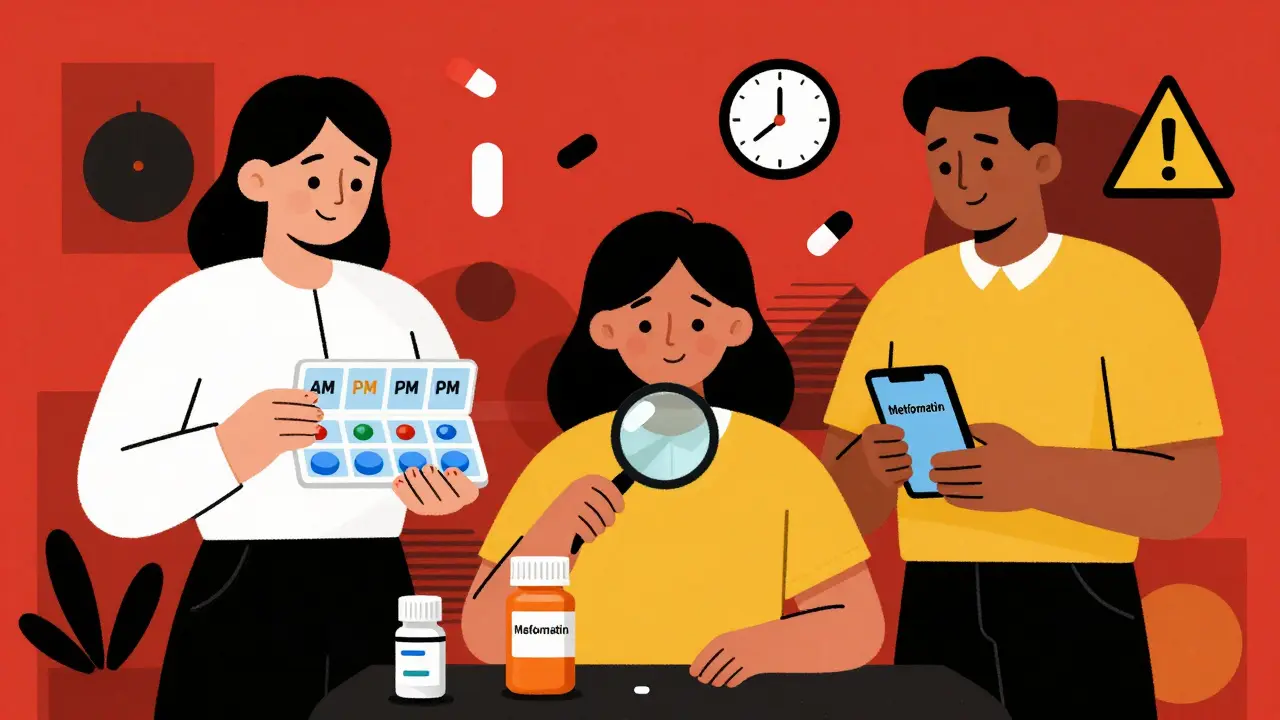
Every year, over 1.3 million people in the U.S. end up in the emergency room because of problems with their medications. Many of these cases aren’t accidents - they’re preventable. If you’re taking prescription drugs, whether it’s one pill a day or five, knowing how to use them safely isn’t optional. It’s essential.
What Really Goes Wrong With Medications?
It’s easy to think medication errors only happen in hospitals. But most mistakes happen at home. You forget a dose. You take two pills by accident. You stop taking your antibiotic because you feel better. You mix your blood thinner with a new supplement you found online. These aren’t rare mistakes. They’re common. According to the CDC, about 45% of adults report at least one medication-related problem each year. The top issues? Missing doses (29%), confusion over when to take pills (22%), and accidentally taking double doses (17%). For people on five or more medications, the risk of error jumps to over three times higher than those on just one or two. One big reason? Lack of clear communication. A 2021 study found that 39% of patients couldn’t even name why they were taking their own prescriptions. If you don’t know why you’re taking it, how can you take it right?The Five Rights of Medication Safety
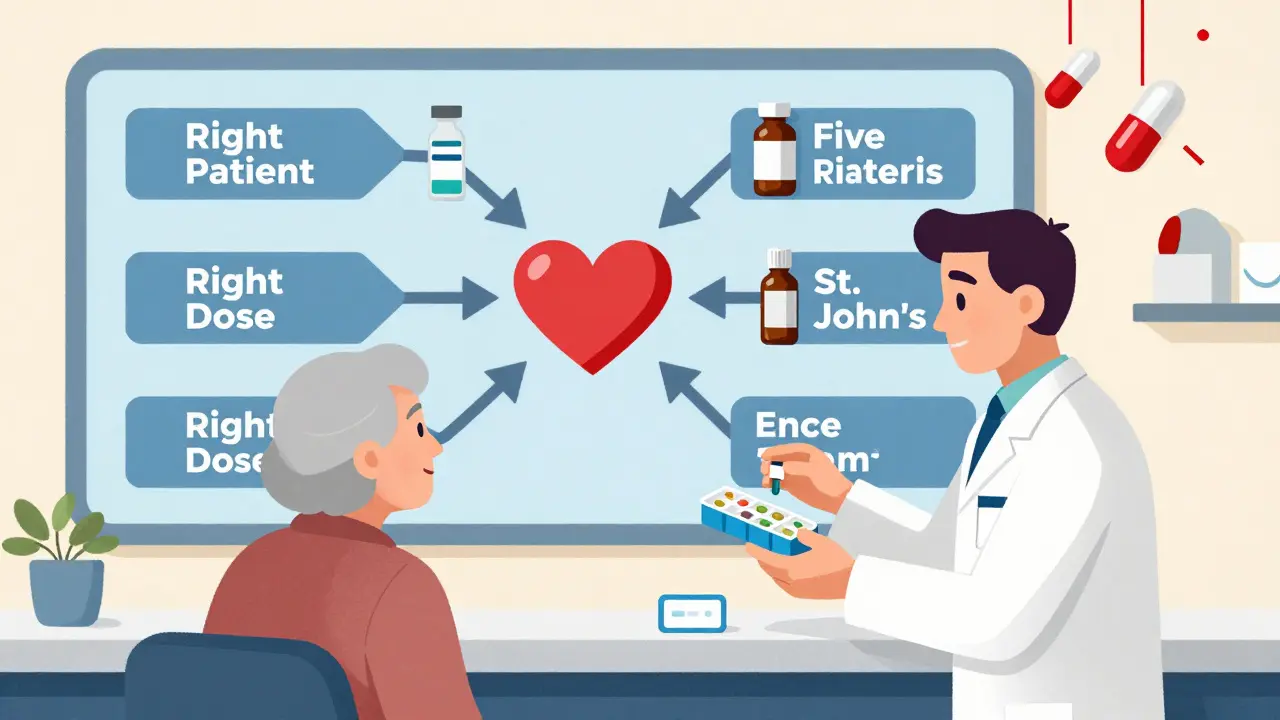
Healthcare professionals use a simple framework called the “Five Rights” to avoid errors. You can use it too:- Right patient - Is this medicine really for you? Double-check your name on the bottle.
- Right drug - Does the pill look the same as last time? If not, ask your pharmacist. Look-alike names like glimepiride and glyburide cause real confusion.
- Right dose - Is it 5 mg or 50 mg? Don’t guess. Read the label. Use a pill cutter if needed.
- Right route - Is it meant to be swallowed, applied to the skin, or inhaled? Never crush pills unless told to.
- Right time - Should you take it with food? At night? Every 8 hours? Timing matters as much as the dose.
Ask Your Doctor These Eight Questions
The FDA says every patient should ask these questions before starting any new prescription:- What is the name of this medicine - both brand and generic?
- What is it supposed to do? How will I know it’s working?
- How and when should I take it? Should I take it with food or on an empty stomach?
- What are the possible side effects? Which ones mean I should call my doctor?
- What should I avoid while taking this? Alcohol? Other medications? Foods?
- What does this pill look like? Is there a generic version?
- When does it expire? Should I throw out old pills?
- What happens if I miss a dose? Should I double up next time?
High-Alert Medications: When One Mistake Can Be Deadly
Some drugs are more dangerous than others. The Institute for Safe Medication Practices calls them “high-alert medications.” Even small mistakes can cause serious harm. These include:- Insulin
- Warfarin (blood thinner)
- Heparin (another blood thinner)
- Intravenous oxytocin (used during labor)
Medication Reconciliation: The Lifesaver You Might Not Know About
When you move from hospital to home, or from one doctor to another, your medication list often gets lost. That’s where “medication reconciliation” comes in - the process of comparing all your current meds to what’s being prescribed. Studies show that when pharmacists do this, medication errors drop by 20% to 45%. But here’s the problem: only 58% of U.S. hospitals consistently track over-the-counter meds and supplements. That’s dangerous. A common herbal supplement like St. John’s Wort can interfere with antidepressants. Garlic pills can thin your blood - a problem if you’re on warfarin. Do this now: Keep a written list of everything you take. Include:- All prescription drugs
- All over-the-counter pills (painkillers, antacids, sleep aids)
- All vitamins and supplements
- All herbal remedies
- Dosages and how often you take them
How to Avoid Common Mistakes at Home
Here are simple, proven ways to stay safe:- Use a pill organizer - Studies show it reduces errors by 35% in older adults. Choose one with AM/PM slots or daily compartments.
- Set phone alarms - One alarm for each dose. Label them: “Amoxicillin,” “Metformin,” etc.
- Check pill appearance - If your pill looks different than last time, ask your pharmacist. It might be a different generic brand.
- Never stop a prescription without talking to your doctor - Especially antibiotics. Stopping early causes resistance and treatment failure. In fact, 23% of antibiotic failures happen because people quit too soon.
- Keep meds out of reach of kids - 38% of accidental poisonings in children come from expired or unsecured medications.
- Do a medicine cabinet clean-out twice a year - Toss expired, discolored, or oddly smelling pills. Don’t flush them - take them to a drug take-back location.
Pharmacists Are Your Secret Weapon
Most people think pharmacists just hand out pills. They’re wrong. Pharmacists are trained medication experts - the last line of defense against errors. If you have questions, ask them. Don’t wait for them to ask you. Ask:- Is this the right drug for my condition?
- Could this interact with my other meds?
- Is there a cheaper generic option?
- Can you show me how to use this inhaler or injector?
What Happens When You Don’t Take Medications Safely?
The cost isn’t just personal. Medication errors cost the U.S. healthcare system $42 billion a year. But the human cost is worse. A woman in Ohio took a wrong dose of warfarin after her doctor changed her prescription but didn’t explain the new dose. She ended up in the hospital with internal bleeding. A man in Florida mixed his blood pressure pill with a new herbal supplement. His heart rate dropped dangerously low. He didn’t know the supplement could interact. These aren’t rare stories. They’re common. And they’re preventable.What’s New in Medication Safety (2024)
Things are improving. The FDA now requires all new medication guides to be written at an 8th-grade reading level - no more confusing jargon. The CDC launched a free mobile app called the “Medication Safety Checklist” in January 2024. It helps you track your meds, set reminders, and print lists for doctors. Pharmacists are also using “Tall Man Lettering” - writing similar drug names with mixed case to make them stand out. For example: predniSONE vs. predniSOLONE. This has cut look-alike errors by 28% in pilot programs. And AI is stepping in. IBM Watson’s prescription review system cut dangerous drug interactions by 44% in a 2023 study. While it’s not in every clinic yet, it’s a sign of where things are headed.Final Thought: You’re the Most Important Part of the System
No matter how good the technology, the system, or the doctor, you are the one who takes the pill. You are the one who notices if something feels off. You are the one who remembers to ask questions. Don’t wait for a mistake to happen. Start today. Write down your meds. Ask questions. Use a pill organizer. Talk to your pharmacist. Review your list every time you see a doctor. Medication safety isn’t about being perfect. It’s about being aware. And that’s something anyone can do - no matter your age, your health, or your background.What should I do if I accidentally take the wrong medication?
If you realize you took the wrong pill, don’t panic. Call your pharmacist or poison control immediately (1-800-222-1222 in the U.S.). Have the pill bottle ready - they’ll need the name, dose, and time taken. Do not wait for symptoms. Even if you feel fine, some reactions can be delayed. Keep the pill container and any packaging - it helps medical staff identify the substance.
Can I share my prescription with a family member who has similar symptoms?
Never share prescription medication. Even if symptoms seem the same, underlying causes can be different. A pill that helps one person’s headache might cause a dangerous reaction in another. Sharing prescriptions is illegal and risky. If someone needs medication, they should see their own doctor.
Why do some pills look different even though they’re the same drug?
Generic drugs must contain the same active ingredient as brand names, but they can look different because of inactive ingredients like color, shape, or size. This is normal. But if the pill changes appearance unexpectedly - especially if you’ve been on it for a while - check with your pharmacist. It might be a different manufacturer, or worse, a mix-up.
How do I know if a supplement interacts with my prescription?
Many supplements interact with medications - even common ones like St. John’s Wort, garlic, or vitamin E. Always tell your doctor and pharmacist about every supplement you take. Use a reliable source like the National Institutes of Health’s Office of Dietary Supplements for information. Never assume “natural” means safe.
Is it safe to take expired medication?
Most expired medications lose potency but aren’t dangerous. However, some - like insulin, liquid antibiotics, or nitroglycerin - can become ineffective or even harmful after expiration. When in doubt, throw it out. Use a drug take-back program or check with your pharmacy for safe disposal. Never flush pills down the toilet unless instructed.
What if I can’t afford my medication?
Never skip doses or cut pills to save money. Talk to your doctor or pharmacist. Many drug manufacturers offer patient assistance programs. Pharmacies often have discount cards or generic alternatives. Some community clinics provide low-cost or free prescriptions. Your health is worth asking for help.





Shruti Chaturvedi March 15, 2026
Been taking my blood pressure med for 5 years and never thought to write down what I'm on until I had a hospital visit last year
Now I keep a little notebook in my purse with everything
Even the ginseng I take for energy
Pharmacist said it's the best thing I could've done
Simple but life changing
Katherine Rodriguez March 17, 2026
Ugh I hate how they make everything sound so easy like we're all just forgetful old folks
Try being a single mom working two jobs and trying to keep track of 7 different pills for your kid and yourself
And don't even get me started on insurance denying generics
It's not about being careless it's about being overwhelmed
Devin Ersoy March 18, 2026
Look I appreciate the checklist but let's be real
The real problem isn't patients forgetting their meds
It's that doctors prescribe like they're playing Jenga with your organs
I had a cardiologist slap me with three new scripts in one visit
One was for a condition I didn't even know I had
And he didn't even ask if I was taking anything else
Just scribbled it like I'm some robot on a conveyor belt
So yeah the Five Rights sound cute but who's checking the doctors?
Scott Smith March 18, 2026
One thing that's not mentioned enough is the importance of knowing your pharmacy's location
Not all pharmacies carry the same generics
Some use different manufacturers
And if you switch pharmacies without telling them you're on a high-alert med like warfarin
You could get a pill that looks completely different
Always ask your pharmacist if the new bottle matches your last one
It's not paranoia it's protocol
Sally Lloyd March 18, 2026
Did you know the FDA allows drug companies to change inactive ingredients without telling you?
That's why your pill looks different every time
But here's the real question
Who's testing what those new fillers do long-term?
And why are we told to trust this system when the same companies that make the drugs also fund the research?
Just saying... maybe we should all be a little more suspicious
Emma Deasy March 19, 2026
Let me just say, with all due respect to the author, this article is profoundly inadequate in addressing the systemic collapse of pharmaceutical oversight in this country.
Moreover, the suggestion that individuals can simply "write things down" is not only patronizing, it is dangerously reductive.
Have you considered the psychological toll of polypharmacy on elderly patients with dementia?
Or the socioeconomic barriers that prevent low-income families from accessing pill organizers?
And what of the fact that 72% of all medication errors occur during transitions of care, yet we are left to self-manage with sticky notes?
It is not a personal failing.
It is a national disgrace.
tamilan Nadar March 21, 2026
Back home in Kerala we use a simple trick
Each medicine gets tied to a different colored string
Red for morning
Blue for night
Green for after food
My grandma taught me this
No need for apps or notebooks
Just color and routine
Works for pills, tea, even prayers
Adam M March 22, 2026
Stop making excuses. If you can't manage your meds, you shouldn't be taking them. Simple.