Metformin Safety Checker
Is Metformin Safe For You?
This tool helps determine if metformin may be appropriate based on liver health guidelines. Results are informational only and should not replace medical advice.
Your Result
Metformin is one of the most commonly prescribed diabetes medications in the world. Millions of people take it daily to control blood sugar. But if you have liver disease, your doctor might tell you to stop taking it. Why? Because of a rare but dangerous side effect called lactic acidosis.
What is lactic acidosis, and why does metformin cause it?
Lactic acidosis happens when your body makes too much lactic acid and can’t clear it fast enough. Lactic acid is a natural byproduct of energy production, especially when your cells don’t get enough oxygen. Normally, your liver breaks down lactic acid and turns it back into glucose. But if your liver is damaged, that process slows down-or stops. Metformin works by reducing how much glucose your liver makes. It also slightly blocks a key energy pathway in your cells (mitochondrial complex I). This can cause lactic acid to build up. In healthy people, this isn’t a problem. Your liver handles it. But if your liver is already struggling, metformin can push you over the edge. The risk is low-about 3 to 10 cases per 100,000 people per year. But when it happens, it’s serious. About 41% of patients need a breathing machine. Around 28 to 47% of people who develop it don’t survive. That’s why doctors are cautious.Is metformin always dangerous with liver disease?
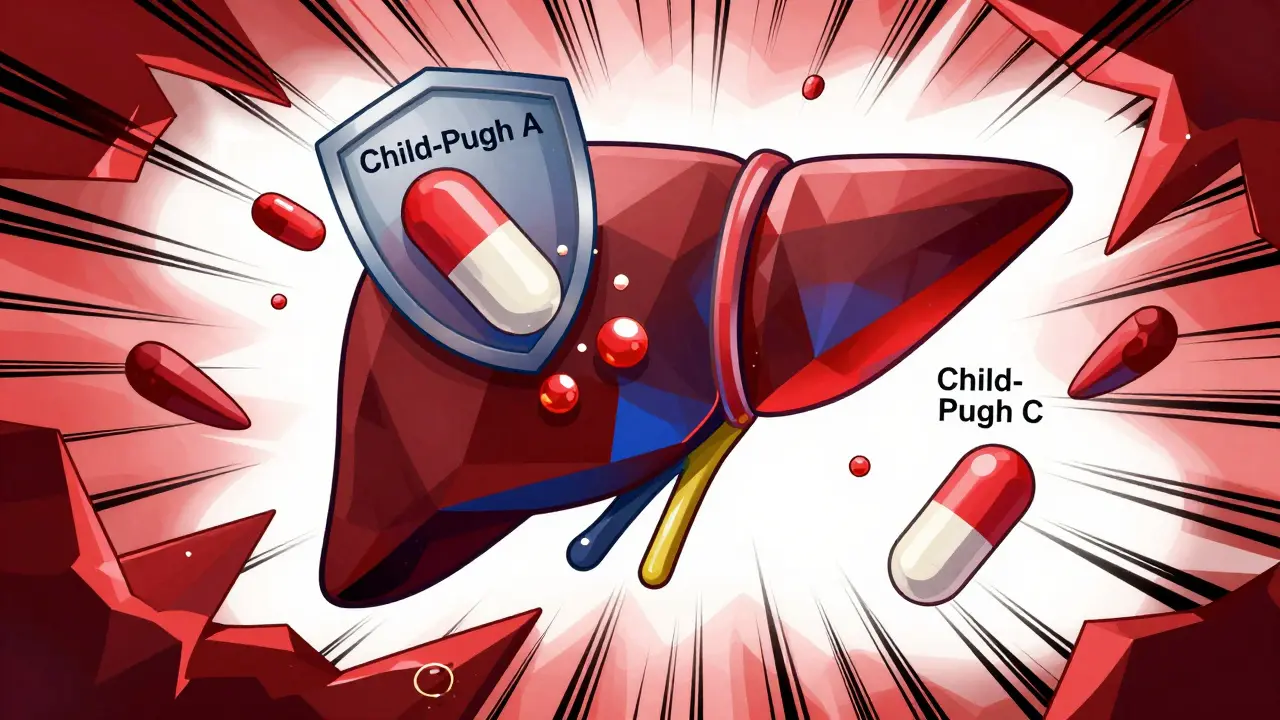
No. The old rule-“never use metformin if you have liver disease”-is outdated. Studies show that people with non-alcoholic fatty liver disease (NAFLD), the most common form of liver disease in people with diabetes, often benefit from metformin. It can reduce liver fat, lower inflammation, and even improve insulin resistance. In fact, some experts now say metformin might be one of the best options for these patients. The real danger is in advanced liver disease: cirrhosis with poor function (Child-Pugh class B or C). In these cases, the liver can’t clear lactate at all. Even small amounts of metformin can build up and trigger lactic acidosis. Here’s the split:- Mild liver disease (NAFLD, Child-Pugh A): Often safe. May even help.
- Severe liver disease (Child-Pugh B or C): Avoid metformin. Too risky.
Why do some doctors still say no?
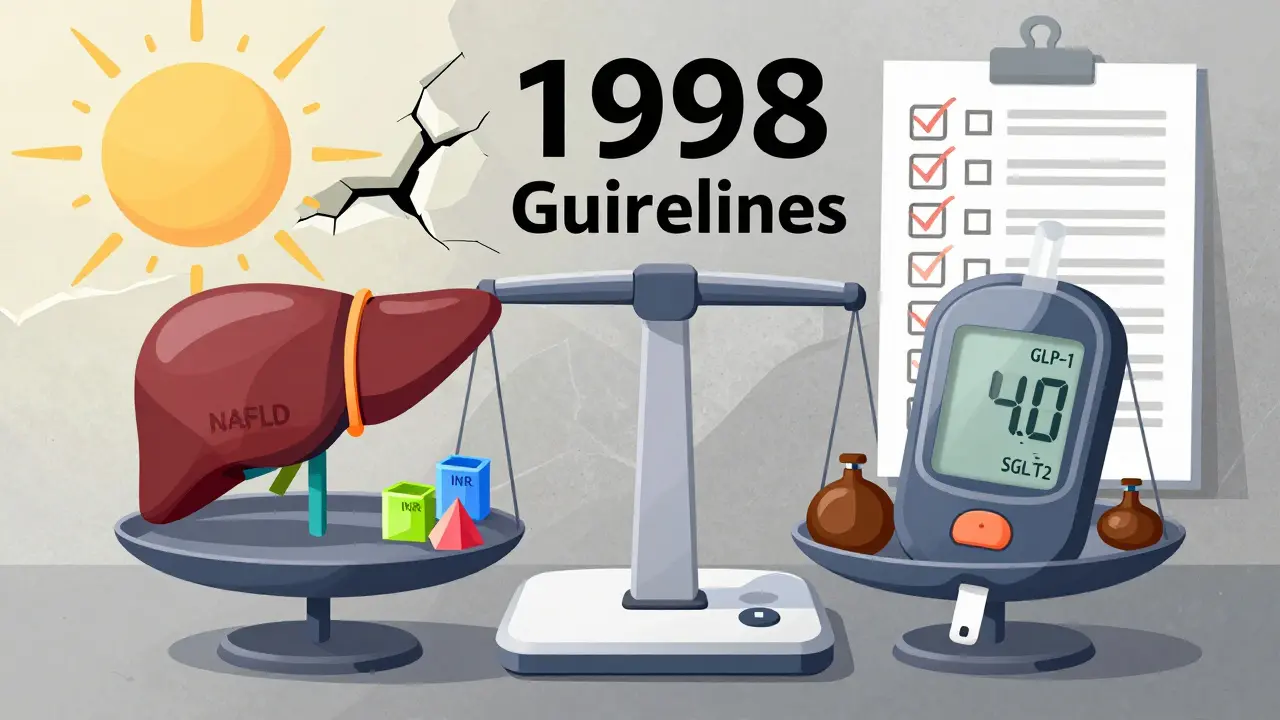
Because guidelines lag behind science. The Medsafe guidelines from 1998 banned metformin in all liver disease. That rule stuck. Even though newer studies show little to no risk in mild cases, many doctors still follow the old warnings out of habit-or fear of liability. Dr. John B. Buse, former president of the American Diabetes Association, said in 2023: “The evidence against metformin in non-cirrhotic liver disease is remarkably weak.” But Dr. Kenneth Cusi, a leading liver and diabetes expert, counters: “In decompensated cirrhosis, the risk isn’t theoretical-it’s life-threatening.” So it’s not black and white. It depends on how well your liver is working.
How do you know if your liver is okay to use metformin?
Your doctor will check a few things:- Child-Pugh score: A system that rates liver function from A (mild) to C (severe). If you’re Child-Pugh A, metformin is often fine. B or C? Avoid it.
- ALT and AST levels: Liver enzymes. High numbers mean inflammation or damage.
- Albumin and bilirubin: These show how well your liver is making proteins and clearing waste.
- INR: A blood clotting test. If it’s high, your liver isn’t producing clotting factors properly.
What should you do if you’re on metformin and have liver disease?
Follow these steps:- Don’t stop cold turkey. If your doctor says to stop, they’ll tell you how. Stopping suddenly can spike your blood sugar.
- Get your liver tested regularly. Every 3 to 6 months if you’re on metformin and have liver disease. More often if your condition changes.
- Watch for warning signs. Nausea, vomiting, stomach pain, unusual tiredness, or trouble breathing? Call your doctor right away. These could be early signs of lactic acidosis.
- Stop metformin before surgery or imaging scans. If you’re getting contrast dye or having surgery, stop metformin 48 hours before. Restart only after you’re eating normally and your kidneys are working fine.
- Stay hydrated. Dehydration raises your risk. Drink water, especially if you’re sick or in hot weather.
What are the alternatives if you can’t take metformin?
If your liver can’t handle metformin, there are other options:- GLP-1 receptor agonists (like semaglutide or liraglutide): These help with blood sugar and weight loss. They’re also good for fatty liver. No lactic acidosis risk.
- SGLT2 inhibitors (like empagliflozin or dapagliflozin): Help your kidneys flush out sugar. They also reduce heart and kidney risks. Safe in mild liver disease.
- DPP-4 inhibitors (like sitagliptin): Mild effect on blood sugar. Low risk of side effects. Often used in liver disease.
- Insulin: The most direct option. No liver metabolism needed. But it can cause weight gain and low blood sugar.
What if you accidentally take too much?
Metformin overdose is rare-but dangerous. In cases of intentional overdose, lactic acidosis happens in about 9% of cases. If you take too much:- Call emergency services immediately.
- Don’t wait for symptoms. Lactic acidosis can develop fast.
- Go to the hospital. Treatment includes IV fluids, sodium bicarbonate to correct acid levels, and possibly dialysis.
What’s changing in 2025?
New data is shifting the landscape. The MET-REVERSE trial, which started in 2021 and ends in late 2025, is studying metformin in people with NAFLD and mild liver impairment. Early results show lactic acidosis in just 0.02% of patients-almost the same as in people with healthy livers. The European Association for the Study of the Liver (EASL) is drafting new 2025 guidelines that may recommend metformin as a first-line treatment for type 2 diabetes in NAFLD patients. Meanwhile, extended-release metformin formulations are becoming more common. They release the drug slowly, which may lower the chance of lactic acidosis. But data on liver patients is still limited.Bottom line: It’s not a yes-or-no question
Metformin isn’t automatically unsafe if you have liver disease. The key is how advanced your disease is. If you have mild fatty liver and no cirrhosis, metformin may be your best option-it helps your liver and your blood sugar. If you have advanced cirrhosis, vomiting, confusion, or swelling in your belly, metformin is too risky. Switch to something safer. Talk to your doctor. Bring your latest blood work. Ask: “Is my liver stable enough for metformin?” Don’t assume it’s off-limits. Don’t assume it’s safe. Get the facts. Your liver matters. Your blood sugar matters. And with the right info, you can manage both.Can I take metformin if I have fatty liver disease?
Yes, if your fatty liver is mild and you don’t have cirrhosis. Studies show metformin can actually reduce liver fat and inflammation in people with non-alcoholic fatty liver disease (NAFLD). Many doctors now consider it a good option for these patients, especially if they have type 2 diabetes. Regular liver tests every 3 to 6 months are still recommended.
What are the signs of lactic acidosis from metformin?
Early signs include nausea, vomiting, stomach pain, unusual tiredness, and muscle aches. As it gets worse, you may feel dizzy, have trouble breathing, or feel cold in your hands and feet. Low blood pressure and rapid heartbeat are also common. If you have these symptoms and are taking metformin, seek medical help immediately. Don’t wait.
Is metformin safe if I have cirrhosis?
Only if your cirrhosis is compensated (Child-Pugh class A). If you have swelling in your belly, confusion, bleeding problems, or jaundice (yellow skin), you have decompensated cirrhosis (Child-Pugh B or C). In those cases, metformin is dangerous and should be avoided. The risk of lactic acidosis is too high.
How often should I get my liver checked if I’m on metformin?
If you have liver disease and are taking metformin, get liver function tests every 3 to 6 months. If your condition is stable, once a year may be enough. But if your liver numbers are rising or you’re sick, your doctor may want tests every month. Always report new symptoms like nausea, fatigue, or confusion.
What happens if I stop metformin suddenly?
Stopping metformin suddenly can cause your blood sugar to spike, especially if you have type 2 diabetes. This increases your risk of complications like nerve damage, kidney stress, or even diabetic ketoacidosis. Never stop without talking to your doctor. They’ll guide you on how to switch safely-often to another medication like a GLP-1 agonist or SGLT2 inhibitor.






Jay Ara December 27, 2025
metformin saved my life but my doc was scared to prescribe it cause i had fatty liver turns out i was fine just needed regular checks
Michael Bond December 29, 2025
Good breakdown. The key is liver function, not just diagnosis.
david jackson December 30, 2025
Let me tell you about my uncle-he had cirrhosis, took metformin anyway because he didn't trust doctors, ended up in ICU for 17 days with lactic acidosis, woke up asking why nobody told him it was dangerous. I mean, the article says it's rare-but rare doesn't mean impossible, and when it hits, it hits like a freight train. The liver isn't just a filter, it's the whole damn engine room. If it's failing, you don't keep revving the engine hoping it'll hold. You shut it down. Period. And yeah, I know some studies say NAFLD is fine, but I've seen what happens when people treat guidelines like buffet options. One person's "mild" is another person's ticking time bomb.
christian ebongue December 31, 2025
so the doc says "avoid metformin" but you're still taking it because you read a reddit post? classic
Joanne Smith January 1, 2026
They say "lactic acidosis is rare" like it's a footnote in a romance novel. But when it happens, you're not reading-you're gasping in a hospital bed while someone yells "bicarb! dialysis now!" while your organs slowly turn to soup. I've seen it. Twice. And yes, NAFLD patients often do fine-but the ones who don't? They don't get to write comments. The silence from those who didn't make it is the loudest warning.
Jody Kennedy January 2, 2026
Just had my first liver panel in 6 months-ALT down 40%, HbA1c down 1.2%. Metformin + weight loss = my liver is actually healing. Don't let fear stop you from giving your body a chance. You got this.
jesse chen January 2, 2026
I really appreciate how this article breaks it down-not just "yes or no," but "how much is your liver actually working?" I’ve had NAFLD for 8 years, and my doctor finally agreed to restart metformin after seeing my Child-Pugh A score. I was terrified, but now I feel like I’m finally in control. Thank you for the clarity.
josue robert figueroa salazar January 3, 2026
Oh so now we're trusting studies over decades of clinical caution? Funny how the same people who scream "pharma is lying!" when it's vaccines suddenly trust big pharma's latest trial data. Metformin's been around since the 50s. If it was this safe in cirrhosis, why did guidelines change only after the patent expired?
Sarah Holmes January 4, 2026
How dare you suggest that a patient’s liver function should dictate treatment rather than a rigid, fear-based protocol? This is medical paternalism disguised as science. You speak of "risk" as if it’s a mathematical abstraction, not a lived reality for those who’ve watched loved ones die because their doctors were too lazy to interpret lab results. The fact that you reduce complex physiology to a Child-Pugh score reveals a profound arrogance. Who are you to say what someone’s liver can endure? The patient’s voice-her fatigue, her nausea, her lived experience-is erased in your algorithm. This isn’t medicine. It’s bureaucracy with a stethoscope.
Prasanthi Kontemukkala January 5, 2026
My mom has NAFLD and diabetes-she’s on metformin, and her liver enzymes improved over a year. She’s not perfect, but she’s alive and walking. The real danger isn’t metformin-it’s not listening to patients, not checking labs, not adjusting. We need more doctors like the ones who actually look at the numbers, not just the checkboxes.
carissa projo January 6, 2026
There’s a quiet revolution happening in metabolic medicine, and it’s not in the textbooks-it’s in the quiet conversations between patients and doctors who dare to see beyond the red flags. We’ve been taught to fear the word "liver disease" like it’s a death sentence, but what if it’s just a signpost? A signal that your body is begging for balance-not punishment. Metformin, in mild cases, doesn’t harm the liver-it helps it heal. It doesn’t cause lactic acidosis; it’s the silence around it-the refusal to personalize care-that does. So ask your doctor not just "Can I take this?" but "What does my liver truly need?" And then listen. Not to the guidelines. Not to the fear. But to the quiet hum of your own body trying to tell you it’s still worth saving.