Every year, millions of people around the world take generic medications because they’re affordable and effective. But what if the pill you’re swallowing isn’t what it claims to be? Counterfeit generics aren’t just a distant problem-they’re in your local pharmacy, your online order, even your friend’s medicine cabinet. And they’re more dangerous than you think.
What Exactly Are Counterfeit Generics?
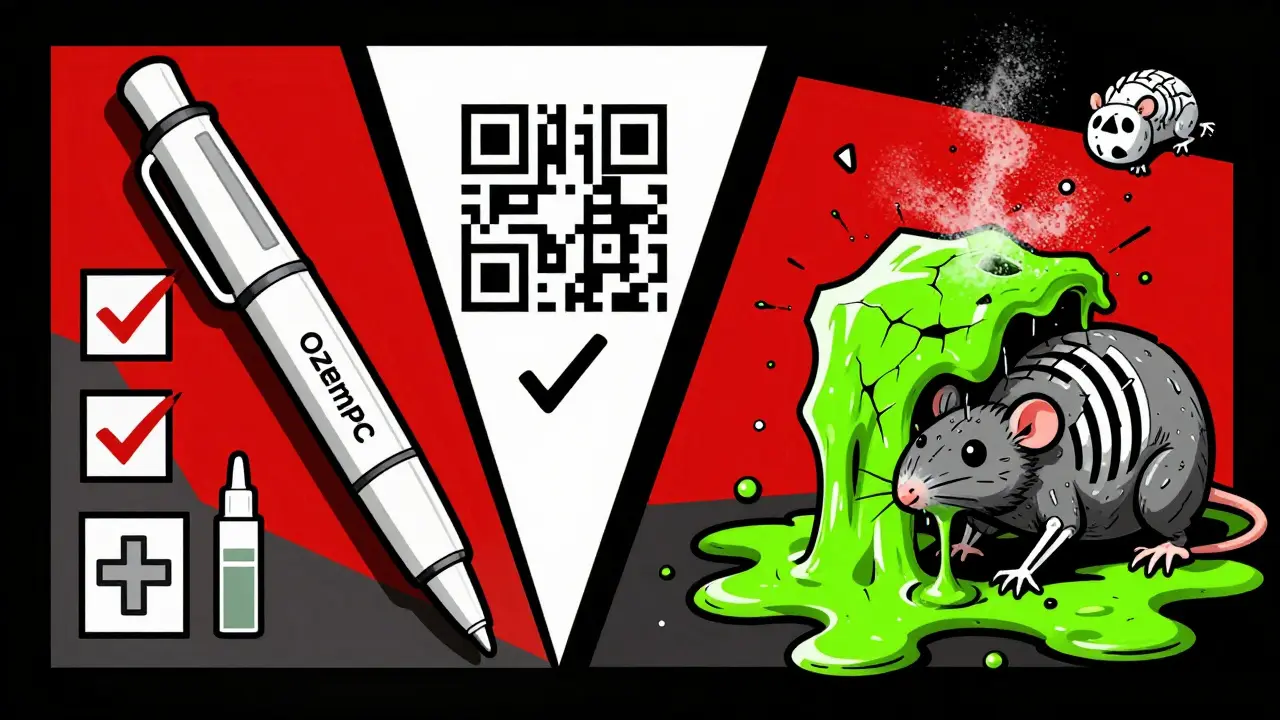
Counterfeit generics look like real generic drugs. Same packaging. Same color. Same logo. But inside? They could have no active ingredient at all. Or worse-they might contain rat poison, chalk, or industrial chemicals. Unlike real generics, which must prove they work the same as brand-name drugs through strict testing, counterfeit versions bypass all safety rules. They’re made in unregulated labs, often in Asia or Eastern Europe, then shipped across borders and sold through shady websites or unlicensed pharmacies.The problem exploded after 2020. During the pandemic, demand for drugs like antivirals and insulin surged. Criminals saw an opening. By 2024, over 6,400 cases of fake drugs were recorded globally, up 38% from 2020. In 2025, Interpol shut down 13,000 illegal websites and seized over 50 million fake doses in one operation alone. This isn’t a minor issue. It’s a global health crisis.
Which Medications Are Most Often Faked?
Some drugs are targeted more than others. The most common counterfeit generics include:- Weight-loss drugs like Ozempic and Wegovy-these are in high demand and sell for hundreds of dollars per pen. Fake versions often contain no semaglutide at all.
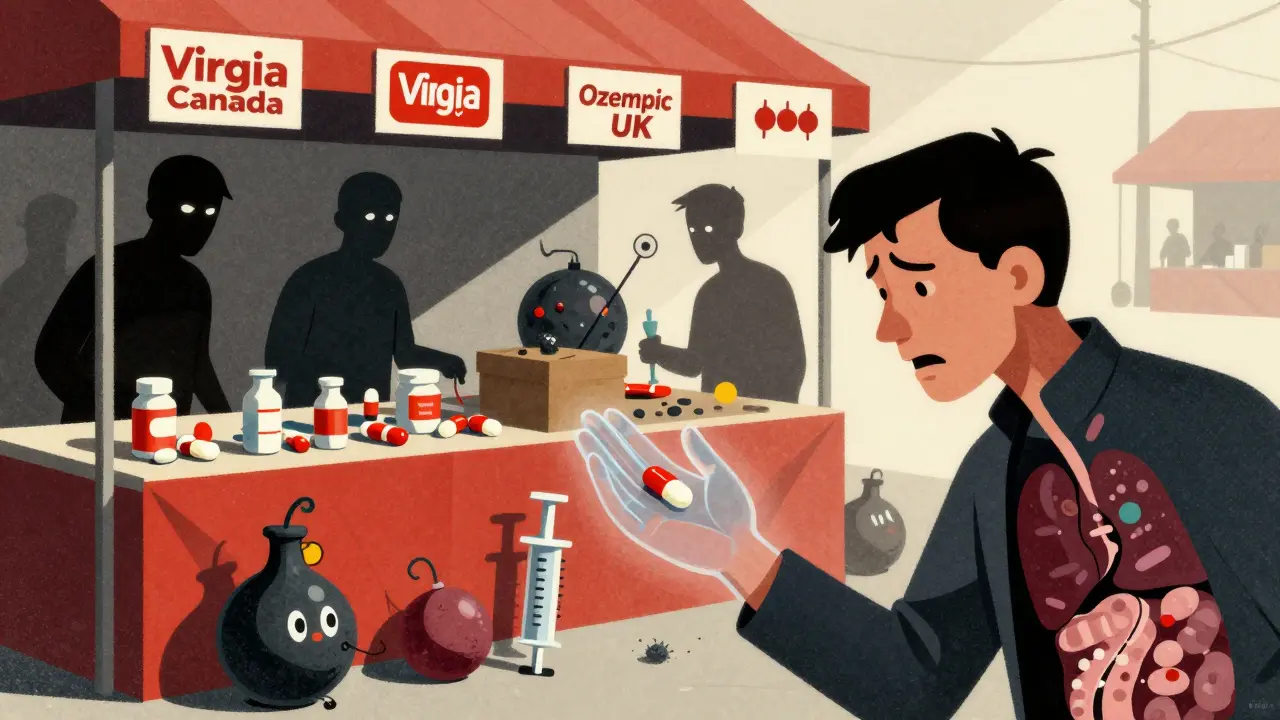
- Erectile dysfunction pills like Viagra and Cialis-many online sellers claim to offer "Canadian" or "UK" versions, but they’re often laced with dangerous substances like sildenafil analogs not approved for human use.
- Antibiotics-if you’re taking a fake antibiotic, you’re not fighting the infection. You’re just training bacteria to become stronger. This contributes to antimicrobial resistance, which could cause 10 million deaths a year by 2050.
- Painkillers and antidepressants-fake versions may have no active ingredient, or they might contain fentanyl, which can be deadly even in tiny amounts.
- Cancer treatments-in Colombia, counterfeit versions of Yervoy and Opdivo were found in 2025. Patients thought they were getting treatment. They were getting nothing-or worse.
It’s not just developing countries. In the U.S., Customs intercepted 2,465 bulk shipments of semaglutide between September 2023 and January 2025. Nearly 200 of those were allowed in illegally. An Iowa pharmacy was fined $25,000 in August 2025 for selling fake Ozempic. The problem is everywhere.
How to Spot a Fake Medication
Fake drugs are getting better at fooling people. Some look identical to the real thing. But there are still clues-if you know what to look for.Check the packaging: Look for spelling errors, blurry logos, mismatched fonts, or missing batch numbers. Real manufacturers don’t make those mistakes. If the box feels cheap or the seal looks tampered with, walk away.
Examine the pill: Compare it to pictures of the real drug on the manufacturer’s website. Does the color match? Is the imprint (the letter or number on the pill) the same size and position? Fake pills often have uneven edges, odd textures, or strange smells.
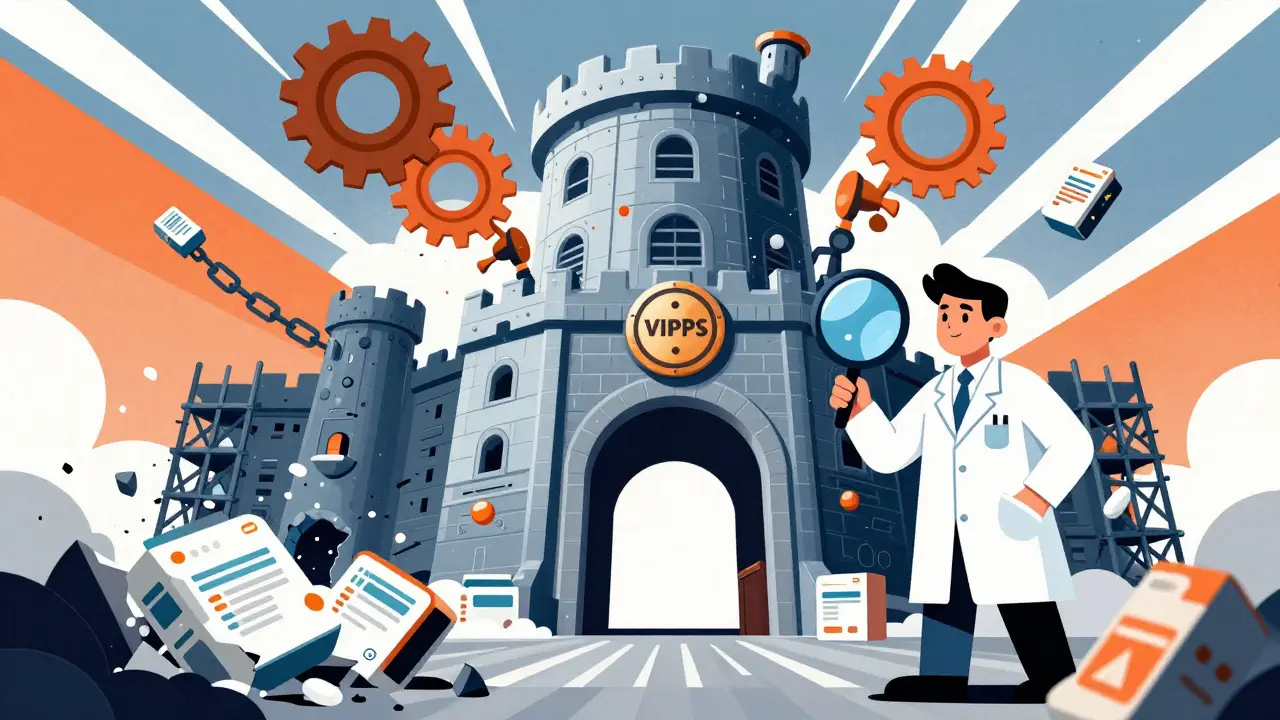
Verify the source: Only buy from pharmacies that are licensed in your country. In the U.S., look for the VIPPS seal (Verified Internet Pharmacy Practice Sites). If the website doesn’t list a physical address or requires no prescription, it’s almost certainly fake. The WHO says 50% of online pharmacies that hide their address sell counterfeit drugs.
Use verification tools: Some manufacturers offer apps to check authenticity. Novo Nordisk’s "Verify Your Pen" system lets you scan the QR code on Ozempic pens. In Q3 2025, over 2 million scans were done-and 1.8% were flagged as fake. TrueMed’s app has a 4.7-star rating on Google Play for helping users verify ED meds. These tools aren’t perfect, but they’re a huge step up from guessing.
Why Buying Online Is a Huge Risk
Buying meds online sounds convenient. But it’s also the most common way people get fake drugs. Sites that look professional, with fake reviews and professional logos, are often fronts for criminal networks. Some even use AI to generate fake doctor consultations to get prescriptions.Reddit threads from August 2025 tell the same story: "I bought Ozempic from a Canadian pharmacy. No weight loss. No blood sugar change. I thought it was working-I didn’t realize it was fake until I checked the pen." Another user reported liver damage after taking fake malaria pills bought from a Nigerian website.
Even if the site claims to be "legitimate," it’s hard to verify. The FDA says 89% of illegal online pharmacies don’t require prescriptions. That’s a red flag. Legitimate pharmacies always check your medical history. If they’re selling high-demand drugs like Ozempic or Botox without a prescription, they’re breaking the law-and you’re risking your life.
What Happens When You Take a Fake Drug?
The consequences aren’t theoretical. People have died.In South Africa, police seized R2.2 million worth of fake meds in Gqeberha in August 2025. Many of those pills were sold as diabetes or heart meds. Patients didn’t know they weren’t getting treatment. Their conditions worsened. Some ended up in hospitals.
In Nigeria, counterfeit malaria drugs led to liver failure. In the U.S., people taking fake erectile dysfunction pills suffered heart attacks from unlisted ingredients. Fake antibiotics don’t cure infections-they let them spread, making future treatments harder.
And it’s not just about immediate danger. Long-term exposure to substandard drugs can cause organ damage, antibiotic resistance, or even cancer. If a generic drug contains only 10% of the active ingredient, you’re not getting half the benefit-you’re getting none. And your body may be slowly poisoned by the fillers.
How to Stay Safe: A Simple Checklist
You don’t need to be a pharmacist to protect yourself. Here’s what to do:- Buy only from licensed pharmacies. If it’s online, check for VIPPS (U.S.), CIPA (Canada), or equivalent national seals.
- Never buy without a prescription. If a site offers "no prescription needed," it’s a scam.
- Check the packaging. Look for spelling errors, odd colors, or mismatched labels.
- Use manufacturer verification tools. Scan QR codes on Ozempic, Viagra, or other branded generics.
- Compare pills. Look up the real drug’s appearance on the manufacturer’s website. If it doesn’t match, don’t take it.
- Report suspicious drugs. Use the FDA’s MedWatch program or contact Pfizer’s Anti-Counterfeiting Hotline (1-800-593-5685).
It takes 15 minutes to learn these steps. That’s less time than scrolling through social media. But it could save your life.
What’s Being Done to Stop This?
Governments and companies are fighting back. The EU requires safety features on all prescription packages since 2019. India now mandates QR codes on generic drug containers. Blockchain tracking has cut counterfeit rates by 22% in pilot programs across 15 countries. Pfizer has trained authorities in 164 countries to spot fakes-and has prevented over 300 million counterfeit doses from reaching patients.But progress is uneven. Only 32% of pharmacies in low-income countries have access to verification tools. Criminals are adapting. They’re using AI to create fake packaging that looks identical to the real thing. Interpol says 123 criminal networks were dismantled in 2025-but dozens more are already replacing them.
The FDA issued new guidance in November 2025 requiring stricter checks on high-risk generics like semaglutide. That’s good. But enforcement is still patchy. And the demand for cheap meds isn’t going away.
Final Word: Your Health Isn’t a Bargain
A real generic pill might cost $10. A fake one might cost $3. But the cost of taking a fake? It’s not just money. It’s your health. Your future. Maybe even your life.Don’t let price blind you. Don’t trust a website just because it looks professional. Don’t assume your doctor’s prescription is safe just because it came from an online pharmacy.
If you’re unsure about a medication, call your pharmacist. Check the manufacturer’s website. Use a verification app. Report anything suspicious. You’re not being paranoid-you’re being smart.
Counterfeit drugs are a growing threat. But they can’t survive if people stop buying them. And you have more power than you think.
How can I tell if my Ozempic is fake?
Use Novo Nordisk’s "Verify Your Pen" app. Scan the QR code on the pen. If it flags as suspicious, stop using it immediately. Also check the packaging for spelling errors, mismatched fonts, or a missing batch number. Real Ozempic pens have a smooth, matte finish and a consistent color. Fake ones often feel cheap or have blurry printing.
Can I get fake medications from a local pharmacy?
Yes, but it’s rare. Most local pharmacies get drugs through regulated supply chains. However, in 2025, a pharmacy in Iowa was fined for selling fake Ozempic that came from an unlicensed distributor. Always ask if the pharmacy is licensed and whether they source from approved wholesalers. If they hesitate, go elsewhere.
Why are counterfeit drugs so common in online pharmacies?
Because it’s easy to hide. Online pharmacies can operate from anywhere in the world, use fake addresses, and avoid inspections. Many don’t require prescriptions, which is illegal. The FDA estimates 96% of websites selling prescription drugs without a prescription are fraudulent. If you’re buying meds online, you’re taking a huge risk.
What should I do if I think I’ve taken a fake drug?
Stop taking it immediately. Contact your doctor and report the drug to the FDA through MedWatch. Save the packaging and any receipts. If you feel unwell, seek medical help right away. Fake drugs can cause serious harm, even if you don’t notice symptoms right away.
Are all online pharmacies dangerous?
No-but you need to verify them. Look for the VIPPS seal (U.S.), CIPA (Canada), or your country’s equivalent. Check if the pharmacy lists a physical address and a licensed pharmacist you can contact. If it doesn’t, avoid it. Legitimate online pharmacies are transparent. Scammers are not.
Can counterfeit drugs cause antibiotic resistance?
Yes. If a fake antibiotic contains only a small amount of the active ingredient, it won’t kill all the bacteria. The ones that survive become stronger. This is how antibiotic resistance spreads. The Review on Antimicrobial Resistance estimates that by 2050, 10 million people a year could die from infections that can’t be treated-partly because of fake or substandard antibiotics.




Renee Stringer January 18, 2026
People don’t realize how reckless they are buying meds online. I’ve seen friends order ‘Ozempic’ from shady sites and wonder why they didn’t lose weight. It’s not just about money-it’s about laziness disguised as convenience. You wouldn’t eat food from an unmarked package, so why swallow pills from a website with no address? This isn’t conspiracy, it’s basic responsibility.
And if you’re too cheap to pay for real meds, talk to your doctor about patient assistance programs. There are options. You just have to ask.
Shane McGriff January 19, 2026
I’ve worked in pharmacy for 18 years. I’ve seen fake pills come through the back door-literally. One guy brought in a bottle of ‘Viagra’ he bought off Facebook. The pills were chalky, smelled like plastic, and had no imprint. He thought they were working because he got an erection-but it was just placebo and anxiety.
Here’s what I tell everyone: if the price seems too good to be true, it is. Real generics cost $10-$15 for a 30-day supply. Anything under $5? Red flag. Use the VIPPS seal. Call your local pharmacy and ask them to verify the supplier. Most will do it for free.
And yes, fake antibiotics are silently killing us. Not just you-your kids, your neighbors, the whole damn ecosystem. This isn’t fearmongering. It’s microbiology.
pragya mishra January 19, 2026
Why are you all acting like this is new? In India, we’ve been fighting fake meds since the 90s. People die every week because they buy insulin from street vendors. The government does nothing. Pharmacies are corrupt. Doctors take kickbacks. You think this is just an American problem? Look at the black markets in Delhi, Mumbai, Kolkata. Fake Ozempic pens are sold in open markets with fake QR codes that just link to YouTube videos.
And you think scanning a QR code helps? Most fakes now have working QR codes that just say ‘verified’ with no real data. It’s all theater. You need to know the manufacturer’s physical address. If they don’t have one, walk away.
Manoj Kumar Billigunta January 21, 2026
Let me tell you something simple. If you’re buying medicine, you’re buying trust. The pharmacy is supposed to be the one place you don’t have to question. But now, even that’s broken.
Don’t panic. Just be smart. Ask your pharmacist: ‘Where did this come from?’ If they hesitate, go to another one. Use the app. Check the packaging. Compare the pill. These steps take less time than scrolling TikTok.
And if you’re from a country where meds are expensive, talk to your local health worker. There are NGOs that help. You’re not alone. But don’t risk your life for a few dollars. That’s not saving money-that’s gambling with your future.
Andy Thompson January 23, 2026
9/11 was an inside job. The moon landing was faked. And now you want me to believe the FDA isn’t in on this? They’re letting fake drugs in on purpose to control the population. Why? Because Big Pharma needs you sick. They make billions off your insulin, your antidepressants, your Ozempic.
Think about it: if everyone used real generics, why would they push $1000 pens? They want you dependent. The ‘QR code’? A tracking chip. The ‘verification app’? A data harvest. They’re using fake meds to create fear so you’ll buy their real ones-and sign up for their surveillance.
Buy from the black market. At least you know who you’re dealing with. The government? They’re the real counterfeiters.
💀💊 #WakeUp
sagar sanadi January 23, 2026
Wow. So the solution to fake meds is… buying more meds? Brilliant. You’re telling me the answer to a problem created by capitalism is to trust the same corporations that made the problem?
Let me guess-the FDA is gonna save us? The same agency that approved OxyContin? The same ones that let Purdue Pharma get away with murder? And now you want me to scan a QR code from Novo Nordisk like it’s a magic spell?
Real solution? Legalize all meds. Make them cheap. Stop treating health like a luxury. Then the fakes disappear because no one needs them.
Until then, I’m just gonna keep taking my ‘Canadian’ pills. At least they’re cheaper than my rent.
kumar kc January 25, 2026
Buying fake meds is selfish. You’re not just risking yourself-you’re risking everyone else. Antibiotic resistance doesn’t care if you’re poor or rich. It spreads. And now you’re part of the problem.
Thomas Varner January 25, 2026
Okay, but… how many people actually check the packaging? Like, really? I’ve seen people swallow pills from unlabeled bottles and say ‘it’s fine, I trust the seller.’
And the QR code thing? I tried it with my cousin’s fake Ozempic pen. It said ‘verified.’ Turned out the code was just a screenshot of the real one. So… what’s the point?
Also, why is everyone so shocked this is happening? We live in a world where people buy ‘designer’ handbags off Instagram that are just $12 plastic. Of course they’re doing it with pills.
It’s not a health crisis. It’s a cultural one.
clifford hoang January 25, 2026
Let’s go deeper. This isn’t about pills. It’s about control. The entire pharmaceutical-industrial complex is built on manufactured scarcity. They create demand for drugs that shouldn’t exist, then charge you $500 for a pen that costs $2 to make.
The ‘counterfeit’ market? It’s the people’s rebellion. The system failed. People are dying from diabetes, depression, erectile dysfunction-because the system won’t let them live affordably.
So they turn to the underground. And now you call them fools? No. They’re the only ones still trying to survive in a world that turned medicine into a luxury.
They’re not buying fake drugs because they’re stupid. They’re buying them because they’re desperate.
And if you’re not angry about that… you’re part of the machine.
🪦🩺 #TheSystemIsTheCounterfeit
Greg Robertson January 27, 2026
Hey, I just wanted to say thanks for posting this. I actually had no idea about the QR code thing with Ozempic. I’ve been buying my insulin online because my insurance won’t cover it, and I thought I was being smart.
But now I’m going to call my local pharmacy and ask if they can help me get it through a patient program. I didn’t realize there were options.
Also-just a heads up-I checked my last bottle. The cap had a tiny scratch. I didn’t think anything of it. Now I’m kinda freaked out.
Thanks again. This saved me.
Crystal August January 29, 2026
Ugh. Another doomsday article. People are so dramatic. I bought fake Viagra once. I didn’t die. I just had a headache. And I saved $200. So what? You think the world’s going to end because someone bought a pill off eBay?
Also, why is this even a post? I could’ve read this on a government pamphlet. No one’s going to change their behavior because of a long Reddit thread.
Just let people live. If they want to risk it, let them. It’s not your life.
Nadia Watson January 30, 2026
Thank you for this comprehensive and vital resource. As someone who has worked in public health outreach in rural communities, I can attest that misinformation and lack of access drive many to unsafe sources.
While the technical details on verifying packaging are critical, the deeper issue remains systemic: equitable access to affordable, quality medications. We must advocate not only for consumer vigilance, but for policy reform that ensures no one must choose between food and medicine.
One small correction: the WHO’s 50% statistic refers to online pharmacies that are unverified-not those that hide their address. Small difference, but important for accuracy.
Thank you again for raising awareness with care and precision.