Hatch-Waxman Act: How Generic Drugs Got Legal Access to the Market
When you pick up a generic pill at the pharmacy, you’re benefiting from the Hatch-Waxman Act, a 1984 U.S. law that created a legal pathway for generic drugs to enter the market without repeating expensive clinical trials. Also known as the Drug Price Competition and Patent Term Restoration Act, it’s the reason you pay up to 85% less for the same medicine. Before this law, brand-name companies held a monopoly until their patents expired—then generics had to start from scratch with costly testing. Hatch-Waxman changed all that by letting generic makers prove their drugs were bioequivalent, meaning they delivered the same active ingredient at the same rate and amount as the brand, without repeating human trials.
The law didn’t just help patients—it reshaped the entire pharmaceutical industry. It gave brand-name companies a limited extension on their patents (up to five years) to make up for time lost during FDA review, while giving generic manufacturers a clear path to challenge weak patents and file abbreviated applications. This balance encouraged innovation but also opened the door to competition. Today, over 90% of prescriptions in the U.S. are filled with generics, mostly because of this one law. It also created the FDA’s Orange Book, a public list of approved drug products with therapeutic equivalence evaluations, so pharmacists and doctors can confidently substitute generics.
But it’s not perfect. Some companies abuse the system by making minor changes to extend patents, a tactic called "evergreening." Others delay generics with legal battles or exclusive rights granted under the law. Still, the Hatch-Waxman Act remains the backbone of affordable medicine in America. You’ll see its fingerprints all over the posts below—from how pharmacists handle generic substitutions to why some generics take years to appear after a patent expires. Whether you’re a patient, pharmacist, or just someone trying to understand why your prescription costs less now, this law is why.
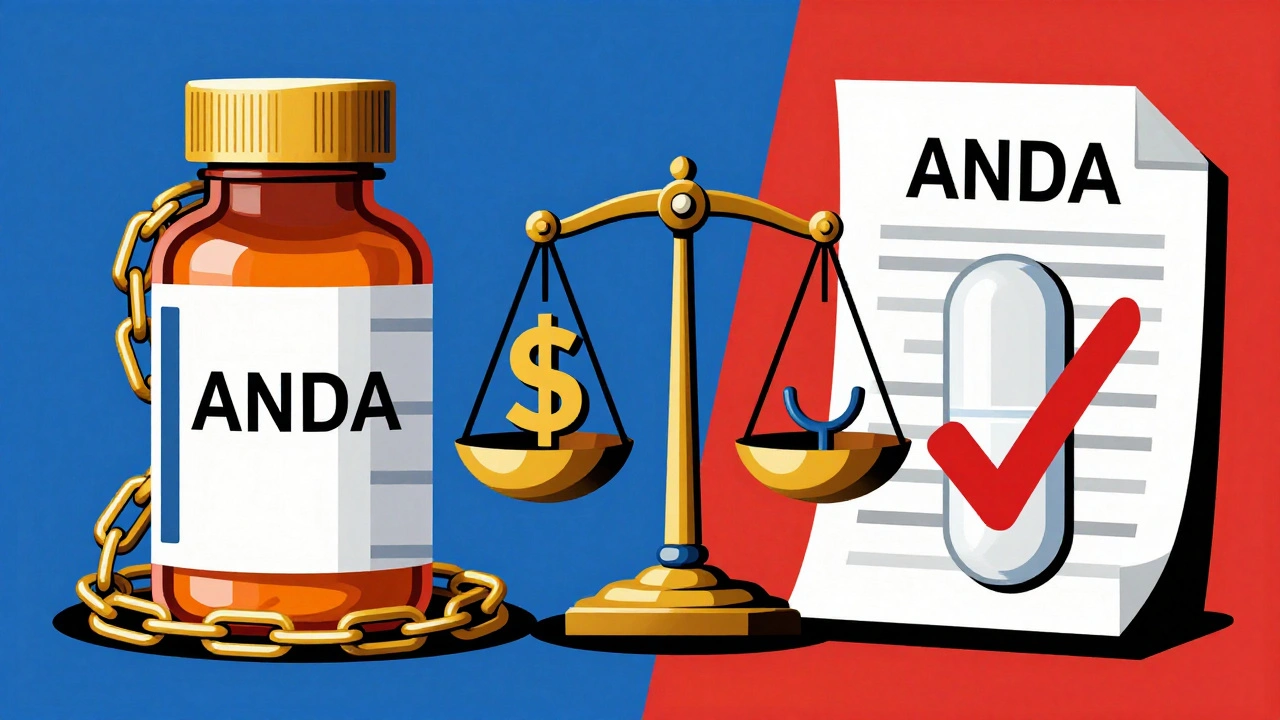
Hatch-Waxman Act: How U.S. Law Made Generic Drugs Affordable and Accessible
The Hatch-Waxman Act revolutionized U.S. drug access by creating a fast, low-cost path for generic drugs while protecting brand innovation. It saved $1.7 trillion in healthcare costs and now powers over 90% of prescriptions.