Lumbar Stenosis: Causes, Symptoms, and What You Can Do
When the space around your spinal cord in the lower back gets too tight, it’s called lumbar stenosis, a narrowing of the spinal canal that puts pressure on nerves exiting the lower spine. It’s not a disease—it’s a condition that happens over time, often from wear and tear, bone spurs, or thickened ligaments. Also known as spinal stenosis in the lumbar region, it’s one of the most common reasons people over 50 start having trouble walking or standing for long periods.
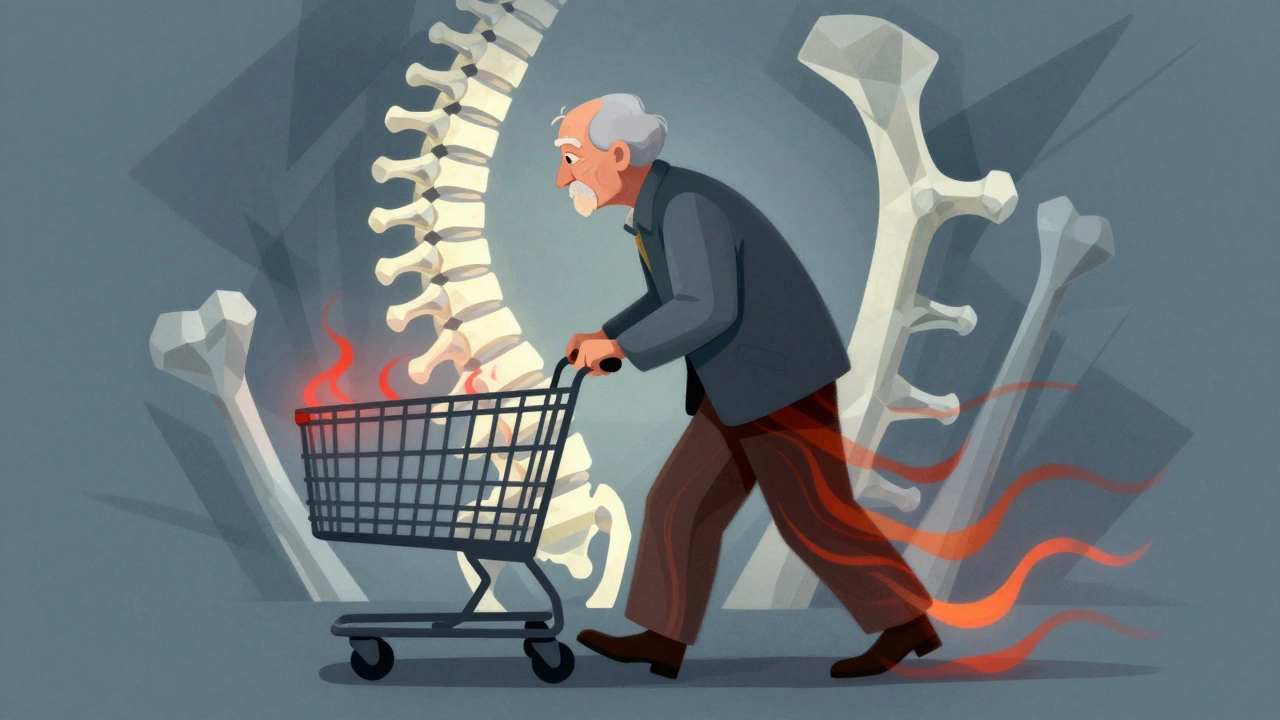
This condition doesn’t just cause back pain. It presses on nerves that run down your legs, leading to numbness, tingling, or weakness in one or both legs. Many people describe it as a heavy, achy feeling that gets worse when standing or walking but improves when sitting or leaning forward—like pushing a shopping cart. That’s because leaning forward opens up the spinal canal slightly, giving the nerves more room. It’s not just aging; factors like arthritis, herniated discs, or even inherited spine shape can make it worse. nerve compression, the direct result of lumbar stenosis squeezing spinal nerves is what turns a dull ache into sharp, shooting pain down the leg—sometimes mistaken for sciatica.
Most people with lumbar stenosis don’t need surgery. Physical therapy, posture changes, and over-the-counter pain relief often help a lot. degenerative disc disease, the gradual breakdown of spinal discs that contributes to bone spurs and narrowing is usually the root cause, and while you can’t reverse it, you can slow its impact. Weight management, core strengthening, and avoiding prolonged standing are simple steps that make a real difference. Some find relief with epidural steroid injections, but these aren’t a cure—just a way to reduce inflammation and buy time.
What you won’t find in most quick guides is how often lumbar stenosis is misdiagnosed. People assume it’s just back pain or a pulled muscle. But if your legs give out after walking a few blocks, or you need to sit down every few minutes just to feel normal, that’s not normal aging. It’s your body signaling something’s off inside the spine. The good news? There are proven, non-surgical ways to manage it—and many people live active lives with it for years.
Below, you’ll find real-world advice from people who’ve dealt with this condition—what worked, what didn’t, and what doctors actually recommend when it comes to pain relief, mobility, and avoiding unnecessary procedures. No fluff. Just what helps.
Spinal Stenosis and Neurogenic Claudication: What It Is and How It’s Treated
Neurogenic claudication causes leg pain when walking, relieved by bending forward. Learn how it differs from vascular claudication, how it's diagnosed, and what treatments actually work-from physical therapy to surgery.