Tinnitus: Causes, Treatments, and What You Can Do Now
When you hear ringing, buzzing, or hissing in your ears with no external source, you’re experiencing tinnitus, a condition where the brain perceives sound without an actual noise source. Also known as ringing in the ears, it affects over 15% of people globally and often links to hearing damage, stress, or underlying health issues. It’s not a disease itself—it’s a symptom. And like any symptom, it’s trying to tell you something.
Tinnitus doesn’t happen in a vacuum. It often rides alongside hearing loss, a decline in the ability to detect sounds, especially high-frequency ones, which can result from aging, loud noise exposure, or certain medications. Many people first notice tinnitus after a concert, a loud workplace, or even years of using headphones too loudly. It’s also tied to ear health, the overall condition of the auditory system, including the inner ear, nerves, and brain pathways that process sound. Problems like earwax buildup, Meniere’s disease, or even jaw misalignment (TMJ) can trigger or worsen it. And while some think it’s all in your head, science shows it’s more about how your brain interprets signals after damage to the inner ear.
What you do next matters. Some people find relief with sound therapy—using white noise or specialized apps to mask the ringing. Others benefit from cognitive behavioral therapy, which helps retrain how the brain reacts to the noise. There’s no magic pill, but managing stress, avoiding loud environments, and checking for drug side effects (like some antibiotics or NSAIDs) can make a real difference. If you’ve had tinnitus for more than a few days, especially if it’s only in one ear or comes with dizziness or hearing loss, it’s not something to ignore. It could signal an underlying condition that needs attention.
This collection brings together real, practical insights from people who’ve lived with tinnitus and the professionals who help them. You’ll find guides on how noise exposure leads to long-term damage, what treatments actually work (and which ones don’t), how ear infections and medications can trigger it, and how to protect your hearing before it’s too late. No fluff. Just clear, actionable info to help you understand what’s happening and what steps to take next.
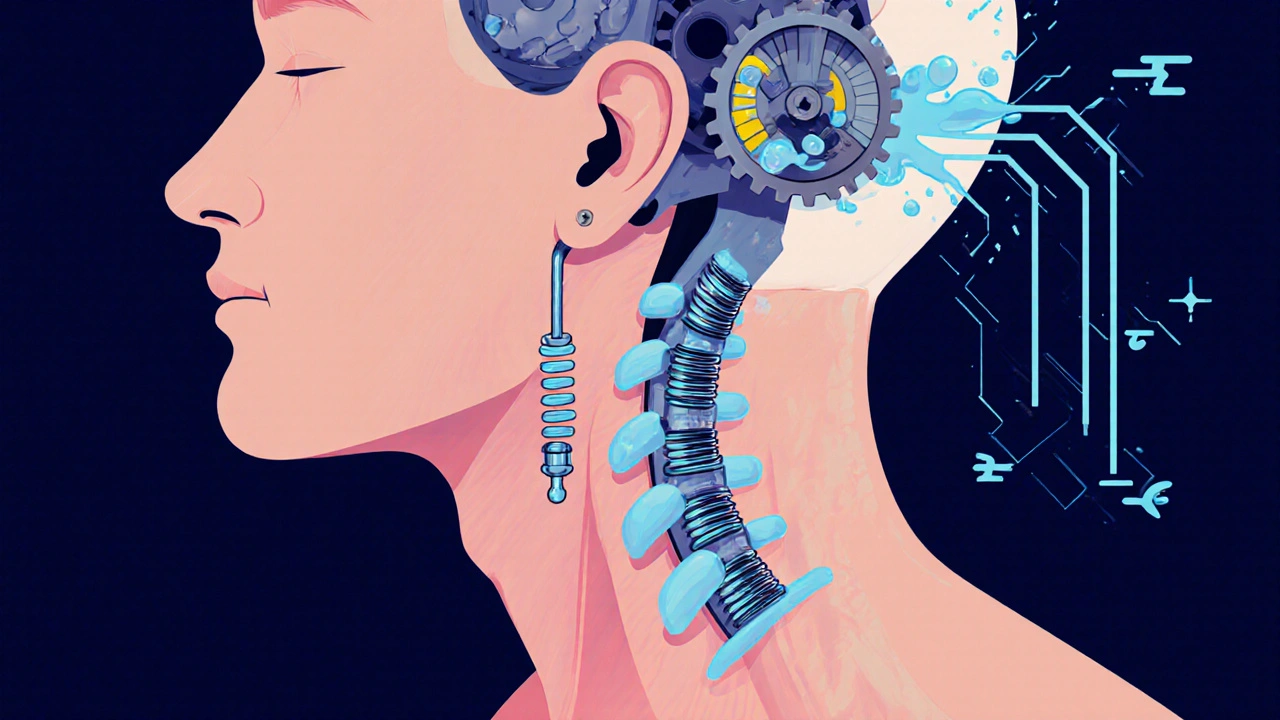
Meniere's Disease and Neck Pain: How Neck Issues Can Worsen Vertigo and Tinnitus
Meniere's disease and neck pain are often linked through nerve and posture issues. Learn how cervical spine tension worsens vertigo and tinnitus-and what simple steps can reduce attacks.