
Drug Safety Signal Estimator
Estimate Signal Detection Probability
Social media pharmacovigilance can detect safety signals, but only when enough users report similar adverse events. This tool estimates whether a safety signal would be detectable based on drug prevalence, adverse event rates, and reporting behavior.
Signal Detection Analysis
Adverse Events Detected
False Positives Expected
Signal-to-Noise Ratio
Signal Detection Probability
Key Insights
Every year, millions of people take prescription drugs. Most of them never have a problem. But for some, a medication that works for others causes a dangerous reaction - something doctors didn’t see in clinical trials. Traditionally, these reactions were reported by doctors or patients through slow, paperwork-heavy systems. Only 5 to 10% of actual adverse events ever made it into official databases. That’s a huge blind spot. Now, social media is changing that. Patients are posting about their side effects on Twitter, Reddit, and Facebook - often within hours of experiencing them. For pharmacovigilance teams, this is both a breakthrough and a minefield.
What Is Social Media Pharmacovigilance?
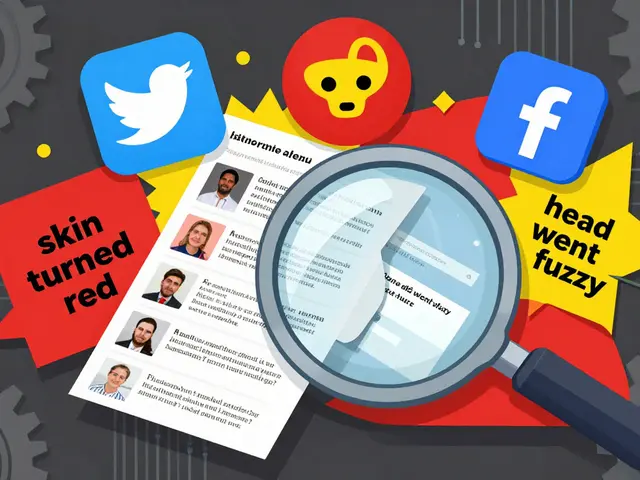
Pharmacovigilance is the science of tracking drug safety after a medicine hits the market. It’s not about whether a drug works - it’s about spotting the hidden dangers. For decades, this relied on doctors filling out forms or patients calling hotlines. But those systems are broken. They’re slow. They’re incomplete. And they miss the real stories patients tell in their own words. Social media pharmacovigilance flips the script. Instead of waiting for formal reports, companies now use AI tools to scan public posts across platforms like Twitter, Reddit, Instagram, and health forums. They look for phrases like “I started taking X and my skin turned red,” or “My mom had seizures after her new pill.” These aren’t official reports. They’re raw, unfiltered patient experiences. And they’re happening in real time. Since 2014, when the European Medicines Agency and big pharma launched the WEB-RADR project, this approach has grown fast. By 2024, 73% of major pharmaceutical companies were using AI to monitor social media for drug safety signals. These systems can process up to 15,000 posts an hour. They use techniques like Named Entity Recognition to pull out drug names, symptoms, and dosages - even when people use slang like “my head went fuzzy” or “I felt like I was drowning.”Where It’s Working: Real Cases That Changed Drug Labels
This isn’t theoretical. It’s already saving lives. In 2022, Venus Remedies noticed a spike in posts about rare skin rashes linked to a new antihistamine. The reactions weren’t in clinical trial data. Doctors hadn’t reported them. But on Reddit and Facebook, dozens of users described the same pattern: red, itchy patches appearing within days of starting the drug. The company flagged it. Regulators reviewed the data. Within 112 days, the drug’s label was updated to warn about this side effect. That’s 6 months faster than traditional reporting would have allowed. Another case came from a diabetes drug launched in early 2023. A small group of users on Twitter started complaining about sudden drops in blood sugar after switching brands. No formal reports existed. But the AI system picked up the cluster - same drug, same symptom, same timing. The signal was confirmed, and a safety alert was issued 47 days before the first official report reached regulators. These aren’t outliers. A 2024 survey found that 43% of pharmaceutical companies have identified at least one significant safety signal through social media in the past two years. In one Reddit thread, a nurse shared how user posts revealed a dangerous interaction between a new antidepressant and a popular herbal supplement - something no lab study had caught.Where It’s Failing: Noise, Bias, and False Alarms
But here’s the catch: 68% of what these AI systems flag turns out to be noise. People joke. They exaggerate. They confuse symptoms. One user might say, “This pill made me feel weird,” and mean tired. Another might mean hallucinations. The AI can’t always tell the difference. That’s why companies still need humans to review every flagged post. It’s a slow, expensive process. And then there’s the data problem. Nearly 92% of social media posts lack critical medical details. No age. No weight. No other medications. No lab results. Just a feeling and a drug name. Without context, it’s impossible to know if the reaction was caused by the drug, a virus, or something else. Worse, the system fails completely with rare drugs. If only 5,000 people take a medication, there won’t be enough posts to spot a pattern. The FDA found that for these drugs, false positives hit 97%. The signal is buried under the noise. There’s also a bias problem. Social media doesn’t represent everyone. Older adults, low-income groups, and people in rural areas are underrepresented. People who don’t use smartphones or who can’t afford data plans aren’t posting. That means the safety data we’re collecting is skewed - it reflects the experiences of tech-savvy, urban, younger populations. What about the elderly patient who never goes online but has a bad reaction? Their voice is silent.
The Tech Behind the Scenes: How AI Reads Patient Posts
It’s not magic. It’s code. Pharmaceutical companies use natural language processing (NLP) tools trained on medical terminology. These tools learn to recognize patterns. “My legs feel heavy” might mean muscle weakness. “I couldn’t stop shaking” could point to tremors. The AI doesn’t understand emotion - it looks for keywords, timing, and repetition. One technique is Named Entity Recognition (NER). It scans posts and pulls out:- Drug names (even brand names like “Lipitor” or slang like “the blue pill”)
- Symptoms (headache, nausea, dizziness)
- Dosage mentions (e.g., “took 2 pills”)
- Timeframes (“started yesterday,” “after 3 days”)
- Personal identifiers (which are automatically redacted to protect privacy)
Legal and Ethical Gray Zones
This is where things get messy. When a patient posts, “I think this pill gave me depression,” are they consenting to have that data used by a drug company? Probably not. Most users don’t realize their public posts are being scanned by corporate AI systems. That’s a privacy issue. In Europe, under GDPR, companies must prove they have a legal basis to use personal data - even if it’s public. In the U.S., there’s no clear law. Some experts argue it’s unethical *not* to use this data. If social media can catch a deadly side effect early, isn’t it our duty to act? Dr. Elena Rodriguez wrote in the Journal of Medical Ethics that ignoring social media could be a form of harm - especially when patients are already speaking out. But others warn: what if a patient’s post is used against them? Could an insurer see it? Could an employer find it? Could someone be stigmatized because their private health experience became a corporate data point? The EMA now requires companies to document their social media monitoring strategies in their safety reports. The FDA says companies must validate data before using it in decisions. But no one has defined clear rules for consent, anonymization, or data retention.Who’s Doing It - and Who’s Not
Adoption isn’t even. In Europe, 63% of pharmaceutical companies use social media monitoring. In North America, it’s 48%. In Asia-Pacific, it’s just 29%. Why? Regulation. Europe has been the leader. The EMA’s 2022 guidance pushed companies to take it seriously. The U.S. followed with FDA guidelines in 2022, but enforcement is still loose. Many Asian companies avoid it entirely due to strict privacy laws in China, Japan, and South Korea. The market is growing fast. The global social media pharmacovigilance segment is projected to hit $892 million by 2028 - up from $287 million in 2023. That’s a 25% annual growth rate. Companies aren’t doing this because it’s easy. They’re doing it because regulators are watching. And because they’re afraid of missing the next Vioxx - a painkiller pulled from the market after it caused thousands of heart attacks, because the warnings were ignored.
The Future: Integration, Not Replacement
Social media won’t replace traditional pharmacovigilance. It never should. But it can become a powerful early warning system. The future lies in blending the two. Imagine a system where:- A patient posts a side effect on Reddit
- AI flags it and cross-references it with clinical trial data and hospital records
- A pharmacovigilance specialist contacts the patient (with consent) for more details
- The verified report is added to the official database
What This Means for Patients
You might be reading this because you had a bad reaction to a drug. Maybe you posted about it online. Maybe you didn’t. Here’s what you should know: your words matter. Even if you think no one is listening, someone is. Pharmacovigilance teams are watching. And if enough people report the same issue, it can lead to safer medications for everyone. But also - be careful. Don’t share your full name, address, or medical ID. Don’t post screenshots of prescriptions. Your privacy is still your right, even in public posts. And if you’re a patient who doesn’t use social media? You’re not invisible. But your voice is harder to hear. That’s why we still need doctors, hotlines, and paper forms. Technology helps - but it doesn’t replace human connection.Can social media really detect drug side effects faster than doctors?
Yes - in some cases. Social media has identified safety signals up to 6 months faster than traditional reporting. For example, a diabetes drug’s side effect was spotted on Twitter 47 days before the first formal report reached regulators. But this only works when many people report the same issue. For rare drugs or isolated reactions, traditional systems still win.
Is it legal for drug companies to monitor my social media posts?
It’s legally gray. In Europe, under GDPR, companies must justify using public data for safety purposes. In the U.S., there’s no clear law - but the FDA requires companies to validate and document their methods. Most companies only analyze public posts and remove personal details. Still, many patients are unaware their comments are being scanned, raising ethical concerns about consent.
Why do so many flagged posts turn out to be false?
Because social media is full of noise. People joke, exaggerate, or confuse symptoms. One person might say “I felt weird” after taking a pill - and mean they were tired. Another might mean they had a seizure. AI can’t always tell the difference. That’s why 68% of flagged posts require human review. Misinformation, unrelated events, and coincidences create false alarms.
Does this method work for all types of medications?
No. It works best for widely used drugs with large patient bases - like antidepressants, diabetes meds, or blood pressure pills. For rare drugs - those taken by fewer than 10,000 people a year - the signal-to-noise ratio is too low. The FDA found false positive rates hit 97% for these drugs. Social media can’t replace traditional monitoring for niche medications.
Are older adults or low-income patients left out of this system?
Yes. Social media users skew younger, wealthier, and more urban. Older adults, people without smartphones, and those in rural areas rarely post about health online. That creates a dangerous bias. If a side effect mainly affects elderly patients who don’t use social media, it might go unnoticed - even if it’s serious. This is why traditional reporting systems still matter.
What’s the biggest risk of using social media for drug safety?
The biggest risk is acting on incomplete or misleading data. If a company pulls a drug based on 50 social media posts - without verifying medical history, dosage, or other causes - they could remove a safe, effective medicine. That harms patients who rely on it. The goal isn’t to react to every post. It’s to find patterns that are statistically significant and medically plausible.




Hayley Ash December 30, 2025
So let me get this straight - we’re trusting AI to read drunk Reddit rants about 'my head went fuzzy' and calling it science? 🤡 Next they’ll use TikTok dance trends to predict heart attacks.
kelly tracy December 31, 2025
This is a disaster waiting to happen. You think some 19-year-old saying 'this pill made me feel like I was dying' is a valid signal? Half of them are just high and bored. This isn't pharmacovigilance - it's digital witch hunting.
Nadia Spira January 1, 2026
The epistemological rupture here is profound. We are conflating phenomenological subjectivity with clinical episteme. The AI doesn't understand context - it parses syntax, not semantics. This isn't data collection - it's ontological colonialism of lived experience.
henry mateo January 3, 2026
i just had a bad reaction to my blood pressure med and posted about it on facebook... never thought anyone would actually read it. kinda weird to think my messy rant might help someone else. hope they fix the privacy thing tho.
Kunal Karakoti January 3, 2026
There is a quiet dignity in the silence of those who do not post. The elderly, the poor, the rural - they suffer in stillness. To claim social media as a complete system of safety is to ignore the invisible. Technology must serve all, not just the connected.
Aayush Khandelwal January 5, 2026
The real innovation isn't the AI - it's the fact that patients finally have a megaphone. For decades, we were told to 'just wait and see' if side effects were real. Now? We're forcing the system to listen. Even if it's noisy, even if it's messy - it's better than the old silence.
Sandeep Mishra January 6, 2026
I work in a rural clinic. We get 3-5 patients a month with weird reactions. None of them have smartphones. None of them post online. We still use paper forms. Don't let the shiny tech make you forget the people who still need the old ways. AI helps - but doesn't replace.
Colin L January 8, 2026
You know what's worse than false positives? The fact that we're letting corporations harvest our emotional outbursts under the guise of 'public data' - and then they sell the insights to insurers. I posted about my anxiety after a new antidepressant. Now my premiums went up. They're not protecting us. They're profiling us. And nobody's talking about this.
srishti Jain January 9, 2026
lol so now my dumb post about 'blue pill making me see ghosts' is in a pharma report? cool. next they'll ban memes.
Joseph Corry January 10, 2026
The entire premise is a neoliberal fantasy. We outsource public health surveillance to unregulated corporate algorithms because we’ve defunded real medicine. This isn't progress - it's abandonment dressed up as innovation. The real failure isn't the AI - it's the system that lets it exist.
Cheyenne Sims January 10, 2026
This is an unacceptable violation of medical ethics. Public posts are not consented data. The FDA’s current guidelines are legally indefensible. If you want to monitor patients, you need IRB approval, informed consent, and data governance - not a bot scraping Twitter.
Shae Chapman January 12, 2026
I cried reading this. 🥹 I posted about my daughter’s reaction to her epilepsy med and within weeks, the label changed. I thought I was just venting... but someone listened. Please don’t take this away. Just make it safer. 💙