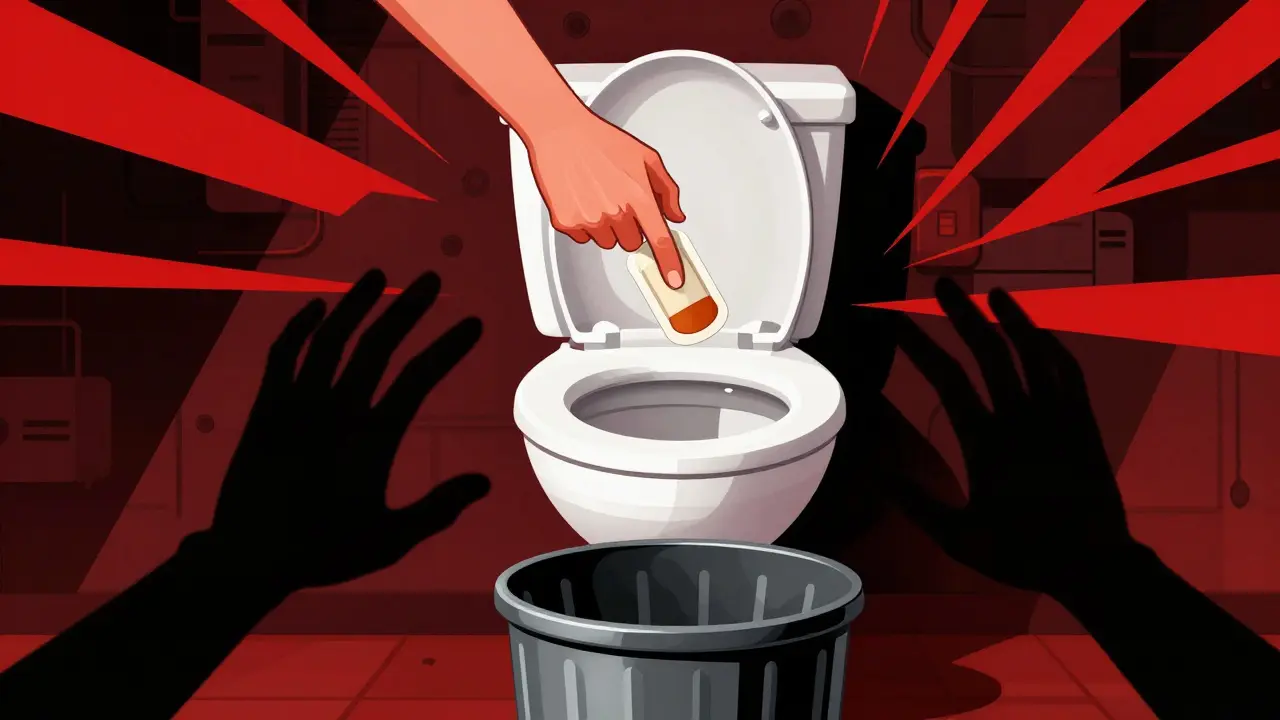
Putting old pills in the trash might seem like the easiest way to get rid of them, but for some medications, that simple act could be deadly. It’s not just about cleaning up - it’s about saving lives. The U.S. Food and Drug Administration (FDA) has a clear rule: never put certain medications in household trash. These aren’t just any drugs. They’re the ones that can kill someone - even a child - with a single dose. And if they end up in your trash, someone might find them. That’s why flushing is sometimes the only safe option.
What’s on the FDA’s Flush List?
The FDA keeps a short but critical list of medications that must be flushed down the toilet immediately after they’re no longer needed. There are only 11 categories on this list, but each one includes powerful drugs that are highly addictive and deadly if misused. These aren’t random picks. They’re based on real data: in 2021, over 107,000 people in the U.S. died from drug overdoses, and opioids made up nearly 70% of those deaths. Many of those cases started with a pill someone found in a home.
The exact medications on the flush list include:
- Buprenorphine - found in brands like SUBOXONE, BELBUCA, and BUTRANS
- Fentanyl - in patches and lozenges like DURAGESIC, ABSTRAL, and ACTIQ
- Hydromorphone - sold as EXALGO
- Meperidine - known as DEMEROL
- Methadone - in DOLOPHINE and METHADOSE
- Morphine - brands like MS CONTIN, AYRMO ER, and KADIAN
- Oxymorphone - OPANA and OPANA ER
- Tapentadol - NUCYNTA and NUCYNTA ER
- Sodium oxybate - XYREM and XYWAV
- Diazepam rectal gel - DIASTAT and DIASTAT ACUDIAL
- Methylphenidate transdermal system - DAYTRANA
These aren’t just old painkillers. Fentanyl, for example, is 50 to 100 times stronger than morphine. One patch, if pulled from the trash and stuck on the skin, can stop someone’s breathing in minutes. That’s why the FDA says: if you have one of these, flush it right away. No waiting. No storing. No guessing.
Why Not Just Throw Them Away?
You might think, “I’ll just mix them with coffee grounds and put them in a sealed bag.” That works for most medications - but not these. The reason is simple: these drugs are targeted. People who struggle with addiction often look through trash cans for pills. A 2019 study by the Substance Abuse and Mental Health Services Administration found that over half of people who misused prescription painkillers got them from friends or family - often by taking them from their homes.
Real cases show how dangerous this is. In February 2023, a Reddit user named u/MedSafetyNurse shared a story of a 3-year-old who found a fentanyl patch in the trash. The child was rushed to the hospital and barely survived. The American Association of Poison Control Centers reported over 8,900 cases of fentanyl exposure in 2022 - 42% of them involved children under five. These aren’t hypothetical risks. They’re everyday dangers.
And it’s not just kids. Teens, neighbors, even visitors can find these drugs. In 2021, a teenager in Ohio died after finding oxymorphone (OPANA ER) in a neighbor’s trash. That death led to new local laws requiring special disposal for Schedule II drugs. If you have one of these medications on the flush list, your trash is not a safe place.
What About the Environment?
“But won’t flushing hurt rivers and drinking water?” That’s a valid concern. Wastewater plants can’t remove all pharmaceuticals. Studies show that up to 80% of U.S. waterways now contain traces of medications. Some compounds, like carbamazepine, barely get filtered out at all.
So why flush then? Because the risk of death outweighs the risk of pollution. The EPA and FDA agree: for these specific drugs, the chance of someone dying from accidental exposure is far greater than the environmental impact of flushing one patch or one pill. Dr. John Scott from the EPA put it plainly: “The environmental impact of a single fentanyl patch flushed is negligible compared to the potential for multiple fatalities if that same patch is accessed from household trash.”
That doesn’t mean you should flush everything. Only these 11 categories. For every other medication - antibiotics, blood pressure pills, antidepressants - the FDA says to do something else.
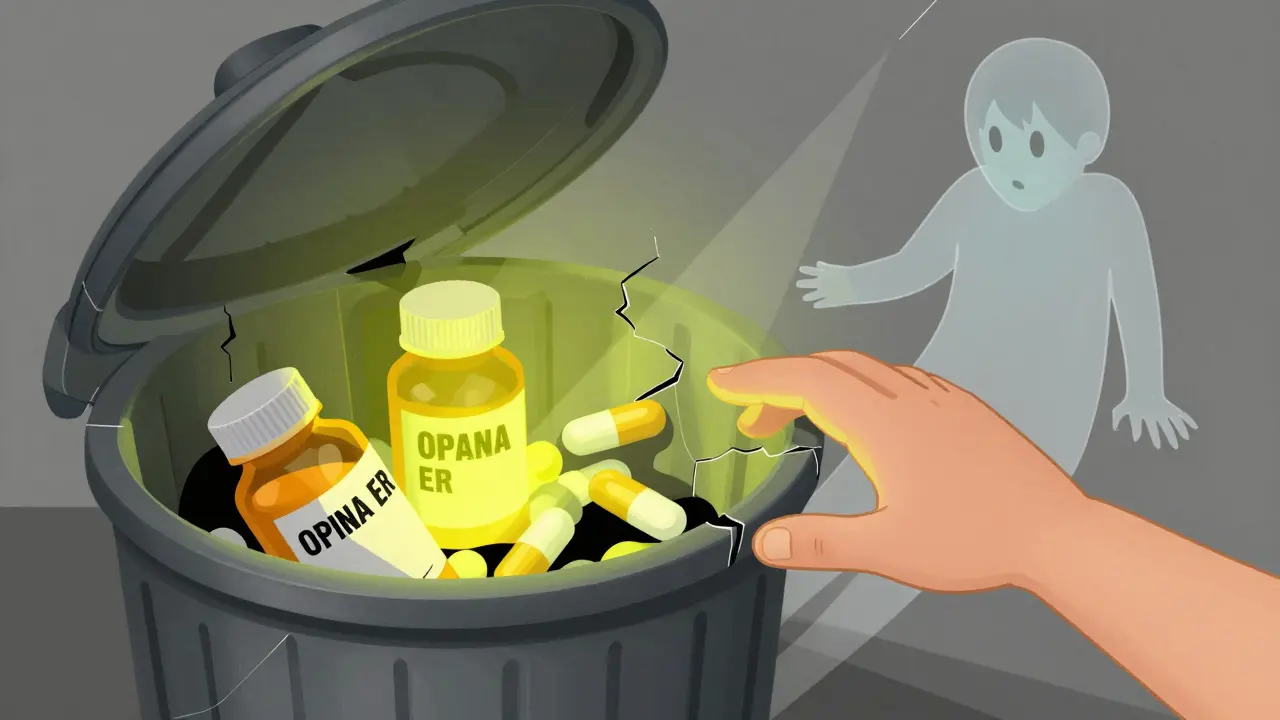
How to Dispose of Other Medications Safely
If your medication isn’t on the flush list, here’s what to do:
- Take the pills out of their original bottles.
- Don’t crush tablets or capsules - that can make them dangerous to handle.
- Mix them with something unappealing: used coffee grounds, cat litter, or dirt.
- Put the mixture in a sealed plastic bag or container.
- Throw it in your regular household trash.
This method makes it hard for someone to dig out and use the pills. It also prevents them from being mistaken for something else. Never pour pills down the sink or toilet unless they’re on the flush list. And never flush them just because you’re worried about the environment - that’s not the right reason.
What Are Your Other Options?
There are better ways than flushing or trash - and they’re getting easier to find.
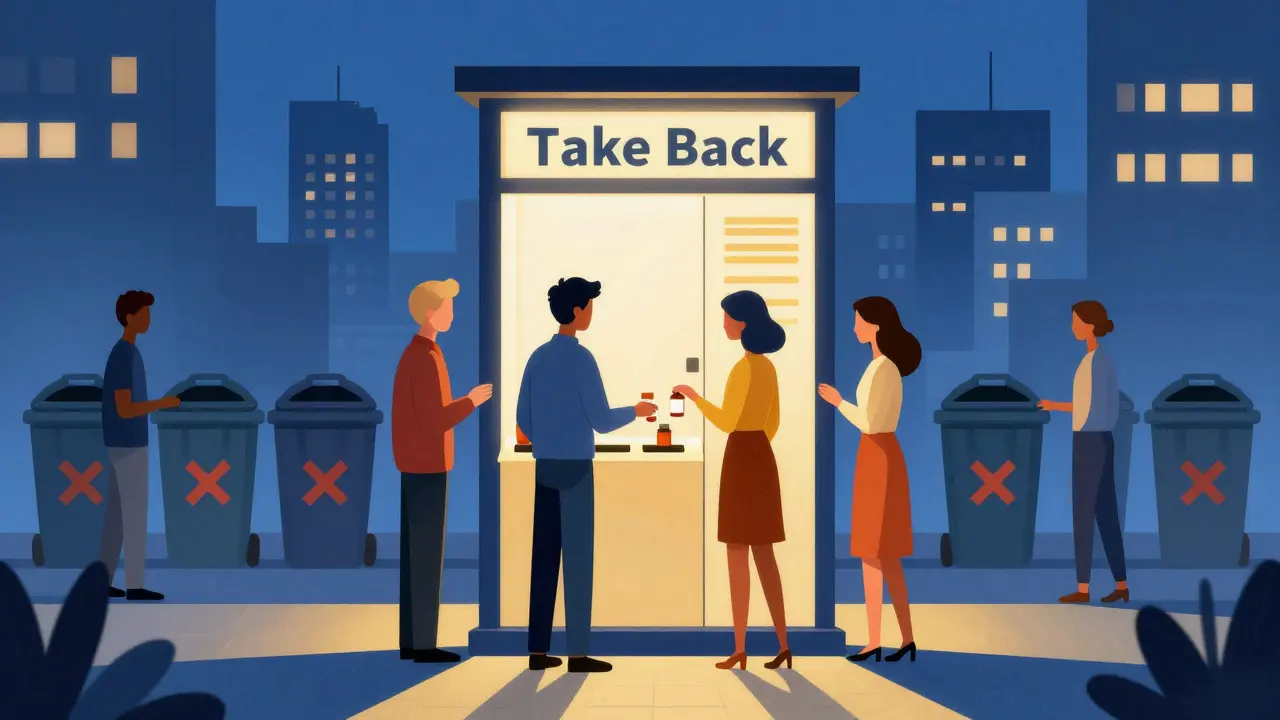
Most pharmacies now offer free medication take-back kiosks. Walgreens has over 2,000 across the U.S. CVS has more than 1,800. These kiosks accept almost all medications - including those on the flush list. No questions asked. Just drop them in. Some police stations and health departments also have collection boxes. In Minnesota alone, there are over 300 locations where you can safely turn in old meds.
Some companies are making it even easier. DisposeRx, for example, sells single-use packets that you add water to. The powder turns pills into a gel that can’t be recovered. Over 1,200 pharmacies now use them. And new packaging with activated charcoal is being tested - it traps drug molecules so they can’t be reused.
The point? You don’t have to flush. You don’t have to guess. There are safe, easy, and free options available. The FDA’s flush list is a last resort - not the first choice.
What If You’re Not Sure?
Most people can’t tell which drugs are on the flush list. A 2022 study found only 43% of patients could identify them correctly. If you’re unsure:
- Check the FDA’s official flush list - it’s updated regularly.
- Call your pharmacist. They’re trained to know this stuff.
- Look at the name: if it’s a strong opioid or a controlled substance, assume it’s on the list.
- When in doubt, take it to a pharmacy drop box.
Don’t rely on memory. Don’t assume “it’s just one pill.” The FDA’s list exists because real people have died because of it.
Final Rule: When in Doubt, Drop It Off
The safest thing you can do is take all unused medications - whether you think they’re dangerous or not - to a pharmacy drop box. No flushing. No mixing with coffee. No guessing. Just drop them in and walk away.
These programs are free, legal, and available in nearly every state. They’re designed to protect you, your family, and your community. And they’re growing. More pharmacies are adding kiosks. More states are funding collection programs. The goal isn’t just to clean up - it’s to prevent tragedy before it happens.
Medication disposal isn’t about convenience. It’s about responsibility. If you have one of these drugs, don’t wait. Don’t hope. Don’t assume someone else will handle it. Take action - because someone’s life might depend on it.
Can I flush any medication if I don’t have a take-back option?
No. Only medications on the FDA’s flush list should be flushed. For all others, mix them with coffee grounds or cat litter, seal them in a plastic bag, and throw them in the trash. Flushing non-listed drugs can harm water systems and is against FDA guidelines.
What if my medication isn’t on the flush list but I’m still worried?
Use a pharmacy take-back kiosk. Nearly all medications - even controlled substances - can be dropped off at Walgreens, CVS, or local law enforcement collection points. These programs accept everything except sharps (needles). It’s the safest, most reliable method.
Are flushable medications dangerous to flush down the toilet?
The environmental impact of flushing these specific medications is minimal compared to the risk of accidental overdose. The FDA and EPA agree: for drugs like fentanyl or oxymorphone, the chance of someone dying from a single dose in the trash far outweighs the pollution risk. Wastewater systems are designed to handle small amounts of pharmaceuticals, and these drugs are flushed only as a last resort to save lives.
Why can’t I just crush pills before throwing them away?
Crushing pills can release dangerous dust, especially with opioids or stimulants. It’s also unnecessary. The FDA recommends mixing intact pills with unappealing substances like coffee grounds or dirt - this makes them hard to retrieve without risking exposure. Crushing doesn’t improve safety and can make handling more hazardous.
Do I need to remove the label from the bottle before disposal?
Yes. Scratch out or cover your name, prescription number, and other personal details on the bottle. This protects your privacy. But don’t throw the bottle in the recycling - it may contain residual medication. Wrap it in tape and put it in the trash, or check if your pharmacy takes back empty containers.


Melba Miller March 8, 2026
Let me get this straight - we’re flushing life-saving meds because some junkie might dig through the trash? What’s next, banning coffee grounds because someone might steal your latte? This country’s gone full paranoid nanny state. I’ve got a cousin who’s a nurse - she says 90% of these ‘accidental overdoses’ are from people who already had prescriptions. Stop scapegoating trash cans and start holding addicts accountable.
Katy Shamitz March 9, 2026
Oh honey, I’m so glad you posted this. I’ve been telling my neighbors for years - you can’t just toss pills like old receipts. My aunt almost lost her grandson last year because he found a fentanyl patch in the recycling bin. It’s not about politics. It’s about being a good human. I keep a locked box in my bathroom now. Everyone should. It’s the bare minimum.
Nicholas Gama March 9, 2026
Flushing is the only rational choice. The EPA’s own data shows pharmaceutical runoff is 0.0003% of total water contamination. Meanwhile, accidental opioid exposure kills 12 kids a week. Math doesn’t lie. Your guilt about ‘pollution’ is just performative virtue signaling.
Mary Beth Brook March 11, 2026
Per FDA 21 CFR 1300.154(b), Schedule II opioids require immediate destruction via flush protocol. Any deviation constitutes non-compliance with federal controlled substance disposal regulations. Your ‘coffee grounds’ method is a liability. Don’t risk a DEA audit.
Neeti Rustagi March 11, 2026
Thank you for sharing such vital information. In India, we have community-based drug collection drives every month in major cities. Perhaps we can advocate for similar initiatives in the United States. Responsibility begins with awareness, and your post has done a great service.
Dan Mayer March 12, 2026
wait so u r saying i shud flush my xanax? but what if my dog drinks the water?? i mean like… my dog is my baby. also i read somewhere that flushing makes fish gay? idk man
Janelle Pearl March 13, 2026
I lost my brother to an overdose. He got his first fentanyl pill from his uncle’s medicine cabinet. I don’t care if it’s ‘inconvenient’ - I’ll drive 40 miles to a drop box if I have to. I don’t want another family to go through this. If you have one of these meds, don’t wait. Don’t rationalize. Just go. Please.
Ray Foret Jr. March 14, 2026
Yessss!! I just dropped off 3 months of my dad’s pain meds at Walgreens today 😊 They had this little kiosk right by the pharmacy - no questions, no forms, just drop and go. So easy! You guys should totally do it too! It feels good to do the right thing 🙌
Samantha Fierro March 16, 2026
Thank you for this comprehensive and meticulously researched guide. The FDA’s guidelines are not merely recommendations - they are public health imperatives grounded in epidemiological evidence. I have distributed printed copies of this list to all residents in my senior community. We must institutionalize safe disposal practices as a standard of care.
Robert Bliss March 16, 2026
i never knew this. i always just threw mine in the trash. i feel kinda bad now. but i’m gonna go drop mine off tomorrow. thanks for making it clear. no more guessing.
Peter Kovac March 16, 2026
There is no empirical evidence that flushing reduces opioid diversion. The 2019 SAMHSA study cited here conflates correlation with causation. The real issue is pharmaceutical overprescribing, not disposal methods. This is a distraction tactic by the FDA to shift blame away from prescribers and manufacturers.
APRIL HARRINGTON March 17, 2026
OMG I JUST FOUND A FENTANYL PATCH IN MY KIDS’ PLAYROOM AND I THOUGHT IT WAS A STICKER 😱 I THREW IT IN THE TRASH LAST WEEK 😭 I’M SO SCARED I’M GONNA LOSE THEM I’M CALLING THE POISON CONTROL CENTER RIGHT NOW AND I’M GOING TO THE PHARMACY IN MY PJs I’M CRYING AND I’M SO SORRY I DIDN’T KNOW
Leon Hallal March 18, 2026
You think flushing is the answer? What about the people who live near rivers? You think your precious pills are more important than the fish? You’re not saving lives - you’re just making yourself feel better. I’ve seen the data. The environmental damage is real. Stop pretending.
Judith Manzano March 20, 2026
This is so important. I never realized how many meds are on that list. I just threw out my old methadone bottle last month. I’m going to call my pharmacist tomorrow and ask if they have a drop box. Thank you for making me aware - I didn’t even know I was putting my family at risk.
rafeq khlo March 21, 2026
Flush protocol is a colonialist solution to a systemic problem. In developing nations, pharmaceutical waste is not a choice - it is a consequence of lack of infrastructure. You Americans think you can solve global health issues by flushing pills. You ignore the root causes - profit-driven prescribing, insurance gaps, lack of mental health access. This is performative activism dressed as public safety