Quick Summary
What You Need to Know First:
- Metabolic surgery offers significantly higher diabetes remission rates compared to medication alone.
- Weight loss typically averages 27% of initial body weight within six years post-procedure.
- Durability varies: while early remission is high, long-term maintenance requires lifelong monitoring.
- Patient selection depends heavily on preoperative insulin dependence and Body Mass Index (BMI).
- Nutritional deficiencies are common risks requiring permanent dietary management.
The Reality Behind Metabolic Surgery
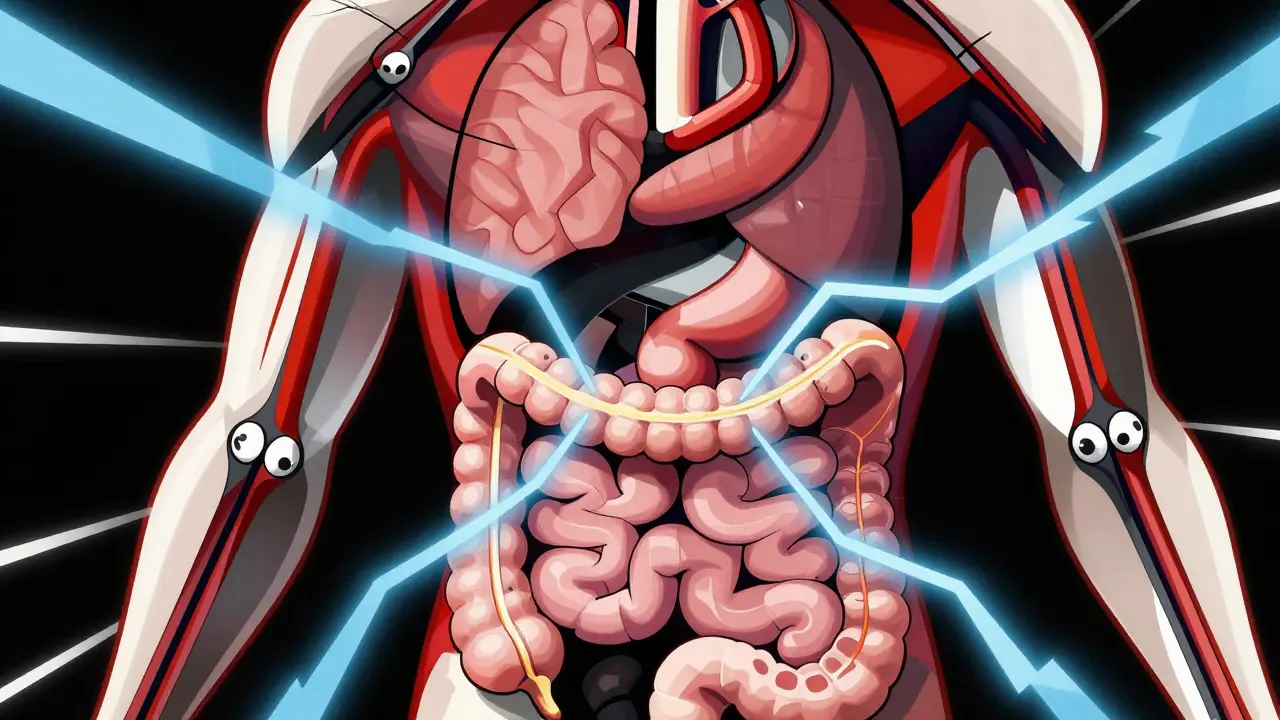
If you are standing at the crossroads of managing severe obesity or persistent type 2 diabetes, the question often isn't just about diet and pills anymore. It's about whether altering your anatomy permanently is the right path forward. Metabolic surgery represents a collection of gastrointestinal procedures designed to treat metabolic diseases like diabetes, but its roots go deep into treating severe obesity. Before we get into the numbers, you need to understand that while the term "bariatric" usually makes people think of weight loss clinics, modern medical consensus distinguishes these operations as tools for fixing how your body processes energy.
In fact, many experts view this differently now. Dr. Francesco Rubino from King's College London has pointed out something fascinating: diabetes resolution often happens within days or weeks after surgery, long before significant weight loss occurs. This tells us something important-the mechanism isn't just mechanical restriction. We aren't talking about shrinking your stomach slightly; we are fundamentally changing hormonal signals. Your gut hormones, specifically ghrelin and GLP-1, interact with your insulin system in ways medicine cannot replicate yet.
Hard Numbers on Weight Loss and Remission
When you look at the clinical data, the distinction between medical therapy and surgical intervention becomes stark. You might wonder if intensive medical management-meaning the best medications plus diet coaching-is enough. The answer lies in the randomized controlled trials.
A massive review published in the Journal of the American Medical Association (JAMA) in 2012 highlighted that surgery patients lost an average of 27.7% of their total body weight. Compare that to the control group receiving standard medical therapy, where patients actually gained 0.2% of their body weight over time. That is not a marginal difference; it is transformative.
We need to talk about durability, though. Short-term wins are great, but does it stick? The Swedish Obese Subjects (SOS) study provides perhaps the most comprehensive long-term data we have. Fifteen years after the initial procedure, 30.4% of patients maintained full remission of their diabetes. In contrast, only 6.5% of the non-surgical control group achieved this. If you look at a seven-year timeline, surgical patients showed an 18.2% remission rate versus 6.2% for those relying solely on lifestyle changes.
Metabolic Surgery procedures that alter gastrointestinal anatomy to treat obesity-related comorbidities such as type 2 diabetes and hypertension. These interventions are recognized by organizations like the American Society for Metabolic and Bariatric Surgery, which defines them specifically for treating metabolic dysfunction beyond simple weight reduction.
Which Procedure Fits Your Profile?
You likely hear doctors throw around terms like "bypass" or "sleeve." They all work differently, and the choice changes your outcome profile. Let's break down the three most common options so you see what the trade-offs actually look like.
| Procedure Type | Mechanism | Typical Weight Loss | Diabetes Remission Potential |
|---|---|---|---|
| Roux-en-Y Gastric Bypass (RYGB) | Bypasses part of small intestine | High (~30%) | Very High (up to 80% short term) |
| Sleeve Gastrectomy | Removes portion of stomach | High (~25%) | High (approx. 70% short term) |
| Biliopancreatic Diversion | Complex rerouting of digestion | Extreme (>35%) | Extremely High (>90%) |
Roux-en-Y Gastric Bypass (RYGB): This is often the gold standard for diabetic patients. By creating a small pouch and connecting it lower down in the small intestine, it alters nutrient absorption. One year post-op, roughly 42% of patients hit complete remission. Interestingly, even five years later, nearly 30% maintain that status. The reason RYGB excels here is partly due to malabsorption and partly because the food bypasses the upper intestine, reducing the release of certain stress hormones that spike blood sugar.
Sleeve Gastrectomy: This involves removing about 80% of the stomach, leaving a tube shape. It has become incredibly popular because it is technically simpler and carries fewer risks of nutritional deficiency compared to bypass procedures. However, the remission data is slightly lower. At one year, you see about 37% remission, dropping to 23% by the five-year mark. For some, this is still life-changing; for others, it might mean returning to some medication later.
Type 2 Diabetes Mellitus a chronic condition characterized by high blood sugar, insulin resistance, or the inability of the body to produce enough insulin. Management via metabolic intervention aims to reset the glucose metabolism, potentially halting disease progression.Who Actually Qualifies?
Eligibility isn't a free-for-all. You cannot simply ask for this surgery regardless of your health metrics. Current guidelines from the ASMBS generally recommend it for patients with a BMI over 40, or between 35 and 39.9 if they have uncontrolled type 2 diabetes despite using the maximum allowed medical therapies. There is a growing conversation about lowering that threshold. Evidence suggests patients with BMIs between 30 and 35 still gain massive benefits if their diabetes is aggressive, although insurance coverage can be tricky here depending on your region.
There is also the factor of duration. How long have you had diabetes? Patients whose condition was diagnosed less recently tend to do better. If you've been dependent on insulin for ten years, the beta cells in your pancreas may have burned out too severely for surgery to restore function fully. One study noted that insulin-naive patients (those not needing shots before surgery) saw a 53.8% remission rate fourteen months after the operation, whereas heavy insulin users fared worse. This is a crucial conversation to have with your specialist before signing consent papers.
The Hormonal Mechanism: Why It Works
We touched on this briefly, but it deserves a dedicated space because it dispels the myth that surgery is just "starving" yourself. When you undergo a bypass or sleeve, you disrupt the enteroinsular axis. Specifically, you boost levels of Glucagon-like Peptide-1 (GLP-1). This hormone does two powerful things: it makes your brain feel fuller faster, and it directly stimulates insulin secretion when sugar enters your system.
This explains why your blood sugar drops immediately, sometimes overnight, after surgery, even if you haven't lost weight yet. Dr. Rubino’s research highlights that without these hormonal shifts, we would not see the dramatic glycemic improvements observed. It is essentially "pharmacological" surgery-you are resetting your body's internal chemistry. However, this benefit comes with a price: because your gut absorbs nutrients differently, you have to manage your vitamin intake aggressively for the rest of your life.
Living With the Long-Term Consequences
Surgery ends the operation day, but it starts a lifelong commitment. It is not a cure-and-forget solution. The SOS study revealed a concerning trend: remission rates drop over time. From a high of 72% at two years, it fell to 36% at ten years. Dr. David Arterburn noted that this decline is often linked to weight regain or the slow progressive loss of beta-cell function. You cannot simply rely on the surgery forever; you must adopt sustainable lifestyle habits.
You also face physical risks that do not happen with oral medication. Malnutrition is a genuine risk. Anemia is common because iron absorption is compromised in bypass patients. Bone fractures can occur due to altered calcium and Vitamin D processing. A study by ARMMS-T2D warned that surveillance for nutritional deficiencies is mandatory, not optional. You will be required to take supplements daily, potentially for the rest of your life, with blood tests monitoring your levels every six months or so.
Future Directions and Non-Surgical Alternatives
The landscape is shifting fast. While surgery remains the king of effectiveness, non-surgical methods are catching up. The DiRECT trial showed that intensive medical management using very low-calorie diets could achieve 46% remission at one year for some patients. But remember, the retention of that remission without surgery is historically difficult. We also see new devices entering the market, like intragastric balloons, which offer intermediate options for those not ready for the knife, though they generally lack the long-term efficacy of established surgical procedures.
Will I definitely be cured of diabetes?
Not necessarily. While many patients achieve remission, statistics show relapse rates increase over time. About 30-40% of patients remain in remission five years post-surgery depending on the procedure. Some may still require reduced medication even if not fully off them.
How much weight will I lose?
On average, patients lose about 27% of their total body weight. However, individual results vary significantly based on starting weight, adherence to diet, and the specific type of procedure performed.
Is the surgery risky?
Short-term surgical risks include infection and leaks. Long-term risks involve nutritional deficiencies like anemia, osteoporosis issues, and potential bowel obstruction. Surgeons advise lifelong supplementation and monitoring.
Can I have the surgery if my BMI is under 35?
Guidelines are expanding. In the US and UK, patients with BMI 30-35 can qualify if their diabetes is poorly controlled medically. However, insurance coverage is inconsistent in this category and requires specific physician advocacy.
Does the surgery fix other health issues?
Yes. Studies indicate improvements in HDL cholesterol, triglycerides, and hypertension. Dr. Courcoulas noted significant improvements in lipid profiles lasting up to 12 years in surgical patients.






Goodwin Colangelo April 2, 2026
The hormone shift explanation is accurate and often overlooked by general practitioners.
Patient compliance with supplements is the critical factor most people forget until complications arise.
Insulin sensitivity improvements happen rapidly regardless of the initial weight metrics seen early on.
Doctors should emphasize the GLP-1 mechanism more during pre-op counseling sessions.
This biological reset gives patients a second chance at metabolic health.
Joseph Rutakangwa April 2, 2026
Focus on consistency over speed
Results will follow
Rob Newton April 3, 2026
Most patients gain weight back within five years anyway
The stats are cherry picked
Branden Prunica April 5, 2026
I saw my best friend crash after surgery because she did not adjust her diet fast enough
She cried every night trying to eat normal food that hurt her stomach
It was absolute devastation watching her struggle through the pain silently
People need to understand the emotional toll is just as heavy as the physical risks
Divine Manna April 6, 2026
Such assumptions lack longitudinal evidence from peer reviewed journals.
One must consider the selection bias inherent in observational studies.
The SOS study provides robust data supporting sustained remission rates.
Drawing conclusions from anecdotal cases ignores the clinical consensus entirely.
Beth LeCours April 7, 2026
Hearing about the vitamin deficiencies makes me nervous.
Ace Kalagui April 9, 2026
It is crazy how many people overlook the nutritional side of this surgery.
You really have to commit to the vitamins forever.
My uncle tried it and he hated taking the pills daily.
They felt like a chore in the morning routine eventually.
But then he started feeling better than ever without meds.
So you see the duality of the whole situation quite clearly now.
We need to talk more about the cultural impact of body image changes too.
People get shocked when a friend suddenly fits into old clothes again.
That can actually strain relationships if they do not prepare well emotionally.
I think families should join the therapy sessions before cutting.
It helps everyone understand why the hunger signals change so much.
Otherwise the patient feels isolated during holiday dinners mostly.
The food texture becomes weird after bypass procedures specifically.
You cannot eat bread the same way anymore which is sad sometimes.
Still, seeing blood sugar drop overnight is miraculous regardless.
We should encourage more research into these hormonal shifts definitely.
Joey Petelle April 9, 2026
Culture does not stop the biology of malabsorption though.
Few realize we are essentially lobotomizing the digestive tract permanently here.
Americans love a quick fix rather than real discipline.
angel sharma April 10, 2026
Moving forward with this procedure takes immense courage and dedication daily.
Your pancreas might finally rest after years of hard work fighting insulin.
Imagine waking up with energy you thought was gone forever already.
Trust your medical team and focus on the recovery phase fully.