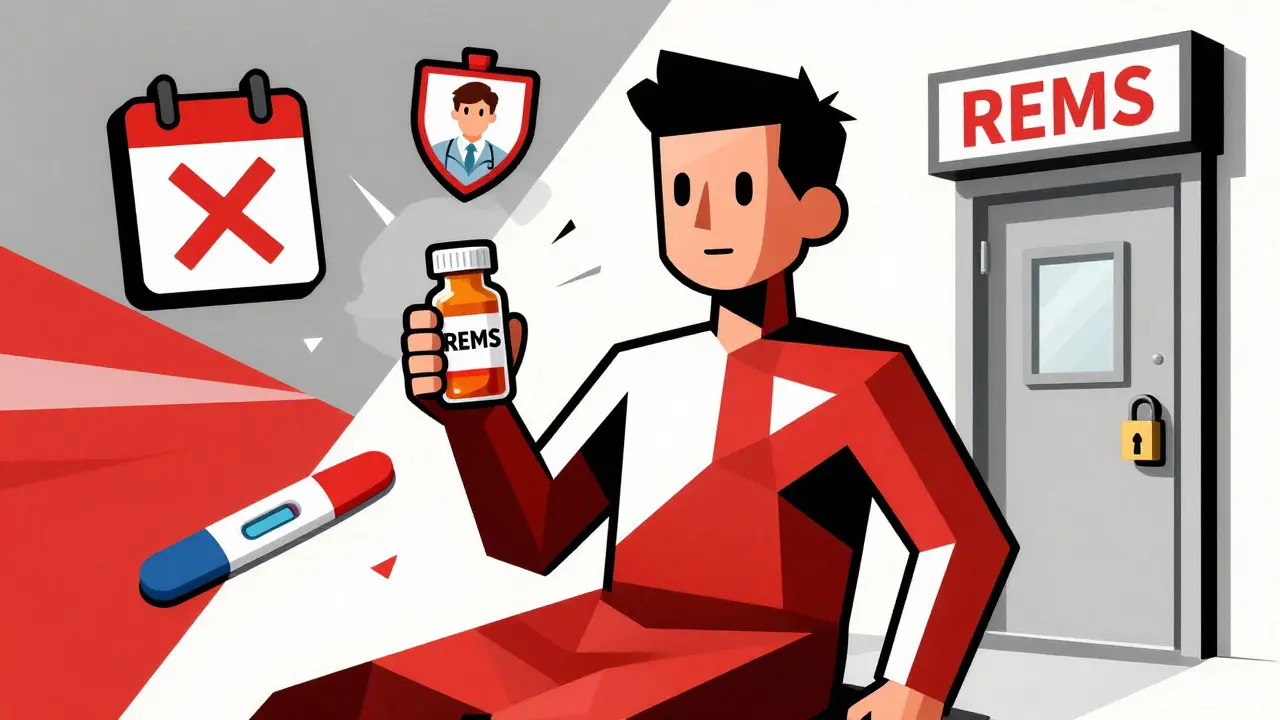
Before you start a new medication, especially one that carries serious risks, you need to know if it’s covered by a REMS program. REMS stands for Risk Evaluation and Mitigation Strategy. It’s not just a formality-it’s a safety net designed by the U.S. Food and Drug Administration (FDA) to make sure the benefits of a drug outweigh its dangers. If you skip checking REMS requirements, you could face delays, denied prescriptions, or even serious harm. For some drugs, like isotretinoin or thalidomide, failing to follow REMS rules can lead to birth defects, overdose, or life-threatening side effects. This isn’t theoretical. In 2022, over 40% of patients on REMS-mandated drugs experienced treatment delays because their prescriber or pharmacy didn’t complete the required steps.
What Is a REMS Program?
REMS programs were created after the FDA gained authority under the Food and Drug Administration Amendments Act of 2007. They’re required for medications with known, serious risks that can’t be managed through standard labeling alone. Think of REMS as extra layers of protection. Some drugs are so dangerous that without REMS, they wouldn’t be approved at all. For example, Zyprexa Relprevv can cause sudden dizziness and sedation after injection-so it must be given in a certified clinic where staff can monitor you for at least three hours. Isotretinoin, used for severe acne, causes severe birth defects. That’s why the iPLEDGE REMS program requires both doctors and patients to register and confirm they understand the risks.
As of 2025, there are 76 active REMS programs in the U.S. Some are simple-just a printed Medication Guide given to patients. Others are complex. They might require doctors to get certified, patients to enroll in registries, labs to be done before each dose, or the drug to be given only in certain hospitals. The FDA doesn’t apply REMS randomly. It’s based on real-world data: cases of liver failure, suicidal behavior, addiction, or fetal harm linked to the drug.
How to Find Out if a Medication Has a REMS Program
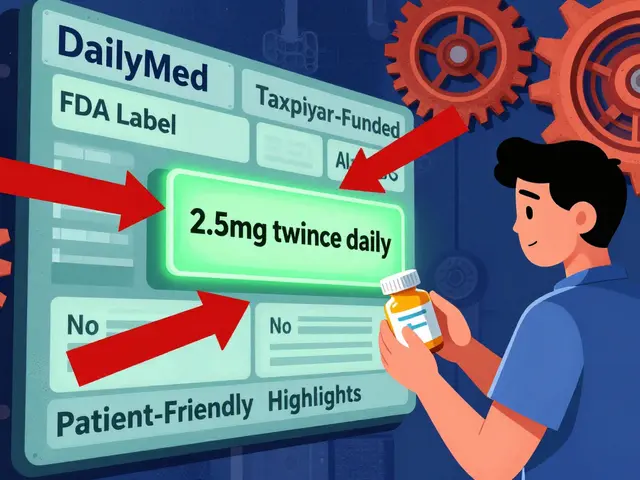
You can’t rely on the pharmacy label alone. Not every REMS requirement is printed there. The first place to check is the official prescribing information-also called the package insert. It’s available online through DailyMed, a government site maintained by the National Library of Medicine. Look for a section titled “REMS” or “Risk Evaluation and Mitigation Strategy.” If it’s there, it will list exactly what’s required.
But the easiest and most reliable method is using the FDA’s REMS Public Dashboard. This free, searchable tool shows every active REMS program. You can search by drug name, manufacturer, or even the type of requirement-like whether prescriber certification or patient registry enrollment is needed. The dashboard was updated in March 2023 and now includes real-time links to each program’s official website. For example, if you search for “mycophenolate,” it will take you directly to the Mycophenolate REMS site, which explains pregnancy testing rules and patient counseling requirements.
Don’t ignore the manufacturer’s website. Companies like Celgene (now part of Bristol Myers Squibb) and Janssen run their own REMS portals. If a drug requires prescriber certification, the manufacturer’s site will have the enrollment form, training videos, and contact info. For isotretinoin, that’s iPLEDGEprogram.com. For opioids, it’s the Opioid Analgesic REMS Education portal. These sites are the only places where doctors can get certified and patients can complete required acknowledgments.
What Are the Common REMS Requirements?
Not all REMS are the same. They’re built around the specific risk. Here’s what you might encounter:
- Medication Guides: These are printed handouts given to patients every time the prescription is filled. They explain the risks in plain language. For drugs like Vyvanse, patients report these guides are helpful but overwhelming-filled with medical jargon.
- Communication Plans: These are educational materials sent to doctors and pharmacists. They don’t require action from patients, but they ensure providers know the risks. The Opioid Analgesic REMS uses this approach, offering free continuing education courses to prescribers.
- Elements to Assure Safe Use (ETASU): These are the strictest requirements. They include:
- Prescriber certification: Doctors must complete training and register with the REMS program before writing the prescription.
- Patient enrollment: Patients must sign up in a registry and confirm they understand the risks.
- Specialized monitoring: Blood tests, pregnancy tests, or heart monitoring before each dose.
- Restricted distribution: The drug can only be dispensed by certified pharmacies or given in certified clinics.
For example, thalidomide requires both prescriber certification and patient enrollment. The training takes about 65 minutes. Once certified, the doctor gets a unique ID number. Without it, the pharmacy won’t fill the script. For patients, this means a delay-sometimes weeks-while paperwork is processed.

Who Is Responsible for Checking REMS Requirements?
It’s a shared responsibility. But in practice, the pharmacist is often the last line of defense. Pharmacies are legally required to verify REMS compliance before dispensing. A 2023 survey of hospital pharmacists found that those who used a standardized REMS checklist cut prescription processing time from 45 minutes to 15 minutes. That’s a huge time-saver.
Doctors need to check REMS before writing the prescription. If you’re a prescriber, you should build REMS verification into your workflow. The Institute for Safe Medication Practices recommends a three-step process:
- Check the medication label for any REMS indication.
- Search the FDA REMS Public Dashboard to confirm the current requirements.
- Call the pharmacy or manufacturer if anything is unclear.
Patients also have a role. Don’t assume your doctor knows. Ask: “Does this drug have a REMS program? What do I need to do?” If you’re prescribed isotretinoin or mycophenolate, you’ll need to complete a pregnancy test and sign forms. If you don’t, the pharmacy will hold your prescription.
How Long Does REMS Verification Take?
It varies. For simple REMS with just a Medication Guide, it takes seconds. For complex ones, it can take days or weeks.
Prescriber certification for drugs like thalidomide or lenalidomide usually takes 1-3 business days after submitting the application and completing training. Patient enrollment in iPLEDGE can take up to 7 days if the patient hasn’t completed the required counseling or pregnancy test. Some pharmacies report delays of 6-10 business days when REMS steps are missed.
As a rule of thumb, plan for 8-12 minutes of extra time per new prescription for REMS checks. If you’re a patient, expect to spend 20-45 minutes on paperwork if you’re enrolling in a registry. The FDA estimates that 1 in 4 patients on REMS drugs experience delays because they weren’t told upfront what was required.
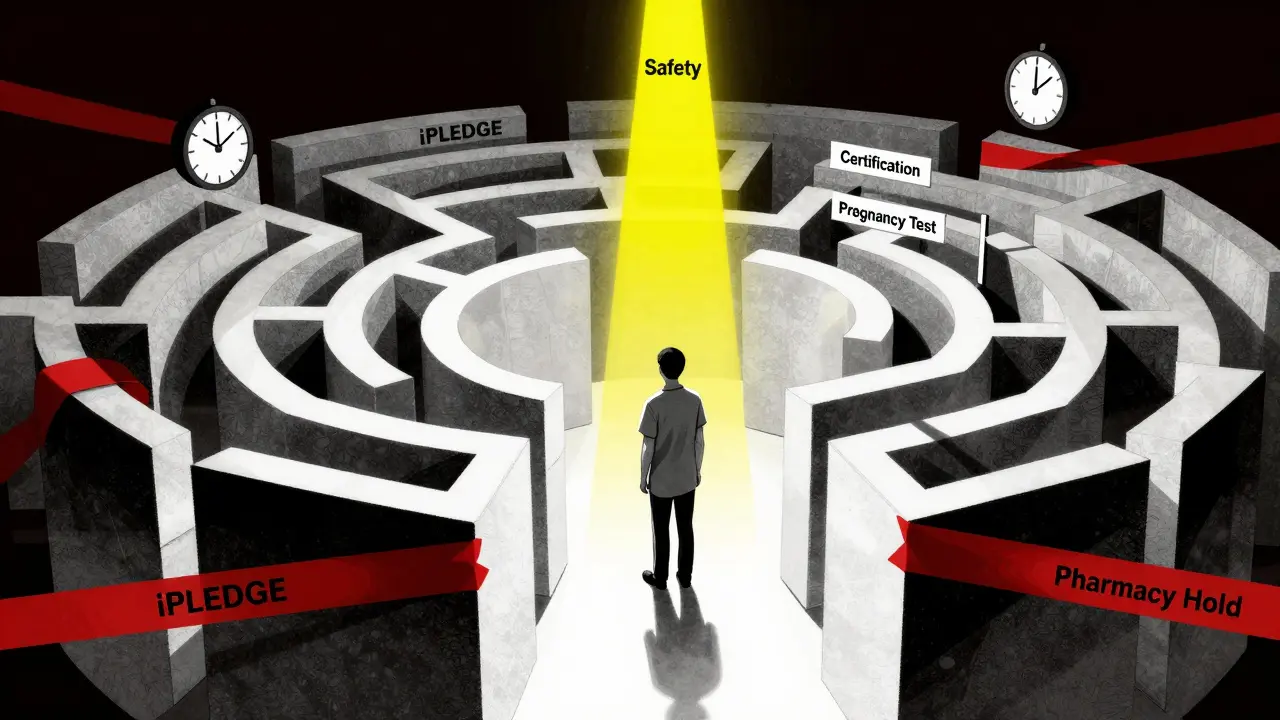
What Happens If You Skip REMS?
Pharmacies will not fill the prescription. Period. That’s not a suggestion-it’s a legal requirement. If a doctor writes a prescription for isotretinoin without iPLEDGE enrollment, the pharmacy will return it. If a patient tries to get thalidomide without certification, the drug won’t leave the warehouse.
There are also legal consequences. In 2022, the FDA issued 27 warning letters to drug manufacturers for failing to enforce REMS rules. Pharmacies have been fined for dispensing REMS drugs without verification. And if a patient suffers harm because REMS steps were skipped, the provider or pharmacy could face liability.
But the biggest risk isn’t legal-it’s medical. A patient on mycophenolate who doesn’t know she’s pregnant could lose the baby. A patient on an opioid without proper education could develop an addiction. REMS exists to prevent those outcomes.
Recent Changes and Future Trends
REMS isn’t static. The FDA has been working to reduce unnecessary burdens. Between 2015 and 2020, 37% of REMS programs were modified to cut red tape. In 2022, 14 programs were simplified without reducing safety. New policies require all REMS programs to include smartphone-friendly tools by 2025. Some pharmacy benefit managers now integrate REMS checks directly into e-prescribing systems, so doctors get alerts right in their EHR.
Looking ahead, experts predict a 25% increase in REMS programs over the next five years. Why? New drugs for cancer, autoimmune diseases, and gene therapies often have narrow safety margins. The Congressional Budget Office estimates that 85-90% of novel oncology drugs approved after 2025 will need REMS. Some companies are even testing blockchain systems to track certification across providers-something that could cut delays by half.
What You Should Do Now
If you’re a patient about to start a new medication:
- Ask your doctor: “Is this drug under a REMS program?”
- Ask your pharmacist: “What do I need to do before I can get this?”
- Check the FDA REMS Public Dashboard using the drug name.
- Don’t wait until the day you pick up the prescription. Start the process early.
If you’re a prescriber:
- Make REMS verification part of your standard prescribing checklist.
- Use the FDA dashboard-not just the package insert-for the most current info.
- Complete REMS training even if it’s not mandatory. It helps you explain risks to patients.
- Keep records. By law, you must store REMS documentation for at least 10 years.
REMS isn’t perfect. It’s slow. It’s confusing. It adds work. But it saves lives. The goal isn’t to make things harder-it’s to make sure the right people get the right drugs, with the right safeguards in place. Skip the steps, and you risk more than a delayed prescription. You risk harm.
Do all new medications have REMS requirements?
No. Only medications with serious, identifiable safety risks require REMS. As of 2025, about 15-20% of newly approved drugs have REMS programs. Common drugs like statins or antibiotics rarely need them. REMS is typically reserved for drugs linked to birth defects, organ failure, addiction, or sudden death. The FDA evaluates each drug’s risk-benefit profile before deciding.
Can I get a REMS medication without a prescription?
No. All REMS medications are prescription-only. Even if a drug doesn’t require prescriber certification, it still needs a valid prescription. Pharmacies are legally barred from dispensing REMS drugs without one. There are no over-the-counter REMS medications.
How often do REMS requirements change?
REMS programs are reviewed regularly by the FDA. About 10-15% are updated each year. Changes can include adding new training, removing outdated requirements, or shifting from certification to education-only. The FDA’s REMS Public Dashboard shows the most recent version, but there can be a 10-14 day lag between a change and its update on the site. Always verify with the manufacturer’s REMS portal if you’re unsure.
Are REMS programs the same in other countries?
No. REMS is a U.S.-specific system. Other countries have different safety programs. The European Medicines Agency uses Risk Management Plans (RMPs), Canada has Risk Evaluation and Mitigation Plans (REMPs), and the UK uses Risk Minimization Action Plans (RiskMAPs). While the goals are similar-reducing harm-the rules, enforcement, and documentation differ. If you’re traveling or getting medication from outside the U.S., REMS doesn’t apply.
What if I can’t complete REMS requirements because of cost or access?
Some REMS programs offer financial assistance or patient support services. For example, the iPLEDGE program provides free pregnancy tests and counseling for low-income patients. Manufacturers often have patient assistance programs to help with the cost of drugs or testing. If you’re struggling, ask your doctor or pharmacist to connect you with the manufacturer’s patient support line. They can help you navigate options. Never stop a medication because of REMS-there’s always a way to get help.








Chandreson Chandreas December 30, 2025
Man, I just learned about REMS last week when my cousin got prescribed isotretinoin 😅 Took her 3 weeks to get the script filled because of iPLEDGE. Honestly? Kinda wild that we need a whole system just to make sure people don't have babies with serious defects. But hey, better safe than sorry. 🙏
Darren Pearson December 30, 2025
While the intent behind REMS is laudable, the bureaucratic overhead is frankly unacceptable. The FDA’s current implementation lacks interoperability with electronic health records and imposes undue administrative burdens on clinicians. One might argue that this constitutes regulatory overreach under the guise of patient safety.
Stewart Smith January 1, 2026
So I asked my doc if my new meds had REMS. He looked at me like I’d just asked if the moon was made of cheese. Then he Googled it on his phone and said, ‘Oh. Yeah. We gotta do the thing.’
Turns out, I’m not the only one who thought the pharmacy was just being slow. Turns out, they were just waiting for paperwork.
Now I know why my last script took 10 days. Not because they were busy. Because we forgot to check the thing.
Lesson learned: Always ask. Even if it feels dumb.
Retha Dungga January 3, 2026
REMS is just the system being extra like why do we need all this paperwork when we already have doctors who went to school for 10 years 🤷♀️
Jenny Salmingo January 5, 2026
I’m from a small town where the pharmacy is the only place people go for health advice. I’ve seen folks cry because they didn’t know about REMS. It’s not just paperwork - it’s trust. If we make it easier, more people will get help. Simple as that. 💛
Aaron Bales January 6, 2026
Stop treating REMS like a hurdle. Treat it like a checklist. Prescriber cert? Check. Patient enrollment? Check. Lab results? Check. Done. 8 minutes. No drama. If you’re waiting weeks, you’re doing it wrong. Use the FDA dashboard. Bookmark it. Make it part of your routine. This isn’t optional - it’s standard care.
Lawver Stanton January 7, 2026
Okay but let’s be real - REMS is the healthcare system’s way of saying ‘we know you’re gonna mess this up so we’re gonna make you jump through 17 flaming hoops before you even get a pill.’
My sister had to take a 90-minute online course just to get a drug for acne. A 24-year-old woman. In 2025. We have AI that writes poetry now but we still make people fill out 12 PDFs to treat a medical condition?
And don’t even get me started on how the iPLEDGE portal crashes every time you try to log in. I swear, the FDA’s IT department is run by a guy who still uses AOL.
Meanwhile, people are dying because they can’t get the meds they need. Not because they’re careless - because the system is broken. And nobody’s fixing it. They’re just adding more checkboxes.
Sara Stinnett January 9, 2026
How quaint. A government program designed to protect the ‘unwashed masses’ from themselves. The irony is that REMS doesn’t reduce harm - it redistributes it. The burden falls on patients who are already vulnerable, while the pharmaceutical companies quietly profit from the complexity. The FDA doesn’t regulate safety - they regulate compliance. And compliance, my dear friends, is a business model. Let’s not mistake bureaucracy for benevolence.
linda permata sari January 9, 2026
I’m from Indonesia and I just got my first U.S. prescription - for mycophenolate. I had no idea what REMS was. My doctor here showed me the FDA site. I cried. Not because I was scared - but because I realized how much care goes into keeping people safe here. Back home, we just get the pill and go. No forms. No tests. No counseling.
It’s overwhelming. But also… kind of beautiful? Like someone actually cared enough to build a system to protect you.
Thank you for explaining this. I finally feel like I’m not just a patient. I’m part of the process.
Brady K. January 11, 2026
REMS isn’t a program - it’s a diagnostic tool. It tells you which drugs are so dangerous they need a goddamn army of administrators just to hand them out. The real question isn’t ‘how do we fix REMS?’ - it’s ‘why are we still approving drugs with this level of risk?’
Let’s stop treating the symptom and start treating the disease. If your drug needs a 65-minute training module just to prescribe it, maybe it shouldn’t be on the market. Or at least, maybe it shouldn’t be first-line.
And don’t give me that ‘but it saves lives’ nonsense. So does a bulletproof vest. That doesn’t mean we should make everyone wear one just to walk to the grocery store.
Kayla Kliphardt January 13, 2026
Just curious - are there any studies showing REMS actually reduces adverse events, or is it mostly about legal protection for providers and pharma? I’ve read the FDA’s rationale, but I’m wondering if there’s hard data on outcomes, not just compliance rates.
John Chapman January 15, 2026
My wife got prescribed thalidomide last year. We thought we were ready. We weren’t.
Turns out, the certification isn’t just for the doctor - the pharmacy has to be certified too. And the one near us wasn’t. So we drove 80 miles. Paid $120 for parking. Sat for 3 hours while they ran her through the whole iPLEDGE thing again.
And then? The pharmacist said, ‘Oh, you didn’t do the pregnancy test today?’
So we went back the next day.
It was a nightmare.
But you know what? She’s alive. And so is her future kid.
So yeah. It’s broken. But it works.
And I’ll take broken but working over ‘easy’ and deadly any day. 🤝
Urvi Patel January 15, 2026
REMS is just corporate capitalism with a lab coat 🤭 why do you think they make it so complicated? so you cant just get the drug and you have to go through their ecosystem and they get paid more