
Mood Stabilizer Interaction Checker
Select Your Medications
Interaction Effect
Timeframe
Clinical Action Required:
You're on lithium for bipolar disorder. Your doctor prescribes ibuprofen for a headache. Within days, you develop confusion and tremors. What happened? You experienced one of psychiatry's most dangerous hidden traps-the silent way routine medications can turn lifesaving treatments into toxic threats.
Mood stabilizers save lives but demand precision. Three cornerstone medications dominate treatment worldwide yet interact in ways that surprise even experienced clinicians. When 68% of lithium users report needing dose adjustments during diuretic therapy, these aren't abstract statistics-they're real people experiencing preventable toxicity. Let's cut through complexity to understand exactly why these interactions occur and how to safely navigate them.
The Critical Pharmacokinetic Differences Driving Interactions
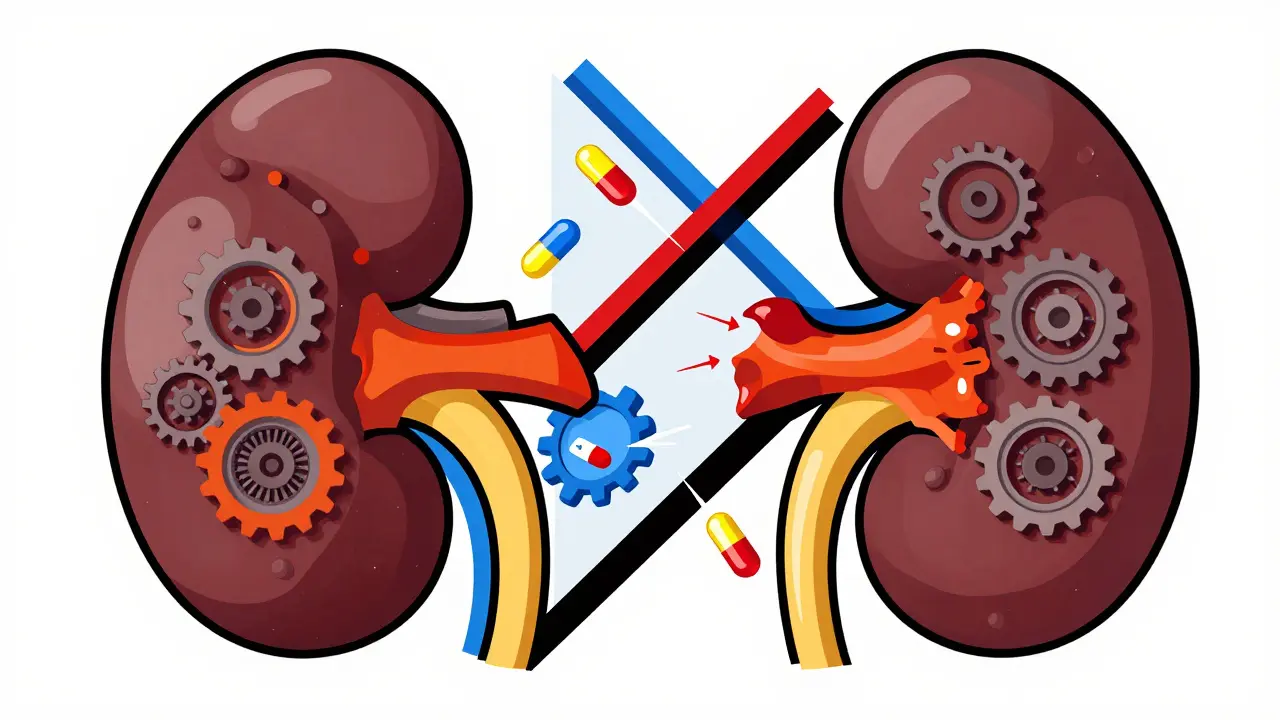
Three drugs, three completely different metabolic pathways create unique interaction vulnerabilities. Lithium operates entirely through kidneys, making it vulnerable to anything affecting renal function. Unlike other psychotropics, it doesn't undergo liver metabolism. With a therapeutic window of just 0.6-1.2 mmol/L-a span smaller than your pinky nail-any factor reducing kidney clearance can push levels into toxic territory within days.
Valproate, meanwhile, relies heavily on hepatic metabolism through multiple pathways including glucuronidation and cytochrome P450 oxidation. Its high protein binding (90%) creates displacement risks where competing medications can suddenly release concentrated free drug into circulation. One patient forum member described confusion after starting ibuprofen while on lithium-their level jumped from 0.8 to 1.3 mmol/L in just 72 hours despite unchanged dosage.
Carbamazepine presents its own complexity. As a potent CYP3A4 inducer, it accelerates breakdown of numerous co-administered drugs. Worse, it autoinduces-metabolizing itself faster over weeks as therapy continues. When combined with valproate, carbamazepine-epoxide metabolite concentrations surge 40-60% through dual inhibition of epoxide hydrolase and glucuronidation pathways. This wasn't fully understood until Dr. Robert Post's 1999 study debunked prior assumptions about the mechanism.
| Parameter | Lithium | Valproate | Carbamazepine |
|---|---|---|---|
| Therapeutic Range | 0.6-1.2 mmol/L | 50-125 mcg/mL | 4-12 mcg/mL |
| Elimination Pathway | Renal (100%) | Hepatic + Renal | Hepatic (CYP3A4) |
| Protein Binding | N/A | 90% | 75-80% |
| Half-life | 24 hours | 9-16 hours | 12-17 hours (post-autoinduction) |
High-Risk Medication Combinations Clinicians Must Monitor
Certain combinations demand immediate vigilance. NSAIDs like ibuprofen decrease lithium clearance by 25-30% through reduced glomerular filtration. A 1989 double-blind study with 24 bipolar patients documented measurable toxicity symptoms appearing within five days of initiating combination therapy. Thiazide diuretics compound this risk further, increasing lithium levels by 25-40% through sodium depletion mechanisms.
Ace inhibitors similarly elevate lithium concentrations approximately 25%, creating particular concern for elderly patients often prescribed multiple cardiovascular medications. Contrast this with carbamazepine's opposite effect-it reduces plasma risperidone levels by 40-60% through accelerated metabolism, potentially negating antipsychotic benefits overnight.
Protein-binding displacement creates hidden dangers with valproate. Lamotrigine becomes dangerously elevated when added to valproate due to UGT inhibition, requiring dose reductions up to 100%. One Reddit community member reported dropping lamotrigine from 400mg to 200mg after switching from carbamazepine to valproate-their neurologist explained carbamazepine was "burning through" the medication too rapidly before the switch.
| Interaction Pair | Effect Mechanism | Clinical Impact | Response Time |
|---|---|---|---|
| Lithium + NSAIDs | Reduced GFR | +25-30% lithium levels | 5-7 days |
| Valproate + Lamotrigine | UGT inhibition | +100-200% lamotrigine exposure | Immediate |
| Carbamazepine + OCPs | CYP3A4 induction | -50-70% contraceptive efficacy | 2-4 weeks |
| Valproate + Carbamazepine | EPOX Hydrolase inhibition | +40-60% CBZ-E levels | Within days |
Managing Combined Therapies Safely
Combining mood stabilizers isn't inherently dangerous-with proper protocols. The 2020 International Society for Bipolar Disorders guidelines specify checking lithium levels 5-7 days after starting ACE inhibitors, maintaining target levels at lower therapeutic bounds (0.6-0.8 mmol/L) during co-medication periods. Regular monitoring catches issues before toxicity manifests clinically.
For carbamazepine-valproate combinations, British Association guidelines recommend simultaneous measurement of parent drug and epoxide metabolite, targeting CBZ-E below 3.5 mcg/mL. Initiating valproate typically warrants 25% carbamazepine dose reduction immediately-waiting for blood results often proves too late. Patient education remains crucial: understanding hydration importance prevents lithium crises during illnesses causing dehydration.
Terrific progress exists in personalized approaches. Current NIH initiatives investigate urinary biomarkers predicting individual susceptibility to lithium-drug interactions. Pharmacogenetic testing for CYP3A4 variants may become standard pre-carbamazepine initiation by 2027, potentially preventing 30-40% adverse reactions based on Mayo Clinic pilot data.

Special Population Considerations
Pregnancy transforms risk calculations entirely. Valproate carries boxed warnings regarding 10.7% congenital malformation rates versus 2.6% background population figures, alongside documented IQ reductions of 7-10 points at age six per NEAD study findings. These risks reduced valproate initiation in women of childbearing potential by 65% post-FDA alerts.
Monitoring Protocols Every Clinician Needs
Routine surveillance schedules depend on stability. New prescriptions warrant weekly initial draws transitioning to monthly after stabilization. Any medication change necessitates rechecking levels within 7-14 days. Patient logs tracking subjective effects complement laboratory data, catching subtle shifts before labs reflect them.
Recent advances improve detection capabilities. FDA-approved extended-release lithium formulations minimize peak-trough fluctuations exacerbating interaction risks. Microbead valproate preparations offer more stable plasma concentrations potentially reducing vulnerability windows. These innovations represent meaningful progress toward safer combination therapies.





Calvin H March 31, 2026
So a simple headache pill is basically poison to bipolar patients now.
Christopher Curcio March 31, 2026
The pharmacokinetic profile of lithium presents significant vulnerability when renal function fluctuates due to external pharmacological agents.
Glomerular filtration rate reductions directly correlate with serum lithium accumulation within the toxic threshold range.
Valproate displacement mechanisms further complicate the management of comorbid conditions requiring anticonvulsant therapy.
Clinical vigilance regarding CYP3A4 induction remains paramount for carbamazepine users interacting with other metabolized substrates.
Biomarkers indicating early renal stress could serve as predictive indicators before overt toxicity manifests physically.
We must prioritize understanding the hepatic versus renal elimination pathways to prevent adverse outcomes in vulnerable populations.
Adryan Brown April 1, 2026
It is really important to understand how these drugs move through our bodies because the kidneys are working so hard.
People often forget that lithium does not change form in the liver like valproate does.
We must consider that protein binding affects how much free drug circulates in the blood stream at any moment.
Safety protocols exist for a reason and ignoring them puts everyone at risk unnecessarily.
The therapeutic window is incredibly narrow for lithium specifically compared to other common medications.
Monitoring levels regularly helps catch toxicity before symptoms become physically obvious or dangerous.
Dehydration alone can shift concentrations enough to cause problems during flu season or hot weather.
Patients need to know that hydration status changes everything when taking kidney-cleared compounds.
Diuretics and ACE inhibitors both impact sodium handling which subsequently impacts lithium retention rates significantly.
Educating patients prevents hospital visits better than reacting after confusion starts appearing in daily life.
Clinicians should explain the mechanism rather than just handing out pills without context for the patient.
Trust between doctor and patient grows when we discuss specific metabolic pathways openly and honestly.
We want to maintain stability while minimizing the burden of frequent lab work over the years.
Modern guidelines suggest lower targets during times of potential interaction to build safety margins.
Always talk to your provider before adding over-the-counter anti-inflammatories to your regimen.
Michael Kinkoph April 1, 2026
The general public simply fails to comprehend the biochemistry involved here! Ignorance breeds toxicity! One expects better diligence from those managing chronic psychiatric conditions!
Cameron Redic April 3, 2026
Your elitist attitude ignores that education access varies widely across demographics.
Medical literature shows providers also miss these interactions frequently during prescribing rounds.
Bashfulness about complexity does not improve patient safety outcomes in real world scenarios.
You are misrepresenting the frequency of adherence failures versus actual biochemical incompatibility events.
Vikash Ranjan April 3, 2026
Actually the data suggests otherwise regarding your claim on provider error rates.
Much of the liability stems from non-disclosure of OTC supplement usage by patients themselves.
Blaming doctors misses the systemic issue of fragmented healthcare communication channels entirely.
Charles Rogers April 4, 2026
Patients need to follow their prescription guidelines properly without deviating based on internet advice.
Reading the insert leaflets thoroughly is the bare minimum requirement for self-care.
Negligence leads to preventable hospitalization situations that could have been avoided easily.
emma ruth rodriguez April 6, 2026
While compliance is essential, clinical oversight of dose adjustments during co-medications remains the provider responsibility.
Guidelines specify target ranges that account for diuretic interference proactively before toxicity occurs.
Shared decision-making protocols enhance adherence significantly when risks are transparently communicated in advance.
Dan Stoof April 8, 2026
There is hope!!! Research is improving daily!! Personalized medicine will stop these accidents eventually!! We just need to stay informed!!! Hydration is key!!!!
Jonathan Alexander April 10, 2026
This is genuinely terrifying when you think about how routine these prescriptions are.
Fearing a simple pain reliever changes how you view basic symptom management forever.
It creates anxiety whenever you see a pharmacy label listing lithium somewhere on the file.
Biraju Shah April 10, 2026
Stop panicking and read the table in the original post.
Risk exists but monitoring mitigates the danger effectively if protocols are followed.
Fear prevents necessary treatment more than the drugs themselves do in many cases.
William Rhodes April 10, 2026
Life is fragile under chemical assault and we fight for stability constantly.
Understanding the body is a path to empowerment rather than helplessness in this situation.
We must remain aggressive about our own health advocacy to survive modern medicine safely.
Katie Riston April 10, 2026
The philosophical implication of relying on narrow windows reminds us of human fragility.
Medicine acts as a double edged sword granting relief while demanding constant vigilance.
We navigate these tightropes daily without realizing the balance required for survival.
Respect for these biochemical boundaries builds a healthier relationship with pharmaceutical interventions.
Wisdom comes from knowing when to hold back and when to push forward with new meds.
Brian Yap April 11, 2026
G'day, good info mate especially for us down south where heat spikes happen often.
Water intake matters even more in summer months when electrolytes get messed up.
Marwood Construction April 12, 2026
Further study is required on renal markers to predict individual susceptibility accurately.
Current pilot data indicates genetic testing may reduce adverse reaction incidence significantly by 2027.