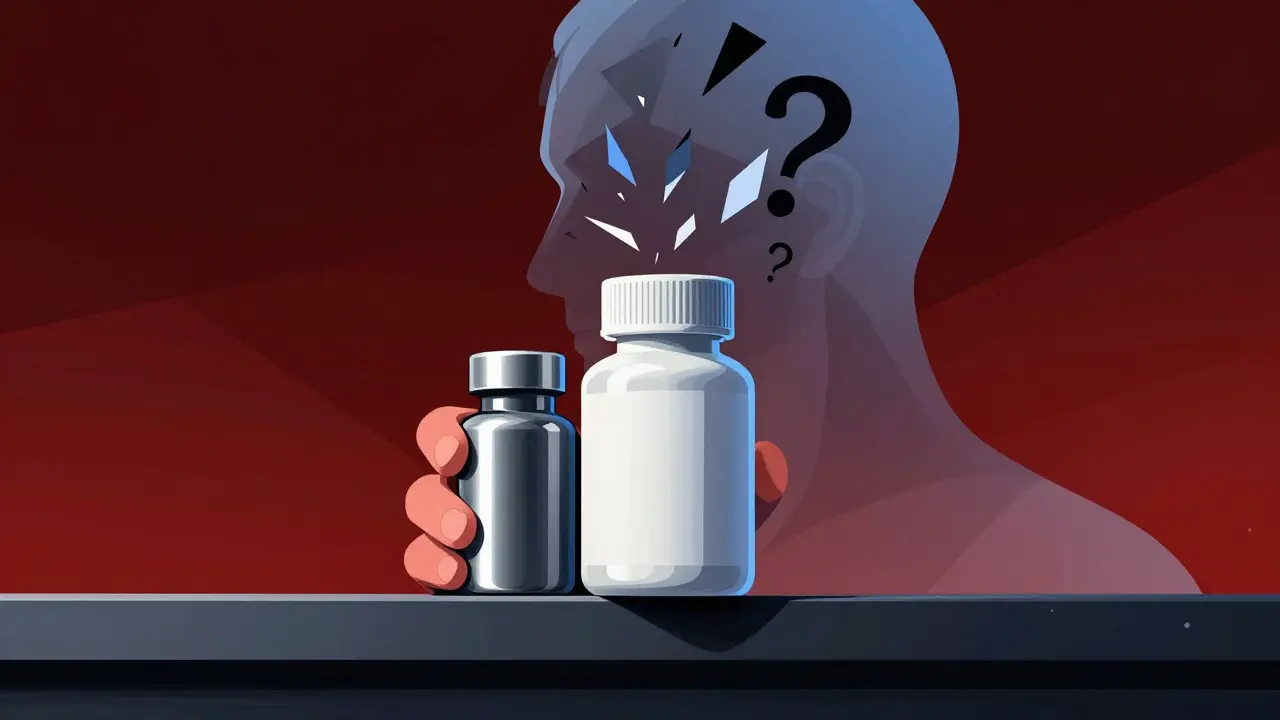
Why Your Brain Might Prefer the Original Pill
You pick up a new bottle from the pharmacy counter. It’s the same medication you’ve taken for years, but the label looks slightly different. Maybe the colour of the tablet isn’t quite the same, or the price is lower. Suddenly, you start wondering: “Will this work as well?” This hesitation isn’t just in your head-it’s scientifically documented. The gap between what the chemical composition says and what your body feels can be wide when generic medications enter the picture. Understanding this dynamic is crucial for maintaining your health without paying premium prices.
We often hear that generics are identical to brand names, which is chemically true. However, research shows that the container they come in matters just as much as the powder inside. If you’ve ever felt let down after switching from a well-known brand to a generic version, you aren’t imagining it. There’s a complex interaction happening between your expectations and your physiology. Let’s look at exactly why this happens and what you can do about it.
The Science of Belief and Pain Relief
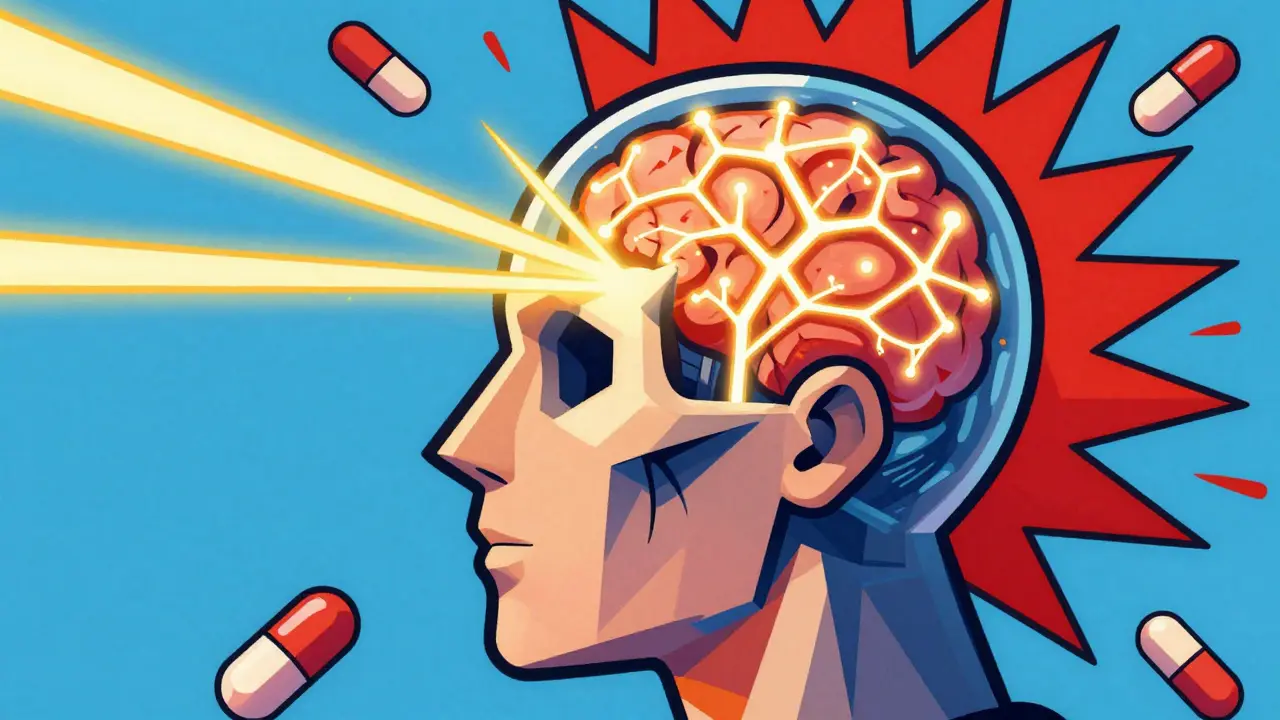
Your brain is wired to predict outcomes based on past experiences and labels. A landmark study published in Health Psychology highlighted this vividly. Researchers at the University of Auckland gave participants inert pills-pure placebo-but labelled half as "brand name" ibuprofen and the other half as "generic." The result was striking. Those who believed they were taking the branded version reported significantly more pain relief than those told it was generic. Even though both groups swallowed nothing active, the belief altered their experience.
This isn’t magic; it’s neurobiology. Functional MRI studies have shown that when patients expect a treatment to work, specific areas of the brain light up. In one analysis, the dorsolateral prefrontal cortex activated 27% more intensely when a placebic substance was presented with a prestigious brand name compared to a generic label. This activation directly correlated with reported pain reduction. Essentially, your expectation triggers the brain to release its own internal opioids and neurotransmitters that modulate perception.
The effect size varies depending on what kind of drug we are talking about. Analgesics, or pain relievers, show the largest differential. A meta-analysis of clinical trials found a Cohen’s d value of 0.82 for brand versus generic placebos in pain management. For cardiovascular medications, the difference is smaller but still present. This variability helps explain why a headache might seem to lift faster on one tablet versus another, even if the active ingredient is statistically the same.
| Therapeutic Category | Effect Size (Brand vs Generic) | Clinical Impact |
|---|---|---|
| Analgesics (Pain) | High (0.82) | Significant perceived relief difference |
| Antidepressants | Moderate (0.65) | Higher dropout rates on generics due to perception |
| Cardiovascular Drugs | Low (0.31) | Minor impact on blood pressure readings via expectation |
Beyond Placebo: The Nocebo Effect
If the placebo effect boosts efficacy through positive belief, the nocebo effect works in the opposite direction. This occurs when negative expectations cause actual physical side effects. In a study involving statins, patients who were told they were receiving generic versions reported muscle pain at much higher rates than those told they were taking neutral-labeled medication. Interestingly, the actual rate of chronic fatigue in the general population didn’t shift; the reporting did.
This phenomenon explains why forums and social media groups are often filled with stories of “failure” after switching. Users report blood pressure spiking or anxiety returning immediately after the switch, despite blood tests showing therapeutic levels of the drug remained stable. One case report detailed a patient discontinuing generic escitalopram because their anxiety worsened, yet monitoring confirmed identical blood levels to the brand version. The body was reacting to the doubt, not the chemistry.
Cost plays a surprisingly large role here too. When placebos are labelled with a high price tag, they produce greater pain reduction than identical pills labelled as cheap. In one trial, a dose priced at $2.50 produced 64% greater pain reduction than the same dose priced at $0.10. This “cost-expectation relationship” means that the economic decision to save money on prescriptions can inadvertently trigger psychological resistance that undermines the treatment plan.
What Bioequivalence Actually Means
It is vital to separate marketing fear from regulatory fact. Regulators like the FDA in the US and the MHRA in the UK enforce strict bioequivalence standards. To approve a generic, the manufacturer must prove that the drug reaches your bloodstream at the same rate and concentration as the original. Specifically, the area under the curve (AUC) and maximum concentration (Cmax) must fall within an 80% to 125% confidence interval of the brand name.
While this sounds like a margin for error, in clinical practice, these small variances rarely cause significant physiological differences for the majority of patients. However, the standard allows for slight variations in inactive ingredients-fillers, binders, or dyes-which change the pill’s appearance. Regulatory guidance documents suggest that changing pill shape or colour increases discontinuation rates by nearly 20%. Visual cues are powerful triggers for the nocebo response, making patients less likely to stick to the regimen if the pill doesn’t look familiar.
Despite the rigorous testing, adherence remains a challenge. Studies indicate that brand-name users demonstrate approximately 18% higher adherence rates over 12 months for chronic conditions like heart disease. Since missing doses is the most common reason for treatment failure in chronic illness, the psychological preference for brands can have genuine long-term health consequences.

Practical Strategies for Managing the Switch
Knowing the psychology helps, but you need actionable steps. Doctors and pharmacists can utilise validated communication protocols to bridge the gap. Research published in JAMA Internal Medicine showed that a simple three-minute educational intervention reduced negative responses by 47%. This conversation doesn’t deny the patient’s experience but contextualises it.
Here is a framework you can discuss with your healthcare provider:
- Understand Bioequivalence: Ask your prescriber to explain that the generic contains the exact same active molecule.
- Acknowledge Differences: Agree that the pill might look or taste different, and admit that this can affect feelings without changing function.
- Set a Transition Period: Plan for a two-week window where you monitor symptoms closely without assuming anything is wrong.
- Document Everything: Keep a log of symptoms and objective measures like blood pressure or glucose logs to track real changes rather than feelings.
For patients with sensitive thresholds, like those on thyroid medication or psychiatric drugs, some clinicians recommend keeping the original brand if finances allow, purely to maintain stability. However, for most common conditions like hypertension or cholesterol, a supportive explanation of how the brain processes information is enough to keep the generic working effectively.
The Economic Reality of Treatment
We cannot ignore the financial context. Generic drugs account for roughly 90% of prescriptions in the US and generate billions in revenue annually. If psychological factors cause unnecessary brand prescriptions, it costs healthcare systems significantly more. Experts estimate that the "psychological penalty" of switching costs billions in lost savings every year.
In the UK, the NHS relies heavily on competition to keep lists affordable. While direct-to-consumer advertising isn't allowed here like it is in America, online forums and word-of-mouth carry immense power. Recognising that these fears are shared by many helps normalise the concern so it doesn't stop you from taking necessary medicine.
Is it safe to switch from brand to generic?
Yes, it is medically safe. Regulatory bodies test generics to ensure they perform within a very tight range of effectiveness compared to the brand. Any perceived drop in efficacy is usually psychological rather than pharmacological.
Can the pill colour really change how I feel?
Visual cues do trigger the nocebo effect. Studies show that changes in appearance increase the chance of reporting side effects. Your brain associates the old colour with safety, so a new one can raise subconscious alarm bells.
Should I always demand the brand name?
Only if the cost is not an issue and you have had documented instability before. For most patients, generics provide excellent value and safety. Financial sustainability supports long-term care better than short-term brand loyalty.
Why does my doctor say they are the same if I feel different?
Doctors refer to chemical composition, while your body refers to total experience. Both perspectives are valid. The chemical data is accurate regarding molecules, but your subjective experience includes psychological components that influence recovery.
How can I stop worrying about the switch?
Focus on objective data like blood pressure or lab results rather than subjective feelings of comfort. Tracking numbers objectively often reveals that the generic is working perfectly despite your initial reservations.







Brian Yap March 30, 2026
It's wild how much our brains dictate what we think works in medicine. I've always felt weird when the shape changed on my script refills. You'd think the active ingredient would be the only thing that matters to our bodies. Sometimes I worry the placebo effect is just marketing disguised as health advice though. Still nice to know there is actual science backing the skepticism we all feel.
Michael Kinkoph March 30, 2026
Oh! Please! Stop pretending that superstition dictates clinical efficacy!; The regulatory frameworks are rigorous!; You cannot simply dismiss decades of pharmacological research because a pill looks different!; It is quite embarrassing how many people cling to brand loyalty over science!
Biraju Shah April 1, 2026
You really need to calm down before you alienate anyone who is asking a genuine question. Your condescending tone does nothing but make people doubt the medical system even more. Not everyone has your luxury of ignoring their own comfort levels. Stop acting like you know everything about patient experience.
dPhanen DhrubRaaj April 2, 2026
sometimes the new pills just dont work the same way for me
Dan Stoof April 2, 2026
I totally get that feeling but remember that optimism is half the battle won! There is so much room for growth in understanding how our minds heal us naturally too! Try looking at the savings as a bonus rather than a compromise! You are capable of handling the change without losing your spark!
emma ruth rodriguez April 3, 2026
It is fascinating how deeply belief influences physiology.
We often overlook the power of expectation in treatment outcomes.
Regulatory standards are strict but human psychology remains complex.
Many patients report feeling different with generic versions.
This subjective experience is valid even without chemical variance.
Healthcare providers need better communication strategies during switches.
Documentation helps separate real symptoms from psychological ones.
Financial pressure often forces decisions that feel wrong emotionally.
Ignoring the nocebo effect leads to unnecessary medication changes.
Patients should track objective data alongside their feelings.
Blood tests provide clarity when personal perception falters.
Trusting the science while respecting feelings is a balance.
Insurance companies benefit when people stick to generics.
Stability in routine matters more than pill color theoretically.
Education regarding bioequivalence reduces anxiety significantly.
Jonathan Alexander April 5, 2026
The sheer drama of switching medications is something I live through every month with my own family. Watching loved ones panic over a blue pill versus a white pill is heartbreaking. We turn normal adjustments into life or death scenarios without realizing the stress we create. It feels like the whole world is against us when the pharmacy makes a tiny change. I wonder if we will ever stop treating healthcare like a performance instead of biology.
Charles Rogers April 6, 2026
People are far too sensitive about trivial aesthetic details while ignoring serious systemic issues. It is pathetic that we allow fear to override logic when safety standards exist. The majority of complainers simply lack the patience to observe true physiological changes objectively. You cannot blame pharmaceutical innovation for your own fragile confidence. Stop making excuses based on minor variations and take responsibility for your own adherence.
Adryan Brown April 7, 2026
I hope everyone can find a middle ground where they trust the medicine while also acknowledging their own feelings. We all want to feel safe during our treatments regardless of the branding. Peace comes from knowing that the active ingredient is working consistently behind the scenes. It might take time to build faith in the new bottle but persistence pays off eventually. Being kind to yourself during transitions helps reduce the mental load significantly.
Kendell Callaway Mooney April 7, 2026
Just remind yourself that the goal is getting healthy without worrying too much about packaging. Write down how you feel so you have proof of progress later on. Keeping simple notes helps remove guesswork from the process entirely. Doctors want you to feel okay but also need accurate reports to help you.
Cameron Redic April 8, 2026
This whole debate is just a convenient excuse for insurance companies to save money on your care. Pharma giants spend billions marketing brand recognition specifically to exploit this exact weakness in human nature. Expectation bias is a tool used against consumers not a biological fact. Until we fix the incentives in healthcare this cycle will never truly end.