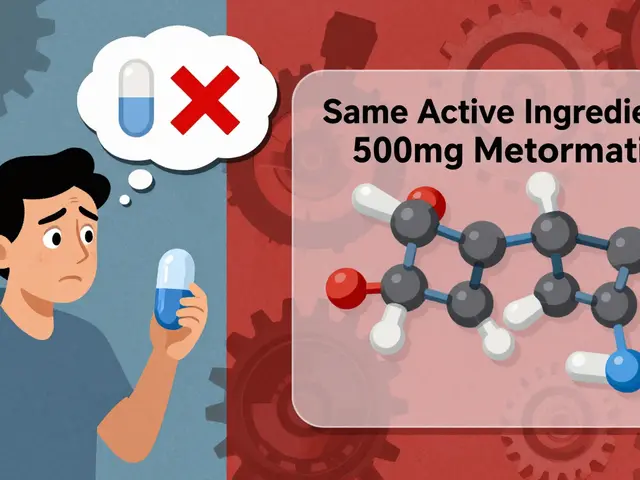
You take your morning pill. It’s a generic version of the drug your doctor prescribed. You expect it to work exactly like the brand-name version because the active ingredient is the same. But what if you feel different? What if you get a rash, stomach pain, or unexpected fatigue? The culprit might not be the medicine itself, but the invisible stuff holding it together.
These are called inactive ingredients, also known as excipients. They make up the bulk of most pills-sometimes more than half, and in some cases, nearly 99%. While they don’t treat your condition, they determine how the drug dissolves, how long it lasts in your body, and whether your immune system reacts to it. Understanding these hidden components is crucial for anyone with sensitivities, allergies, or chronic conditions requiring multiple daily medications.
The Hidden Bulk: What Are Inactive Ingredients?
When we talk about a medication, we focus on the active pharmaceutical ingredient (API)-the chemical that actually treats the disease. But an API alone isn’t a usable pill. It needs structure, stability, and a way to enter your bloodstream effectively. That’s where inactive ingredients come in.
Think of a cake. The flour is the active ingredient-the main component. But without eggs, sugar, baking powder, and salt, you don’t have a cake; you have a pile of dry powder. Similarly, excipients are substances added to drugs to ensure proper manufacturing, stability, absorption, and patient compliance. They include fillers like lactose or corn starch, binders like cellulose, coatings like titanium dioxide, and preservatives like bisulfites.
According to research from MIT and Brigham and Women’s Hospital published in 2019, over 50% of any given pill can consist of these non-active components. Some formulations contain up to 99% inactive material by weight. This means when you switch from a brand-name drug to a generic, or even between two different generic manufacturers, you are often consuming a significantly different mixture of chemicals, even though the therapeutic agent remains identical.
Why Do Generics Use Different Excipients?
The U.S. Food and Drug Administration (FDA) requires generic drugs to demonstrate bioequivalence with their brand-name counterparts. This means the generic must deliver the same amount of active ingredient into your bloodstream within a similar time frame. However, the FDA does not require generics to use the exact same inactive ingredients as the original brand-name product.
This flexibility exists for several practical reasons:
- Patent Expiration: Brand-name companies hold patents on specific formulations, including unique excipient blends. Generic manufacturers cannot copy these proprietary mixtures once the patent expires.
- Cost Efficiency: Generic makers often choose cheaper, widely available excipients to keep prices low. A brand-name drug might use a specialized binder that costs $50 per kilogram, while a generic uses a standard alternative at $5 per kilogram.
- Manufacturing Processes: Different production lines may require different types of flow agents or lubricants to prevent pills from sticking to machinery.
As a result, the inactive ingredient profile can vary dramatically between brands and generics. One manufacturer might use lactose as a filler, while another uses microcrystalline cellulose. Both meet regulatory standards, but they affect patients differently.
Common Problematic Excipients and Their Effects
For most people, these differences are harmless. But for those with specific allergies, intolerances, or sensitive digestive systems, certain excipients can trigger real physical reactions. Here are the most common culprits:
| Ingredient | Function | Potential Reaction | Affected Population |
|---|---|---|---|
| Lactose | Filler/Binder | Bloating, gas, diarrhea | Lactose intolerant individuals (~65% of global population) |
| Sodium Metabisulfite | Preservative/Antioxidant | Asthma attacks, wheezing | Asthmatics with sulfite sensitivity (~1-3%) |
| Titanium Dioxide | Coloring Agent | Skin irritation, potential carcinogen concerns | General population (banned in EU food since 2022) |
| Corn Starch | Filler/Disintegrant | Allergic reaction, digestive distress | Corn allergy sufferers |
| Red Dye No. 40 | Coloring Agent | Hyperactivity, hives, flushing | Children, those with salicylate sensitivity |
| Gluten-containing wheat starch | Filler | Intestinal inflammation, pain | Celiac disease patients (<1% of population) |
The MIT study found that approximately 93% of medications contain at least one allergen such as peanut oil, lactose, or chemical dyes. Nearly all medications contain compounds that some patients cannot tolerate, including gluten and certain sugars. About 55% of medications contain FODMAP sugars, which can trigger severe digestive issues in people with Irritable Bowel Syndrome (IBS).

Bioequivalence vs. Clinical Reality
The concept of bioequivalence ensures that the *active* ingredient behaves similarly in the body. But does this guarantee identical clinical outcomes? Not always. Research has shown subtle but significant variations.
A study examining blood pressure medications found that after generic versions became available, adverse event rates increased by 8% for losartan, nearly 12% for valsartan, and 14% for candesartan. While researchers couldn't definitively prove these spikes were caused solely by inactive ingredients, the correlation suggests that formulation changes matter. Dr. Choudhry from Harvard Medical School notes that "a slight variation in the chemical formula" or "different inactive ingredient" could cause patients to experience more side effects.
Additionally, dissolution rates-the speed at which a pill breaks down in the stomach-can vary. Some generic drugs dissolve over three times faster than their brand-name equivalents. Faster dissolution might lead to higher peak concentrations of the drug in the blood, potentially increasing side effects, while slower dissolution could reduce efficacy.
Who Should Be Most Concerned?
If you have no known allergies and a robust digestive system, you likely won’t notice a difference between brand-name and generic medications. The cost savings are substantial-generics typically cost 80-85% less than brand-name drugs. For the average person, switching to generics is a smart financial decision with minimal health risk.
However, certain groups need to pay closer attention:
- Polypharmacy Patients: If you take five or more medications daily (common among adults over 65), the cumulative load of various excipients can become significant. Even small amounts of lactose or dyes across multiple pills can add up to problematic levels.
- Allergy Sufferers: Those with asthma, eczema, or food allergies are more likely to react to preservatives like bisulfites or colorants like Red Dye No. 40.
- Digestive Disorders: People with IBS, Crohn’s disease, or celiac disease may find that certain fillers exacerbate their symptoms, leading to poor medication adherence.
- Thyroid Medication Users:: Levothyroxine is notoriously sensitive to formulation changes. Many patients report feeling better on brand-name Synthroid than on generic alternatives due to differences in how the drug is absorbed.

How to Identify and Manage Excipient Sensitivities
The biggest challenge is transparency. Unlike food labels, medication packaging rarely lists every inactive ingredient in plain language. The FDA requires manufacturers to list them in the package insert, but patients seldom read these documents. Pharmacists also don’t always check for excipient conflicts unless specifically asked.
Here’s what you can do:
- Ask Your Pharmacist: Before filling a new prescription, ask if the generic contains lactose, gluten, or specific dyes. Pharmacists have access to detailed formularies that list excipients.
- Check the FDA Inactive Ingredient Database (IID): The FDA maintains an online database listing approved inactive ingredients for each drug product. While not user-friendly, it’s a valuable resource for identifying potential triggers.
- Request Specific Manufacturers: If you’ve had a good experience with a particular generic brand, ask your doctor to write “Dispense as Written” or specify the manufacturer on the prescription. This prevents automatic substitution with a different generic.
- Consider Brand-Name for Critical Drugs: For narrow-therapeutic-index drugs like levothyroxine, warfarin, or antiepileptics, staying on the brand-name version may provide more consistent results.
- Track Symptoms: Keep a log of any new side effects after switching medications. Note the date, the drug name, and the manufacturer. This data helps doctors identify patterns.
The Future of Excipient Transparency
Regulatory bodies are beginning to recognize the gap in current practices. The NIH’s PubMed Central analysis concluded that "a majority of medications contain ingredients that could cause adverse reactions," underscoring the need for better tolerability and safety standards. Advocacy groups are pushing for standardized labeling of all potentially problematic inactive ingredients, similar to food allergen warnings.
Dr. Giovanni Traverso, lead researcher on the MIT study, emphasized that "doctors have no idea which of these ingredients will be included in the pills they prescribe to their patients." His team is working on developing a comprehensive database of inactive ingredients by medication to assist both clinicians and patients in making informed decisions. Industry analysts predict that increased awareness will lead to greater market differentiation, with some manufacturers specializing in "hypoallergenic" formulations for sensitive patients.
Until then, vigilance is key. You know your body better than anyone else. If a generic medication makes you feel worse, don’t assume it’s just your imagination. It might be the invisible ingredients doing the talking.
Are inactive ingredients in generic drugs safe?
Yes, for the vast majority of people. The FDA rigorously tests inactive ingredients for safety. However, "safe" doesn't mean "tolerable for everyone." Individuals with specific allergies, intolerances, or digestive disorders may experience adverse reactions to certain excipients like lactose, bisulfites, or artificial dyes, even if the active ingredient is identical.
Can I request a specific generic manufacturer?
Yes. You can ask your doctor to specify the manufacturer on the prescription or write "Dispense as Written" (DAW). You can also discuss preferences with your pharmacist. Some insurance plans may charge a higher copay for specific generics, so check with your provider first.
Why do generic drugs sometimes cause more side effects?
While the active ingredient is the same, differences in inactive ingredients can affect how quickly the drug dissolves and absorbs. Variations in binders, fillers, or coatings may lead to slightly different bioavailability or trigger allergic reactions in sensitive individuals, resulting in perceived or actual side effects.
Do all generic drugs contain lactose?
No, but many do. Lactose is a common, inexpensive filler used in hundreds of medications. If you are lactose intolerant, you should explicitly ask your pharmacist to check the ingredient list before filling a prescription. Alternatives using cellulose or starch-based fillers are often available.
Is there a database to check for inactive ingredients?
Yes, the FDA maintains the Inactive Ingredient Database (IID). It lists all inactive ingredients approved for use in FDA-approved drug products. While the interface is technical, it allows you to search by drug name and see the full list of excipients used by each manufacturer.
Should I avoid generic thyroid medication?
Not necessarily, but consistency is critical. Levothyroxine has a narrow therapeutic index, meaning small changes in absorption can significantly impact hormone levels. Many endocrinologists recommend sticking with one brand (either brand-name or a specific generic manufacturer) to avoid fluctuations in TSH levels.
What is bioequivalence?
Bioequivalence means that a generic drug delivers the same amount of active ingredient into the bloodstream within a similar time frame as the brand-name drug. The FDA allows a slight variability (typically 80-125% of the reference drug's exposure), ensuring therapeutic equivalence for most patients.
Can inactive ingredients affect drug efficacy?
Indirectly, yes. If an inactive ingredient causes gastrointestinal distress, it may alter gut motility or absorption rates, affecting how much active drug enters your system. Additionally, differences in dissolution rates can change the peak concentration and duration of the drug's effect.