Kidney Damage from NSAIDs: Risks, Signs, and What You Can Do
When you take NSAIDs, nonsteroidal anti-inflammatory drugs like ibuprofen or naproxen used for pain and inflammation. Also known as pain relievers, they’re among the most common medications people use daily—often without thinking about the toll on their body. But if you’ve been popping them for weeks or months, your kidneys might be paying the price. Kidney damage from NSAIDs isn’t rare. It’s silent, slow, and often ignored until it’s too late.
These drugs work by blocking enzymes that cause pain and swelling, but they also reduce blood flow to the kidneys. For most people, that’s no big deal. But if you’re over 60, have high blood pressure, diabetes, heart failure, or already have reduced kidney function, your kidneys don’t have much room to handle the drop in blood flow. The result? Acute kidney injury that can happen after just a few days of use—or chronic damage that builds up over years. People with autoimmune diseases like lupus or those on diuretics are also at higher risk. It’s not about how strong the pill is—it’s about how long you’ve been taking it, and whether your body can still compensate.
There’s no single test that catches early kidney damage from NSAIDs. You won’t feel it until your creatinine levels rise or your urine output drops. But some warning signs you can’t ignore: swelling in your ankles, unexplained fatigue, nausea, confusion, or suddenly needing to pee more often at night. If you’ve been using ibuprofen daily for back pain or arthritis, and you notice any of these, it’s time to talk to your doctor—not just about stopping the meds, but about safer alternatives. Acetaminophen might be gentler on your kidneys, but it has its own risks. Physical therapy, heat therapy, or even low-dose antidepressants for nerve pain could be better long-term options.
What’s surprising is how often this happens without anyone noticing. A 2021 study in the Journal of the American Society of Nephrology found that nearly 1 in 5 older adults taking daily NSAIDs showed signs of declining kidney function within a year—even if they had no symptoms. That’s not a fluke. It’s a pattern. And it’s happening because people assume if it’s sold over the counter, it’s safe for long-term use. It’s not. Your kidneys don’t have a warning light like your car does. They just get quieter over time.
Some of the posts here dig into how medications like celecoxib—a type of NSAID—might affect cancer risk, while others look at how drugs like metformin or azilsartan interact with organ health. You’ll find real-world stories and data on how common painkillers quietly wear down your body. You’ll also see what alternatives work better for chronic pain, how to monitor your kidney numbers, and when it’s time to stop self-treating and get professional help. This isn’t about scaring you off NSAIDs. It’s about giving you the facts so you can use them wisely—or find something better.
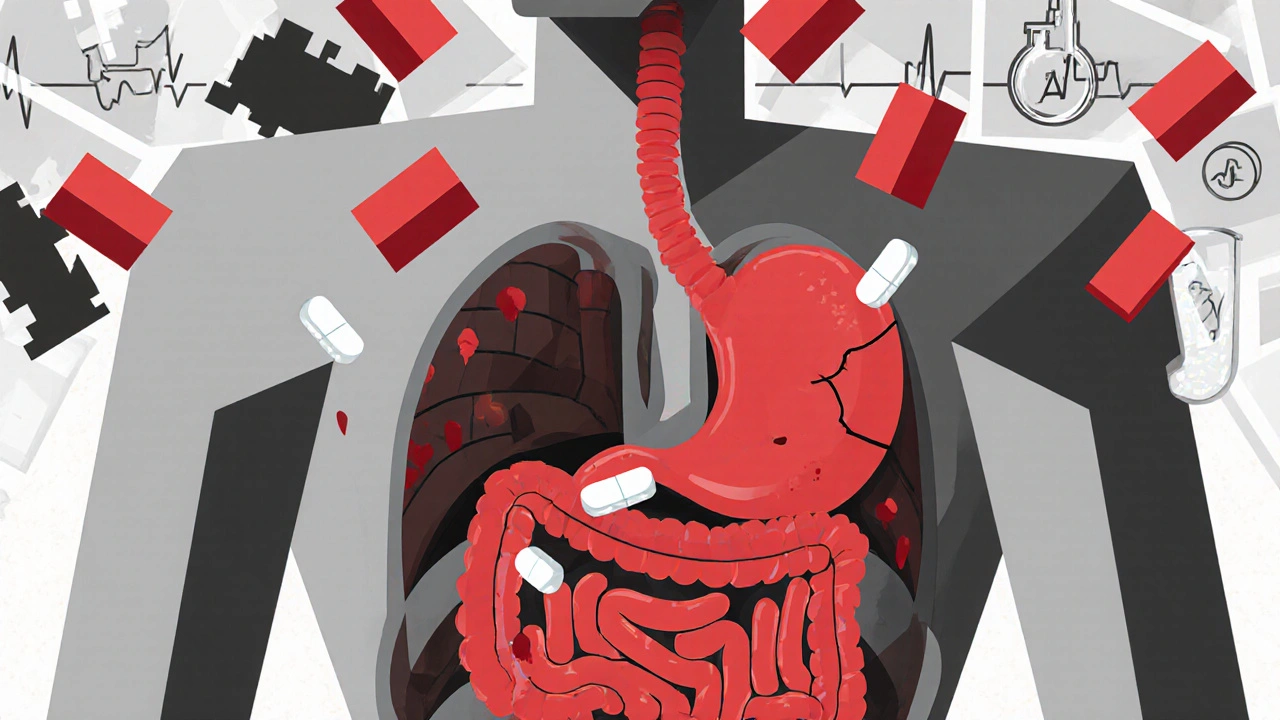
NSAID Safety: Understanding GI Risks, Kidney Effects, and Essential Monitoring
NSAIDs relieve pain but carry hidden risks to your stomach, intestines, and kidneys. Learn the real dangers, who's most at risk, and what tests you need to stay safe.