Do you suffer from sudden, urgent trips to the bathroom that disrupt your day? If standard treatments for irritable bowel syndrome (IBS) haven't worked, you might not have IBS at all. You could have bile acid diarrhea, also known as bile acid malabsorption. It is a condition where excess bile acids reach your colon, causing watery stools and cramping. This isn't just "bad luck" with digestion; it's a specific physiological error that happens in about 25% to 30% of people diagnosed with IBS-diarrhea predominant (IBS-D). The good news? Unlike typical IBS, this condition has a clear cause and effective treatments.
Understanding Bile Acid Malabsorption
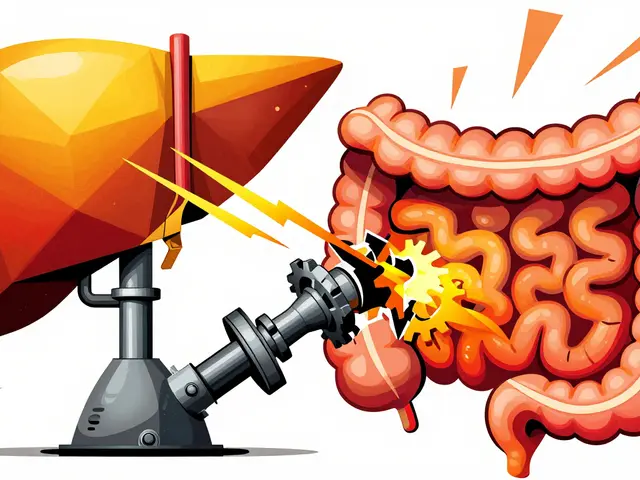
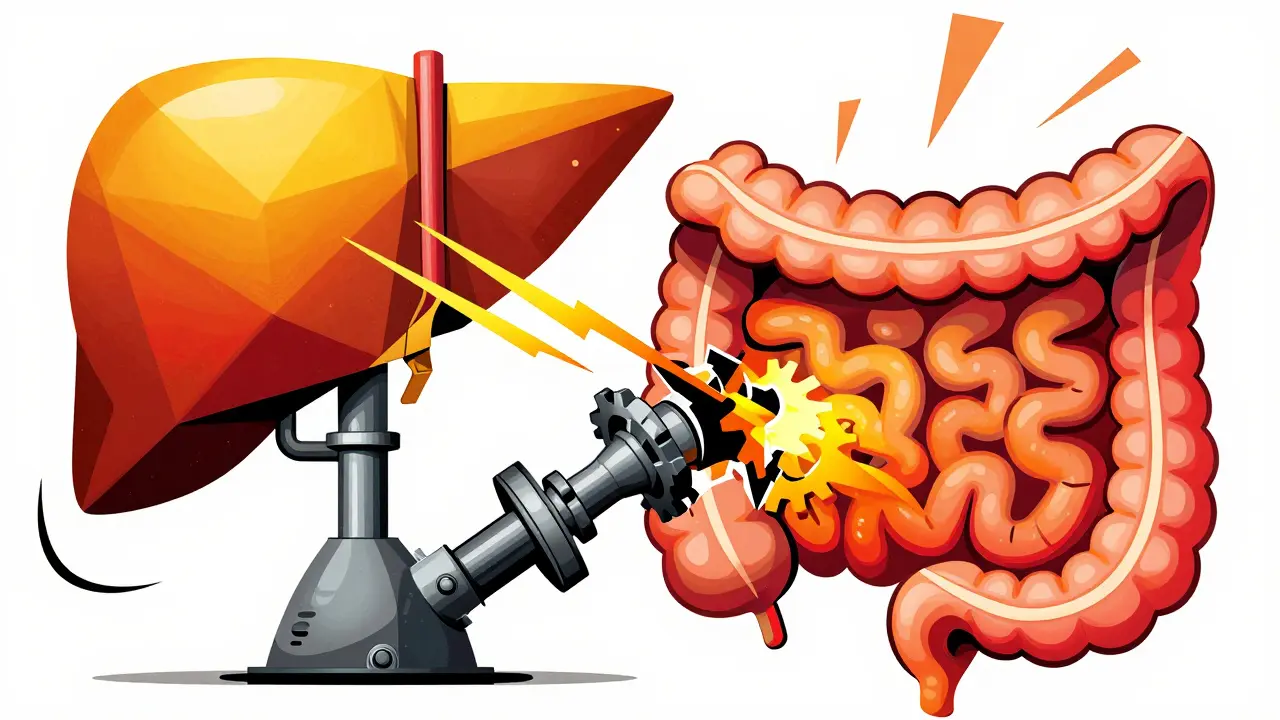
To understand why this happens, think of your digestive system like a recycling plant. Your liver produces bile acids to help digest fats. Normally, 95% of these acids are reabsorbed in the last part of your small intestine, called the terminal ileum. In bile acid diarrhea, this reabsorption fails. The excess bile spills into your large intestine (colon). There, it acts like an irritant. It pulls water into the gut and speeds up muscle contractions. The result is urgent, watery diarrhea.
Doctors categorize this into three types based on the cause:
- Type I: Caused by damage to the ileum, often from Crohn's disease or surgery.
- Type II: Idiopathic, meaning there is no visible structural damage, but the cells simply don't absorb bile properly.
- Type III: Secondary to other conditions like gallbladder removal or chronic pancreatitis.
The mechanism involves complex signals. Bile acids activate receptors called TGR5 in the colon. This stimulates nerves that speed up movement. It also triggers fluid secretion through channels known as CFTR. Understanding this helps explain why reducing fat intake or blocking bile absorption works so well.
Getting the Right Diagnosis
Diagnosis is tricky because many doctors still assume chronic diarrhea is just IBS. However, getting the right label changes everything. Here are the main tests used today.
| Test Name | How It Works | Availability | Key Metric |
|---|---|---|---|
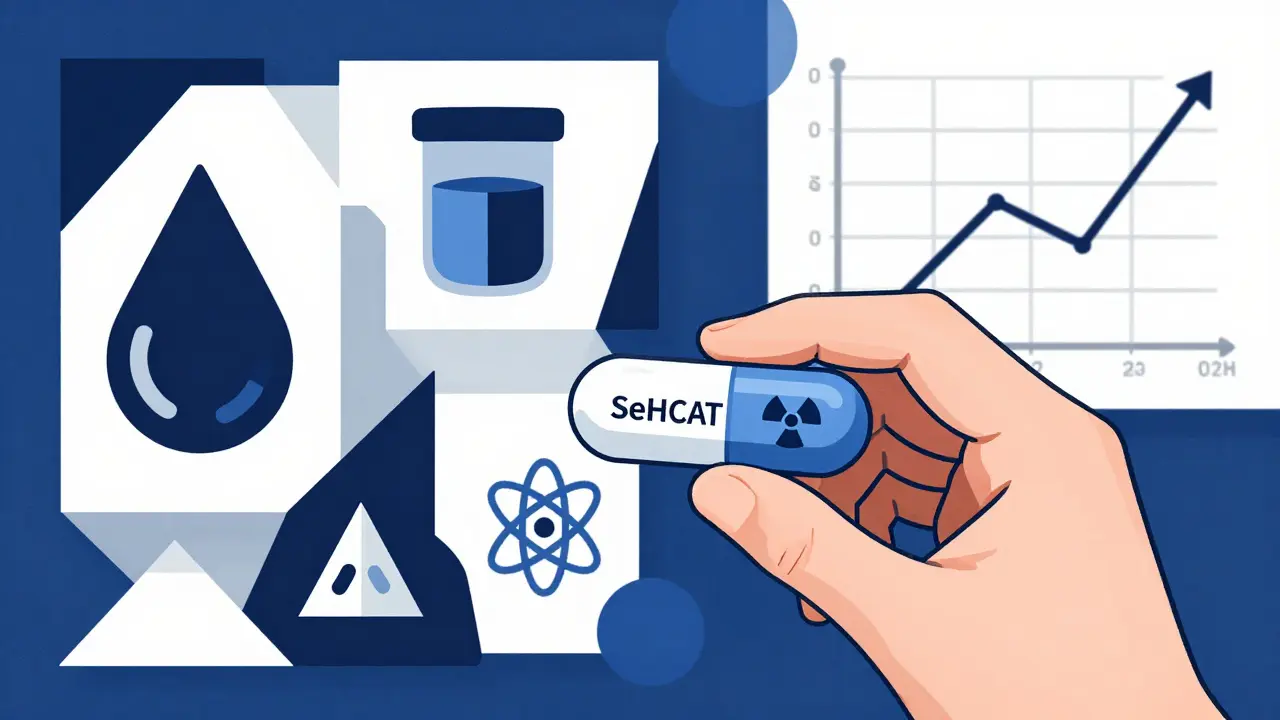
| SeHCAT Test | You swallow a pill with a radioactive marker. A scan after 7 days measures retention. | Widely available in the UK and Europe; rare in the US. | Retention below 15% indicates severe malabsorption. |
| Serum C4 Test | A blood test measuring a precursor molecule made when the liver overproduces bile. | Growing availability in specialized labs. | Levels above 15.3 ng/mL suggest BAD. |
| Fecal Bile Acid Test | Collecting stool samples for 48 hours to measure total bile content. | Available at major reference labs (e.g., Mayo Clinic Labs). | High levels confirm excess bile in the colon. |
| FGF-19 Test | Blood test measuring Fibroblast Growth Factor 19, which regulates bile production. | Limited clinical use; mostly research setting. | Levels below 85 pg/mL may indicate BAD. |
If you live in the United States, the SeHCAT test is hard to find. In that case, ask your gastroenterologist about the serum C4 test or a therapeutic trial of bile acid binders. Many experts now recommend trying a binder first. If your symptoms vanish within a few days, that response itself confirms the diagnosis.
Treatment: How Bile Acid Binders Work
The cornerstone of treatment is medication called bile acid sequestrants, or binders. These drugs work like sponges. They soak up the excess bile in your intestine before it can irritate your colon. The bile is then safely excreted in your stool.
There are three main options approved for use:
- Cholestyramine (Questran): This is the oldest option. It comes as a powder you mix with water or juice. While effective, many people dislike its chalky taste and texture. It can also cause constipation. Typical doses start at 4 grams once or twice daily.
- Colestipol (Colestid): Similar to cholestyramine, this is also a powder. Some patients find it slightly easier to tolerate, but it shares similar side effects.
- Colesevelam (Welchol): This is a tablet form, which makes it much easier to take. Studies show only about 5% of users experience constipation, compared to 20-30% with older powders. Doses range from 1.875 to 3.75 grams daily.
About 70% of patients see significant improvement within 48 to 72 hours of starting these medications. If you try one and it causes too much constipation, don't give up. Talk to your doctor about lowering the dose or switching to colesevelam. Consistency is key-take them with meals to ensure they bind the bile released during digestion.
Dietary Strategies for Relief
Medication isn't the only tool. What you eat directly impacts how much bile your liver releases. Since fat is the primary trigger for bile secretion, managing fat intake is crucial.
Here is a practical approach to dietary management:
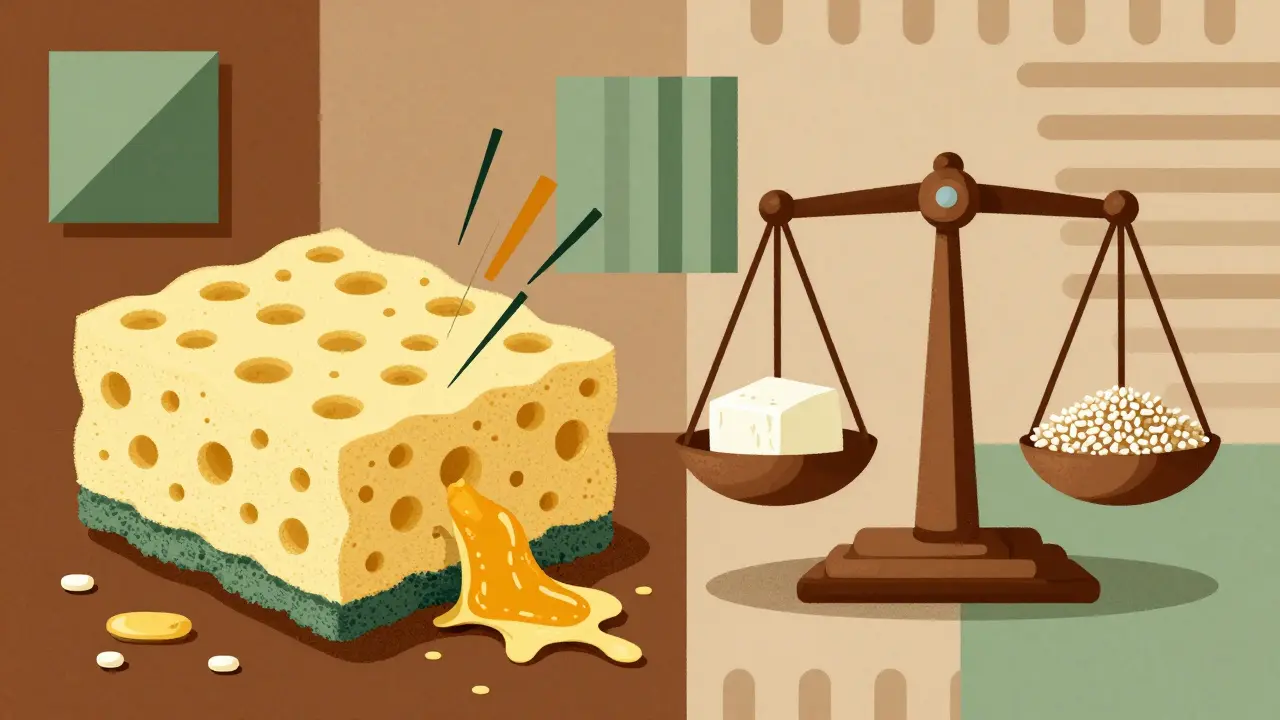
- Limit Fat Intake: Aim for 20-40 grams of fat per day. Research shows that keeping fat under 30 grams daily can reduce stool frequency by 40%. Avoid fried foods, fatty cuts of meat, and heavy creams.
- Add Soluble Fiber: Psyllium husk acts as a natural binder. Taking 5-10 grams daily can improve stool consistency. Clinical trials show a 35% reduction in daily bowel movements with psyllium supplementation.
- Eat Smaller Meals: Instead of three large meals, try five or six smaller ones. Large meals dump a huge amount of bile into your gut at once, overwhelming your system. Smaller meals spread out the load.
- Identify Triggers: Caffeine increases colonic motility by 15-20%, which can worsen urgency. Artificial sweeteners like sorbitol have an osmotic effect, pulling more water into the gut. Keep a food diary for 4-6 weeks to spot your personal triggers.
Some patients find success with the Specific Carbohydrate Diet (SCD), which eliminates complex carbs. About 45% of those who tried it reported improvement. However, a simple low-fat diet combined with psyllium is often enough to get control back.
Living with Bile Acid Diarrhea
Managing this condition takes patience. You might feel frustrated if you've been misdiagnosed for years. But remember, this is a treatable mechanical issue, not a vague functional disorder. Joining support groups can help. Organizations like the BAD Patient Support Group connect you with others who understand the struggle.
Track your symptoms. Apps like the BAD Tracker can help you log meals, meds, and bathroom visits. This data helps you and your doctor fine-tune your treatment. If binders make you constipated, adjust the dose down. If diet changes aren't enough, combine them with medication. Most people find a balance within a few months.
Don't let fear of public restrooms rule your life. With the right binder dose and a mindful diet, you can regain predictability. If you suspect you have bile acid diarrhea, ask your doctor for testing or a trial of therapy. You deserve relief, and it is available.
What is the difference between bile acid diarrhea and IBS?
IBS is a diagnosis of exclusion with no single known cause. Bile acid diarrhea (BAD) is a specific condition caused by excess bile acids irritating the colon. Up to 30% of people diagnosed with IBS-D actually have BAD. The key difference is that BAD responds specifically to bile acid binders, whereas IBS treatments vary widely.
Can I take bile acid binders long-term?
Yes, most patients take them long-term. They are generally safe. However, they can interfere with the absorption of fat-soluble vitamins (A, D, E, K) and other medications. Take other medicines at least 2 hours before or after your binder dose. Your doctor may recommend vitamin supplements.
Why does cholestyramine cause constipation?
Binders remove bile acids, which normally help move stool through the gut. Without enough bile, stool moves slower and becomes harder. If this happens, talk to your doctor about lowering the dose or switching to colesevelam, which has fewer gastrointestinal side effects.
Is the SeHCAT test available in the US?
It is very rare in the US. Most American doctors rely on serum C4 blood tests, fecal bile acid tests, or a therapeutic trial of bile acid binders to diagnose the condition. If you are in the UK or Europe, SeHCAT is the gold standard.
Does removing my gallbladder cause bile acid diarrhea?
Yes, it can. This is classified as Type III BAD. Without a gallbladder to store bile, it drips continuously into your intestine. After eating, especially fatty foods, this continuous flow can overwhelm your ability to reabsorb it, leading to diarrhea.