Imagine you are taking medication to prevent a stroke, but suddenly your nose won't stop bleeding. Or perhaps you notice dark, tarry stools that smell unusually foul. These aren't just minor annoyances; they can be the first signs of a life-threatening blood thinner overdose leading to severe internal bleeding where blood accumulates inside the body cavities or tissues without external exit. Anticoagulants save millions of lives by preventing clots, but when the balance tips too far, they become dangerous. Knowing exactly what to do in these moments isn't just helpful-it is the difference between a full recovery and a fatal outcome.
Understanding Blood Thinners and the Risk of Overdose
To handle an overdose, you first need to understand what you are dealing with. Blood thinners, medically known as anticoagulants, are drugs that interfere with the body's clotting process. They do not actually 'thin' the blood; rather, they slow down the chemical reactions that form clots. The two main categories are Vitamin K antagonists like warfarin (brand name Coumadin) and Direct Oral Anticoagulants (DOACs) such as apixaban (Eliquis), dabigatran (Pradaxa), and rivaroxaban (Xarelto).
Warfarin has been around since the 1950s and requires regular monitoring through a blood test called the INR (International Normalized Ratio). An INR measures how long it takes for your blood to clot. For most people on warfarin, the target INR is between 2.0 and 3.0. If this number spikes above 4.5 or 5.0, the risk of bleeding increases dramatically. DOACs, introduced more recently, work faster and don't require routine blood tests, which makes them convenient but also tricky because patients often don't realize their levels are dangerously high until symptoms appear.
An overdose can happen in several ways. You might accidentally take a double dose, forget you already took your pill, or interact with another medication or food that boosts the effect of the anticoagulant. For example, eating large amounts of vitamin K-rich foods can lower warfarin's effect, while missing those foods or taking certain antibiotics can spike it. Understanding this mechanism helps you recognize why sudden changes in diet or medication routines matter so much.
Recognizing the Warning Signs of Internal Bleeding
The most critical step in surviving a blood thinner overdose is recognizing the symptoms early. Many people dismiss early signs as minor issues, but delay can be deadly. According to data from the American Heart Association, over 60% of patients initially mistake serious bleeding symptoms for something less severe. Here is what you need to watch for:
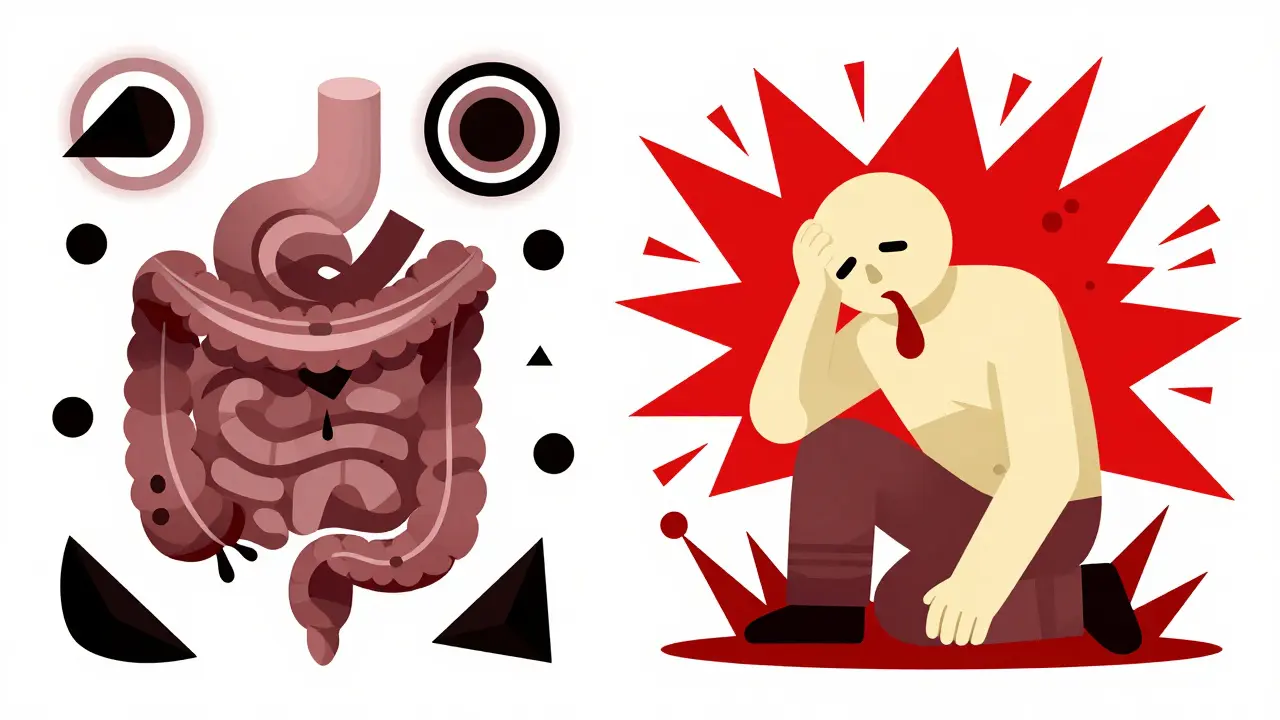
- Gastrointestinal Bleeding: Look for black, tarry, or sticky stools. This indicates digested blood from the upper stomach or intestines. Vomiting material that looks like coffee grounds is another red flag.
- Urinary Tract Bleeding: Urine that appears pink, red, or dark brown suggests bleeding in the kidneys or bladder.
- Respiratory Bleeding: Coughing up bright red blood or frothy sputum can indicate bleeding in the lungs.
- External Signs: Unusual bruising that appears without injury, petechiae (small, flat, red spots under the skin), or bleeding from gums and nose that lasts longer than 10 minutes despite pressure.
- Systemic Symptoms: Extreme fatigue, dizziness, shortness of breath, or pale skin. These occur because your body is losing blood volume, reducing oxygen delivery to vital organs.
If you experience any of these, do not wait to see if they get better. The Mayo Clinic advises seeking immediate help if bleeding persists beyond 5-10 minutes or if you feel lightheaded. Time is tissue-and in this case, time is life.
Immediate Actions: What to Do Right Now
If you suspect a blood thinner overdose, panic will only slow you down. Follow these steps immediately:
- Call Emergency Services: Dial 911 (or your local emergency number) immediately. Do not drive yourself to the hospital. Internal bleeding can cause fainting or shock at any moment.
- Stop Taking the Medication: Do not take your next scheduled dose. Keep the bottle handy to show medical staff the exact drug, dosage, and expiration date.
- Note the Details: Write down the time of your last dose, how much you took, and any other medications or supplements you have consumed recently. This information helps doctors choose the right reversal agent.
- Apply Pressure: If there is visible external bleeding, apply firm, continuous pressure with a clean cloth for at least 10 minutes. Elevate the injured area above heart level if possible.
- Avoid Certain Drugs: Do NOT take aspirin, ibuprofen, naproxen, or other NSAIDs. These drugs further inhibit platelet function and will worsen the bleeding.
While waiting for help, lie down and keep still. Avoid bending over or straining, which can increase blood pressure and exacerbate bleeding. If you feel dizzy, lie flat and elevate your legs slightly to maintain blood flow to the brain.
Medical Treatment for Anticoagulant Overdose
Hospital treatment depends heavily on the type of blood thinner involved and the severity of the bleeding. Doctors will perform rapid blood tests, including INR for warfarin patients and specific assays for DOACs. The goal is to reverse the anticoagulant effect quickly without causing new clots.
| Anticoagulant Type | Specific Drug Examples | Primary Reversal Agent | Alternative Treatment |
|---|---|---|---|
| Vitamin K Antagonist | Warfarin (Coumadin) | Vitamin K (Phytonadione) + Prothrombin Complex Concentrate (PCC) | Fresh Frozen Plasma (FFP) if PCC unavailable |
| Direct Thrombin Inhibitor | Dabigatran (Pradaxa) | Idarucizumab (Praxbind) | Dialysis (in severe cases) |
| Factor Xa Inhibitors | Apixaban (Eliquis), Rivaroxaban (Xarelto) | Andexanet alfa (Andexxa) | Prothrombin Complex Concentrate (PCC) |
For warfarin overdose with active bleeding, the standard of care involves administering Prothrombin Complex Concentrate (PCC), which replaces the missing clotting factors II, VII, IX, and X almost instantly. This is paired with intravenous Vitamin K, which helps the liver start producing its own clotting factors again. PCC works within minutes, whereas Vitamin K takes hours to days to fully normalize the INR.
For DOACs, specific antidotes have revolutionized treatment. Idarucizumab binds directly to dabigatran, neutralizing it completely. Andexanet alfa acts as a decoy for Factor Xa inhibitors, pulling the drug away from natural clotting pathways. These agents are expensive-often costing thousands of dollars per dose-but they are lifesaving in emergencies. If these specific antidotes are unavailable, doctors may use PCC off-label, though it is less effective than targeted therapies.
Prevention and Long-Term Safety Strategies
Preventing an overdose is far easier than treating one. The key lies in consistent monitoring and awareness. For warfarin users, regular INR testing is non-negotiable. Aim for stability in your diet regarding vitamin K intake. You don't need to avoid leafy greens, but you should eat similar amounts each day so your doctor can adjust your dose accurately.
Consider using a pill organizer with daily compartments to prevent double-dosing. Set phone reminders for medication times. Be cautious with over-the-counter medications and herbal supplements. St. John’s Wort, ginkgo biloba, and high-dose fish oil can all interact with blood thinners. Always consult your pharmacist before adding anything new to your regimen.
Patients should carry a medical alert card or wear a bracelet stating they are on anticoagulants. In an emergency, this information allows paramedics to act faster. Additionally, discuss the HAS-BLED score with your doctor. This tool assesses your individual risk of bleeding based on factors like hypertension, kidney function, and age. Knowing your risk profile helps you stay vigilant.
When to Seek Follow-Up Care
After an overdose event, even if treated successfully, you need close follow-up. Your doctor will likely repeat blood tests to ensure clotting factors have normalized and no delayed bleeding occurs. They may adjust your dosage or switch you to a different anticoagulant if the risk of future overdose is high. Never restart your medication without explicit instruction from your healthcare provider.
How long does it take for blood thinners to leave the system after an overdose?
The timeline depends on the drug. Warfarin has a half-life of 36-42 hours, meaning effects can last 2-5 days after stopping. However, with reversal agents like Vitamin K and PCC, clotting ability can be restored within hours. DOACs generally have shorter half-lives (12-17 hours), but accumulation can occur in patients with kidney issues, prolonging their presence in the body.
Can I reverse a blood thinner overdose at home?
No. There is no safe way to reverse a significant blood thinner overdose at home. While small dietary adjustments might influence warfarin levels slightly, acute overdose requires medical intervention with IV medications and monitoring. Attempting home remedies can delay critical care and lead to fatal internal bleeding.
What foods affect blood thinners the most?
Vitamin K-rich foods like kale, spinach, broccoli, and Brussels sprouts significantly impact warfarin. Sudden increases in these foods can lower INR (increasing clot risk), while sudden decreases can raise INR (increasing bleeding risk). DOACs are less affected by diet, but grapefruit juice can interact with some formulations, increasing drug levels in the blood.
Is it safe to take aspirin with blood thinners?
Generally, no. Aspirin inhibits platelets, which work differently than the clotting factors targeted by anticoagulants. Combining them creates a 'double hit' on your body's ability to stop bleeding, drastically increasing the risk of gastrointestinal and cerebral hemorrhage. Only take aspirin if explicitly prescribed by your cardiologist alongside your anticoagulant.
What is the cost of reversing a blood thinner overdose?
Costs vary widely. Vitamin K is inexpensive, but PCC can cost hundreds of dollars per dose. Specific antidotes like Idarucizumab or Andexanet alfa can range from $3,500 to over $10,000 per administration. Hospitalization for major bleeding averages nearly $29,000 per admission, making prevention and early detection financially prudent as well as medically necessary.