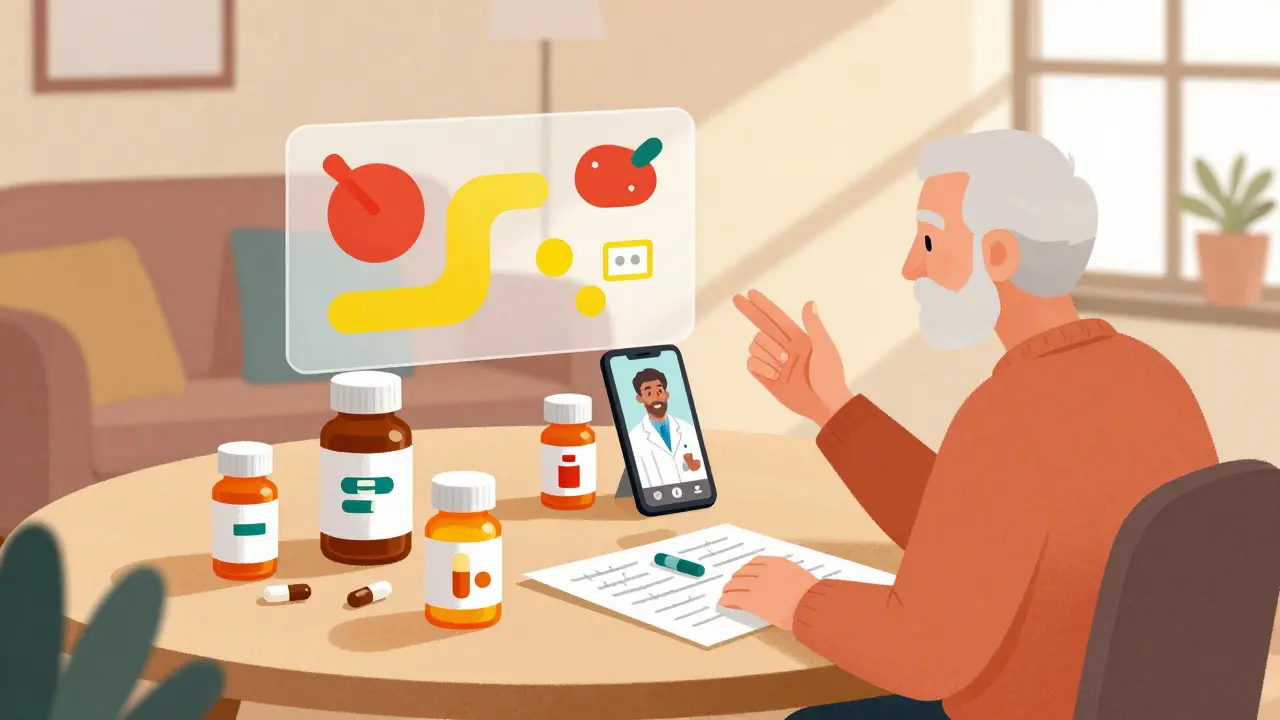
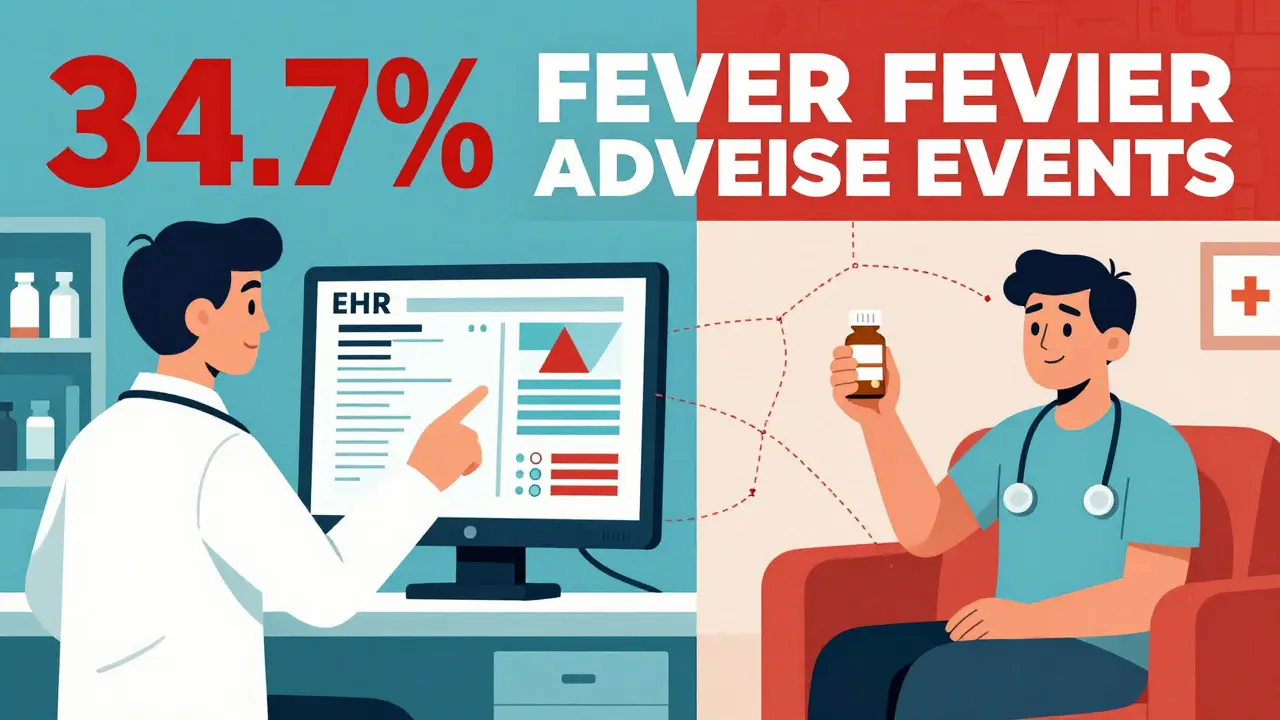
When you’re managing multiple medications - prescription, over-the-counter, or supplements - a medication review isn’t just a good idea. It’s a safety must. And with telehealth, you can do it from your living room. But showing up with your pills on your coffee table isn’t enough. If you don’t know how to prepare or what to ask, you could miss critical risks. A 2020 study found telehealth medication reviews cut adverse drug events by 34.7% in older adults. But that only happens when patients come ready.
What Exactly Is a Telehealth Medication Review?
A telehealth medication review is a virtual meeting with a pharmacist or clinician who checks all your medicines - not just prescriptions. They look for interactions, duplicates, unnecessary drugs, and side effects you might not even realize you’re experiencing. This isn’t a quick chat. It’s a structured assessment using clinical tools that pull from your medical records, pharmacy data, and lab results. The process is backed by research: a 2022 meta-analysis in JAMA Internal Medicine showed telehealth reviews match in-person ones in effectiveness for 80-85% of cases.How to Prepare: The 5-Step Checklist
You wouldn’t walk into a doctor’s office without your insurance card. Don’t walk into a virtual review without this:- Bring every pill, bottle, and supplement. Even the ones you haven’t taken in months. A 2023 study showed patients who displayed all their medications during the call improved review accuracy by 37.4%. Don’t rely on memory. Take photos of labels if bottles are missing.
- Write down your daily routine. What time do you take each med? Do you skip doses? Do you crush pills? Do you take them with food or on an empty stomach? These details matter. One patient in Manchester missed that her blood pressure med was causing dizziness because she took it at bedtime - and didn’t realize the fall risk.
- Know your symptoms. Are you feeling more tired than usual? Nauseous? Confused? Itchy? These aren’t just "old age" signs. They could be side effects. Write them down with when they started and how often they happen.
- Check your pharmacy records. Go online or call your pharmacy and print out your current medication list. Compare it to what you have at home. Mismatches are common - 43.2% of medication errors come from incorrect lists, according to the Institute for Safe Medication Practices (ISMP).
- Test your tech. Make sure your camera works. Your internet is stable (at least 1.5 Mbps). Use a quiet room. Have a charger nearby. If you’re over 65, ask a family member to help you log in 10 minutes early. A 2024 National Council on Aging survey found seniors who got tech training were 68.2% more comfortable with telehealth reviews.
What to Ask: The 6 Critical Questions
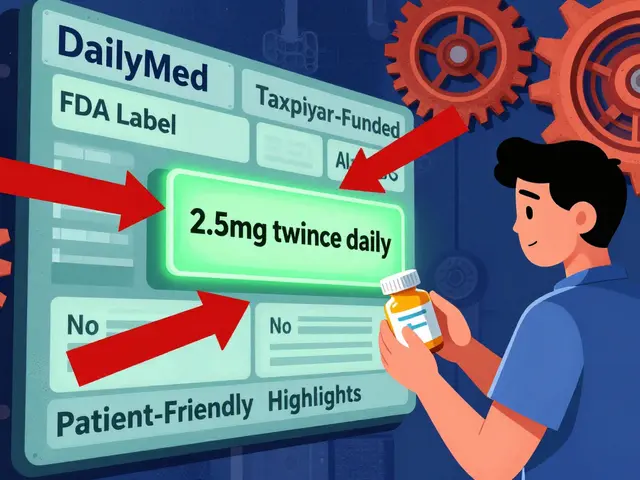
Don’t let the pharmacist lead the whole conversation. You’re the expert on your body. Ask these questions - and don’t move on until you get clear answers:- "How will you confirm my medication list matches what my pharmacy and doctor have?" This is non-negotiable. If they don’t pull data from your pharmacy system or EHR (like Epic or Cerner), they’re guessing. And guessing kills.
- "Are any of these drugs no longer needed?" Polypharmacy - taking five or more meds - is the biggest risk factor for hospitalization in older adults. Many meds are prescribed for short-term use but kept for years. Ask if any can be stopped safely.
- "Are there interactions I should worry about?" Especially between prescription drugs, OTC painkillers (like ibuprofen), and supplements (like St. John’s Wort or fish oil). These aren’t always obvious.
- "What side effects should I watch for between now and our next check-in?" Telehealth can’t feel your pulse or check your swelling. You need to know what’s dangerous. For example, if you’re on a blood thinner, ask: "If I bruise easily or have dark stools, do I call 999 or wait?"
- "How will you share your recommendations with my GP?" Only 62.8% of telehealth services have a direct, standardized way to send changes to your primary care provider. If they say "I’ll email them," ask for a copy of the report they send. Keep it.
- "What happens if I have a problem after this appointment?" Who do you call? Is there a 24/7 line? Can you get a same-day video follow-up? Lack of clear follow-up paths is the top complaint in negative reviews - 32.8% of patients say they didn’t get enough time to ask urgent questions.
When Telehealth Falls Short
Telehealth is powerful - but not perfect. It’s great for managing stable conditions like high blood pressure, diabetes, or depression meds. But it has limits:- If you’re frail, confused, or have trouble swallowing, a virtual review might miss signs of physical decline.
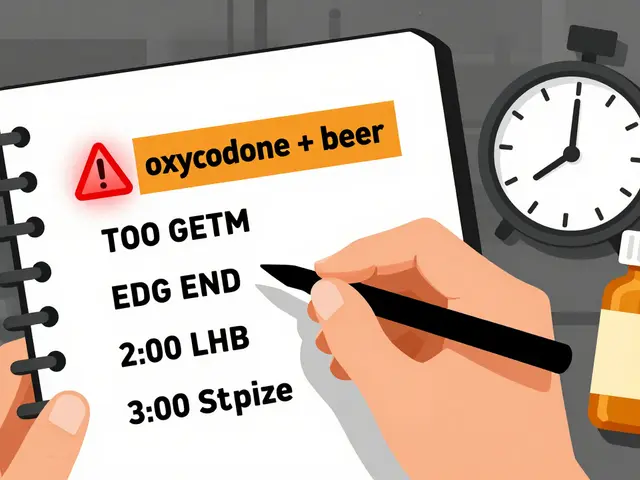
- If you’re on strong painkillers (Schedule II drugs like oxycodone), U.S. rules require an in-person visit every three months. The DEA’s 2025 rules delayed full telehealth access for these until December 31, 2025.
- If you have mental health conditions requiring full cognitive assessment - like dementia or severe depression - video alone isn’t enough. The New York State Office of Mental Health says you need to be seen in person for those.
Don’t let the convenience of telehealth make you skip an in-person check-up when it’s needed. If your pharmacist says "you should see your GP for a physical," listen.
What Happens After the Review?
You shouldn’t leave the call with just a list of changes. You should leave with:- A written summary - email or printed - of what was changed, why, and what to watch for.
- A clear timeline: "Stop this med in 7 days," "Start this new one next Monday," "Check blood work in 2 weeks."
- Confirmation that your pharmacy has been updated. Ask them to call your pharmacy to confirm.
And don’t forget to tell your GP. Many patients assume the pharmacist handles it. They don’t always. Follow up with your doctor’s office within a week to make sure your chart is updated. A 2024 ASHP survey found pharmacists spend 57.3% of their time on telehealth reviews just coordinating with other providers because systems don’t talk to each other.
Cost and Insurance: What You Need to Know
In the U.S., Medicare now pays for two types of telehealth medication reviews: G2225 (comprehensive, $142.37) and G2226 (targeted, $78.92). Private insurers follow similar models. In the UK, these services are often covered under NHS long-term condition management plans - but access varies by region. Always ask: "Is this covered?" before the appointment. If you’re paying out of pocket, expect $50-$150. But if you’re on multiple meds, the cost of one preventable hospital stay is far higher.Real Stories, Real Risks
One patient in Manchester, 71, took six medications. During her telehealth review, the pharmacist spotted that her antidepressant and a common OTC sleep aid were dangerously interacting - causing confusion and falls. She’d been told the sleep aid was "safe." The pharmacist stopped it. Her balance improved in days. Another, 68, thought his cholesterol drug was working fine. The review showed his liver enzymes were sky-high. He’d been on it for five years with no monitoring. The med was switched. His liver recovered. These aren’t rare. They’re preventable.Final Thought: Your Meds Are Your Responsibility
Telehealth makes medication reviews easier. But it doesn’t make them automatic. You’re still the one who takes the pills. You’re still the one who notices the side effects. You’re still the one who must speak up. Come prepared. Ask the hard questions. Demand clarity. And if something feels off - even after the review - call again. Your safety isn’t a one-time event. It’s an ongoing conversation.Can I do a telehealth medication review if I don’t have a computer?
Yes. Most telehealth platforms work on smartphones with a stable internet connection. You can also use a tablet or even a smart TV with a camera. If you don’t have access to any device, ask your GP or local pharmacy if they offer phone-based reviews. While video is preferred for visual checks (like pill bottles), phone calls still work for basic medication reconciliation and safety checks.
Do I need to be on video, or can I do this by phone?
For a full medication review, video is strongly recommended. Pharmacists need to see your pill bottles, check for signs of physical distress (like swelling or skin rashes), and observe your ability to handle medications. But if you have no video capability, a phone call is better than nothing - especially for simple questions like "Is this med still needed?" or "Can I take this with my other pills?" Just make sure you have your list ready and describe each pill clearly.
What if I forget to mention a supplement during the review?
Supplements are one of the most common sources of hidden drug interactions. If you forget one, call the pharmacist back as soon as you remember. Most telehealth services allow one free follow-up within 7 days. If you’re unsure whether a supplement is safe, don’t wait - ask. Even common ones like magnesium, vitamin D, or turmeric can interfere with blood thinners, blood pressure meds, or thyroid drugs.
How often should I have a telehealth medication review?
If you take three or more prescription medications, aim for a review every 6 to 12 months. If you’ve recently been hospitalized, had a major surgery, or started a new drug, get one within 30 days. After a change in your health - like weight loss, memory issues, or new symptoms - schedule one immediately. Don’t wait for your doctor to suggest it. Be proactive.
Can a telehealth pharmacist change my prescriptions?
No - only your doctor can prescribe or change prescriptions. But a pharmacist can recommend changes. They’ll send a formal recommendation to your GP with evidence and reasoning. Most GPs accept these recommendations, especially if they come from a board-certified pharmacist. If your doctor refuses, ask for the reason in writing. Sometimes it’s a misunderstanding - other times, it’s outdated thinking. Don’t let a refusal stop you from advocating for your safety.
What if I’m not happy with my telehealth pharmacist?
You have the right to request a different provider. If the review felt rushed, the advice was unclear, or they didn’t answer your questions, contact the clinic or pharmacy that scheduled the appointment. Ask for another pharmacist - preferably one with experience in geriatrics or polypharmacy. Your safety matters more than convenience. Don’t settle for a review that leaves you confused.





Natasha Sandra December 24, 2025
OMG YES!! 🙌 I did this last month and my grandma’s meds were a total mess-she was taking TWO different blood pressure pills that did the same thing 😱 Pharmacist caught it and saved her from a stroke. Telehealth is a GAME CHANGER. Don’t sleep on it!! 💊❤️
Sumler Luu December 26, 2025
I appreciate how thorough this is. I’ve been hesitant about telehealth reviews because I worry about missing physical cues, but the checklist here made me feel way more confident. Especially the tech prep part-I didn’t realize how much internet speed mattered.
Sandeep Jain December 27, 2025
bro this is so real. i had no idea my turmeric supplement was messing with my blood thinner. my pharmacist said ‘u gotta tell us everything, even if u think its just a herbal tea’ 🙏 i was so embarrassed i forgot, but she was chill about it. now i keep a note in my phone. thanks for the reminder.
Rajni Jain December 28, 2025
you’re not alone if you feel overwhelmed. i used to skip my meds because i was scared to ask questions. but after my telehealth review, i wrote down my 6 questions on a sticky note and read them out loud before the call. it felt weird at first… but now i own my health. you got this 💪
Peter sullen December 29, 2025
It is imperative to underscore, with the utmost clinical precision, that the documented efficacy of telehealth-mediated pharmacovigilance-particularly as corroborated by the 2022 JAMA meta-analysis-is statistically non-inferior to in-person modalities (p < 0.01), with a 95% CI of 80–85%. Furthermore, the implementation of G2225 and G2226 billing codes represents a paradigm shift in value-based care delivery. One must, therefore, advocate for institutional adoption of standardized EHR-integrated reconciliation protocols.
Brittany Fuhs December 29, 2025
Of course it works in the US. In India? Good luck getting a pharmacist who even knows what 'polypharmacy' means. This whole system is built for rich white people with good internet. My aunt in Delhi takes 8 pills and still gets scolded for 'forgetting' her meds. Stop acting like this is universal.
Sophia Daniels December 31, 2025
Let’s be real-this isn’t a review, it’s a 2-hour interrogation with a pharmacist who’s paid to find reasons to take your meds away. I got told my vitamin D was ‘unnecessary’ because my levels were ‘borderline.’ I’ve been taking it for 10 years and my bones don’t ache. Meanwhile, my neighbor got her oxycodone pulled because she ‘forgot’ to mention her painkiller stash. Who’s the real danger here? 🤡
Steven Destiny January 1, 2026
THIS IS THE MOST IMPORTANT THING YOU’LL READ THIS YEAR. If you’re on more than 3 meds, you’re one bad interaction away from the ER. Don’t wait for your doctor to bring it up. DO IT YOURSELF. Book the call. Take the photos. Ask the questions. Your life isn’t a suggestion-it’s a priority. Go do it. NOW.
Fabio Raphael January 3, 2026
What’s the most common thing people forget to mention? I’m curious because I’ve heard supplements, but also things like herbal teas, CBD, or even grapefruit juice. Is there a pattern in the data? I’ve been wondering if I’m missing something subtle.
Amy Lesleighter (Wales) January 3, 2026
just take your pills. write them down. ask if any can be dropped. if you feel weird, call back. thats it. no magic. no fancy tech. just pay attention. your body tells you. you just gotta listen.
sakshi nagpal January 3, 2026
This is beautifully detailed. I work in a rural pharmacy in India, and many elderly patients come with 10+ medications, often from different doctors. We do phone reviews when video isn't possible. The checklist here mirrors what we do manually-just more organized. Thank you for validating our work.
roger dalomba January 4, 2026
Wow. A 15-page essay on how to not die from your own medicine. Congrats. You just turned a 10-minute call into a TED Talk.
Nikki Brown January 5, 2026
You people are so naive. This isn’t ‘safety’-it’s control. They want you to think you need their approval to take your own pills. I’ve been on the same meds for 12 years. I know my body. I don’t need a pharmacist with a clipboard telling me what ‘side effects’ I should feel. 😒