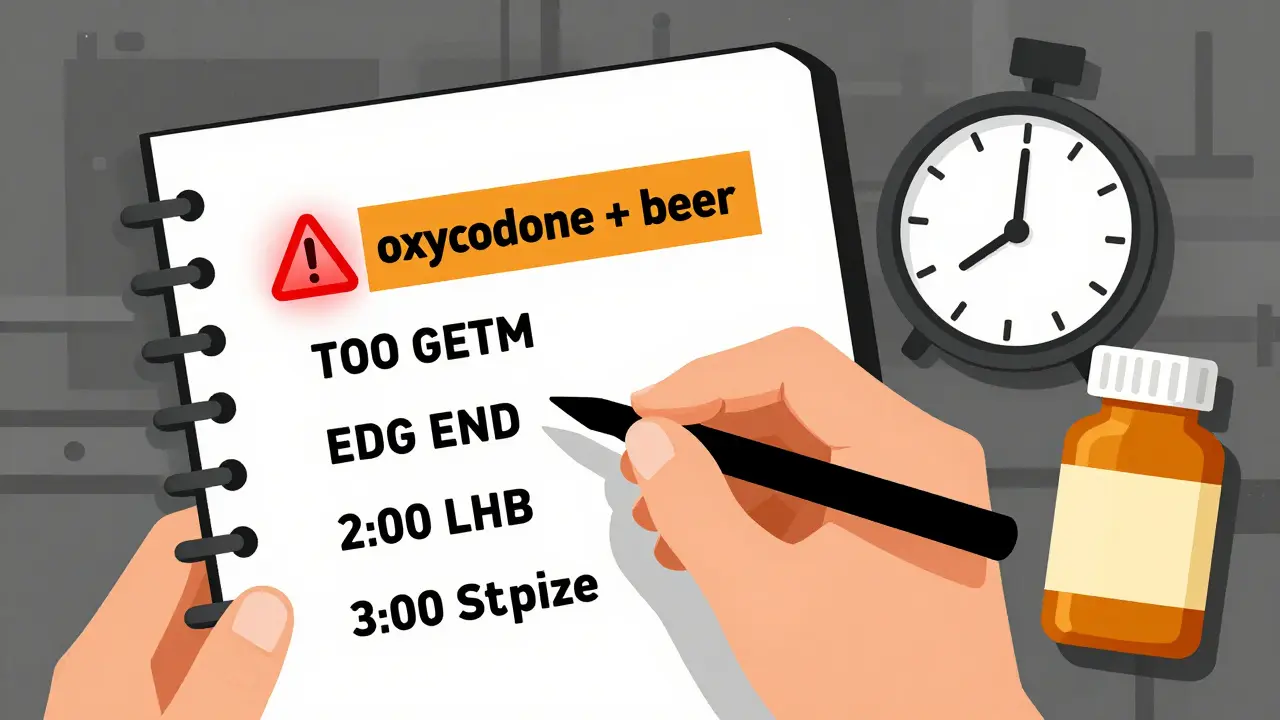
Every year, thousands of people accidentally take too much of a medication-sometimes because they lost track, forgot they already took a dose, or mixed it with something else. It doesn’t have to happen. A simple medication log can be the difference between staying safe and ending up in the hospital-or worse. You don’t need an app, a doctor’s order, or fancy tools. Just a notebook, a phone note, or even a printed template. The goal? Know exactly what you took, when, and how you felt. That’s how you stop overdose errors before they start.
Why Medication Logs Work
Most people think overdose only happens with street drugs or when someone takes a whole bottle by accident. But the truth? It often happens quietly. Someone takes their pain pill at 8 a.m., feels a little better, then takes another at 1 p.m. because they’re still sore. Later, they take a sleeping pill because they can’t rest. Unknowingly, they’ve mixed two depressants. That’s a recipe for breathing to slow down-until it stops. A medication log stops that chain. It forces you to pause before each dose. You write it down. You check what you took earlier. You see the pattern. You realize: “I already had two today. I shouldn’t take a third.” This isn’t just for opioids. It works for benzodiazepines, sleep aids, muscle relaxers, even high-dose acetaminophen. Any drug with a narrow safety margin benefits from tracking. The CDC says mixing opioids with alcohol or sedatives increases overdose risk by up to 300%. A log makes that risk visible.What to Write in Your Log
Don’t just write “took pain pill.” That’s not enough. You need details. Here’s what every entry should include:- Medication name-Use the brand or generic name, but be consistent. If you write “oxycodone,” don’t switch to “Percocet” next time.
- Dosage-Write the exact amount: 10 mg, not “one pill.” If you split a pill, write “5 mg.”
- Time taken-Use a 24-hour clock if possible: 14:30, not “2:30 in the afternoon.”
- Reason-Why are you taking it? “Back pain,” “anxiety,” “trouble sleeping.” This helps you spot patterns.
- Method of use-Swallowed? Crushed? Snorted? Injected? The way you take it changes how fast it hits your system-and how dangerous it is.
- Other substances taken-Alcohol? Benzodiazepines? Marijuana? Even a glass of wine counts. Write it down.
- Effects-Did you feel dizzy? Nauseous? Calm? Sleepy? This tells you how your body reacts.
- Drug test results (if applicable)-If you’re using test strips for fentanyl or xylazine, note the result. “Positive for fentanyl-used half dose.”
Example entry:
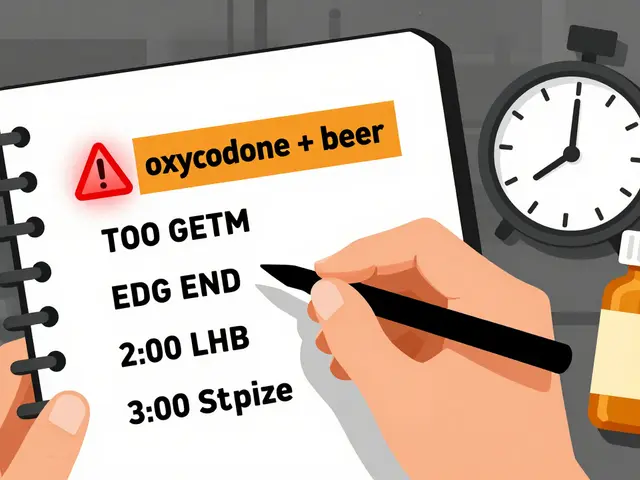
12/18/2025, 10:15 - Oxycodone 10 mg, swallowed, for lower back pain. Took 1 beer at 19:00. Felt drowsy by 11:30. No other meds.
That’s enough to warn you: “I took oxycodone and alcohol. That combo made me sleepy. Don’t do that again.”
How to Start (Even If You’ve Never Done It Before)
You don’t need to be perfect. You just need to start.- Grab a notebook, a notes app, or print a simple template. No app is required-paper works fine.
- Set a reminder on your phone for 10 minutes after your first daily dose. Use it as a prompt to write.
- Start with your most dangerous combo. If you take painkillers and sleep aids, log those first.
- Don’t try to log everything at once. Focus on one medication for three days. Then add another.
- Review your log every Sunday. Look for trends: “I always take extra after 6 p.m.” or “I take more when I’m stressed.”
One person I know started logging after nearly overdosing on gabapentin. He’d been taking 900 mg three times a day because he thought “more helps.” His log showed he was taking 2,700 mg daily-three times the recommended dose. He cut back to 900 mg total. He’s been safe for 14 months.
Digital vs. Paper Logs
Some people swear by apps. Others refuse to use phones for health tracking. Both work-if you use them.Apps (like Medisafe, MyTherapy, or even Google Keep) can send reminders, sync across devices, and flag dangerous interactions. But they require internet access, setup, and consistent use. If you forget to open the app, it’s useless.
Paper logs are foolproof. No battery, no login, no updates needed. You can keep it in your wallet. You can hand it to a friend or paramedic in an emergency. But you have to remember to write. No auto-reminders.
Best option? Use both. Keep a paper log for daily entries. Use a phone note to quickly jot down a dose if you’re out. Transfer it later. That way, you’re covered.
Sharing Your Log for Safety
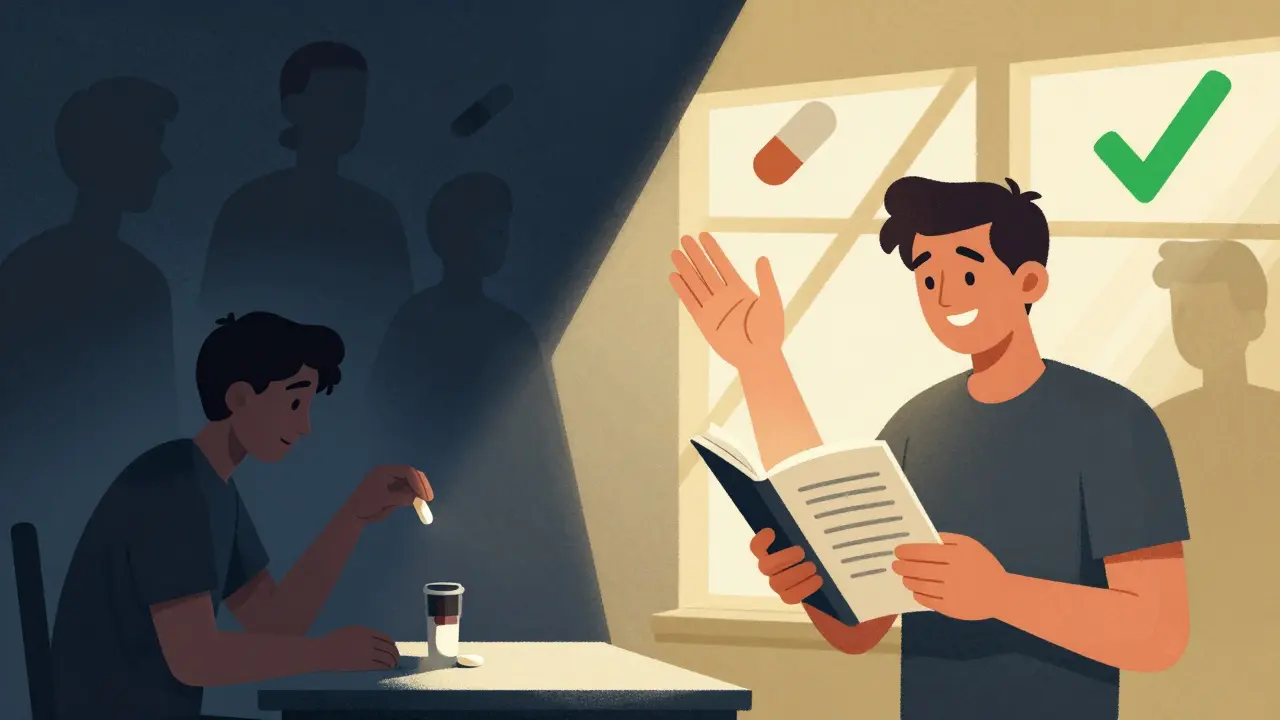
Overdose often happens alone. That’s why the SAMHSA toolkit says: “Never use alone.”Your log isn’t just for you. It’s a safety tool for others. Give a copy to someone you trust-a partner, a friend, a family member. Tell them: “If I’m unresponsive, show this to the paramedics.”
They’ll see:
- What you normally take
- What you took today
- What you didn’t take (which helps rule out accidental overdose)
Paramedics don’t always know what you’ve been taking. A printed log gives them critical info in the first 90 seconds-before they even ask.
Some harm reduction centers in Manchester give out pre-printed log sheets with space for emergency contacts. You can ask at your local needle exchange or community health center.
Common Mistakes (And How to Avoid Them)
- “I’ll remember.” You won’t. Memory fades fast. Even if you’re “just taking one,” write it down.
- Guessing doses. If you don’t know how much you took, don’t guess. Use a pill splitter or scale. Or stop until you can check the bottle.
- Only logging when you think you messed up. Logging only when things go wrong misses the point. Log every time, good or bad.
- Ignoring side effects. Dizziness? Confusion? Slurred speech? These aren’t “just how I feel.” They’re warning signs. Write them down.
- Not reviewing your log. Writing is half the battle. Reviewing is the other half. Spend five minutes every week looking for patterns.
When Your Log Tells You to Stop
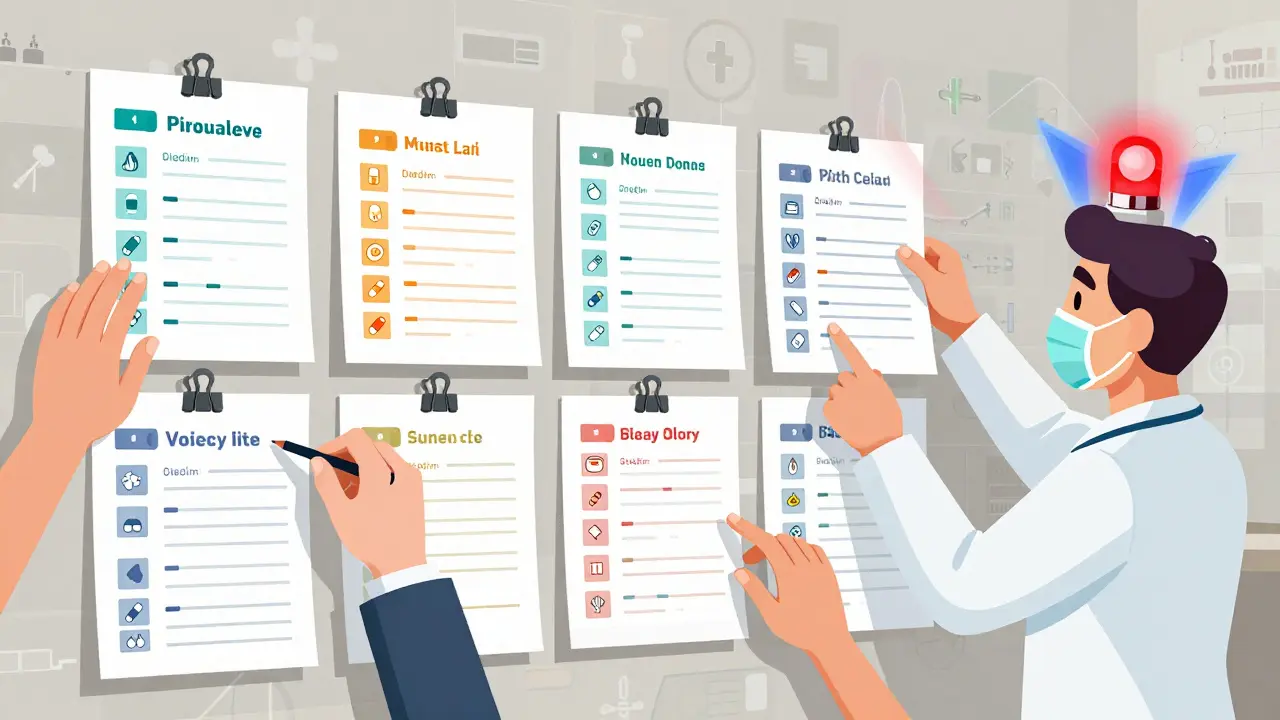
Your log isn’t just a record. It’s a signal system.Here’s what to do when your log shows red flags:
- Two doses in one day - If you took a dose at 8 a.m. and again at 4 p.m., ask: “Do I really need the second?” Don’t assume it’s okay.
- Increasing doses without approval - If you’ve gone from 5 mg to 15 mg in a week, that’s a red flag. Talk to your doctor.
- Using with alcohol or other depressants - If you see this pattern, stop. No exceptions.
- Feeling worse after taking it - If you’re more anxious, more tired, or more confused after taking a med, it might not be helping. Log it. Then talk to someone.
Your log doesn’t judge. It just shows the truth. And the truth is your best ally.
It’s Not Just About Pills
This isn’t just for prescription drugs. It’s for any substance you take regularly. Even OTC meds like NyQuil, Advil PM, or melatonin can add up. Some people take 3-4 different sleep aids every night without realizing they’re all sedating.One woman in Manchester was taking NyQuil, diphenhydramine, and a prescription sleep pill every night. She thought she was “just trying to sleep.” Her log showed she was taking the equivalent of 150 mg of diphenhydramine daily-the same as 10 Benadryl pills. That’s enough to cause heart rhythm problems. She stopped. She started cognitive behavioral therapy for insomnia. She hasn’t needed the meds in 8 months.
Log everything. Even the “harmless” stuff.
What Comes Next
If you’re logging consistently for a month, you’ll start seeing things you never noticed. Maybe you take more when you’re lonely. Maybe you skip doses when you feel fine. Maybe you’ve been taking the same painkiller for three years-even though your injury healed five months ago.That’s when you talk to your doctor. Bring your log. Say: “Here’s what I’ve been taking. I want to make sure it’s still safe.”
Doctors don’t always know what you’re really taking. Many patients don’t tell them about OTC meds, supplements, or street drugs. Your log gives them the full picture. That’s how you get better care.
And if you’re not ready to talk to a doctor yet? That’s okay. Keep logging. You’re already doing something most people won’t. You’re taking control.
Do I need to log every single pill, even if it’s just one?
Yes. Even one pill can be dangerous if you’ve already taken others that day or if it’s mixed with alcohol or other drugs. Overdose doesn’t always come from taking a whole bottle-it comes from small, repeated mistakes. Logging every dose builds awareness and stops the habit before it becomes a crisis.
Can I use a regular notebook or do I need a special form?
Any notebook works. You don’t need a fancy template. Just make sure you include: medication name, dose, time, reason, other substances, and how you felt. If you want a free printable template, search for “medication log PDF” from the CDC or SAMHSA-they offer simple ones you can print and use.
What if I forget to log for a day?
Don’t panic. Don’t try to guess and backfill. Just start again the next day. The goal isn’t perfection-it’s awareness. One day off won’t ruin your progress. But if you miss days often, try setting a phone reminder or keeping your log where you take your meds-like next to your pill organizer.
Can a medication log help someone with a substance use disorder?
Yes. Many recovery programs use medication logs to help people track cravings, triggers, and usage patterns. It’s not a cure, but it gives you real data to work with-instead of guessing or denying. When you see “I took opioids every Friday after work,” you can plan ahead: go for a walk, call a friend, or attend a meeting that day.
Is it safe to share my medication log with others?
It’s safer not to share it with people who judge or shame you. But it’s very safe-and potentially life-saving-to share it with someone you trust: a partner, a close friend, a counselor, or a harm reduction worker. They can help you spot dangerous patterns you might miss. If you’re worried about privacy, keep a copy at home and give a printed version only to your emergency contact.
How long should I keep my medication log?
Keep it as long as you’re taking medications that carry overdose risk. Even after you stop, keep your logs for at least 6 months. You might need them later-for a doctor’s visit, a new prescription, or if you ever restart treatment. Your history matters. Don’t throw it away.
Final Thought: You’re Not Alone
Overdose doesn’t happen because someone is careless. It happens because the system is complex, the drugs are powerful, and the body doesn’t always warn you in time. A medication log isn’t about blame. It’s about clarity. It’s about giving yourself the information you need to make a different choice.You don’t need to be perfect. You just need to be consistent. One entry at a time. One day at a time. That’s how you stay alive.





Tony Du bled December 23, 2025
Just started logging my gabapentin after almost blacking out last week. Paper notebook next to my pills. No app. No fuss. Already caught myself reaching for a second dose. Simple works.
Art Van Gelder December 24, 2025
Man, this is the most thoughtful public health advice I’ve seen in years. Not just because it saves lives, but because it treats people like adults who can handle truth. No shaming, no guilt trips-just facts, structure, and dignity. I’ve been in recovery for eight years and I wish I’d had this when I started. The part about writing down how you feel? That’s the real magic. It turns abstract anxiety into concrete data. You stop guessing what’s happening inside your body and start seeing it. And that’s power.
Most people think addiction is about willpower. It’s not. It’s about perception. You lose track of time, dosage, consequences. The log doesn’t fix you-it gives you a mirror. And sometimes, all you need is to see yourself clearly to change.
I keep mine in my wallet. My sister has a copy. Last Christmas, I passed out after mixing wine with my sleep med. She pulled out my log, showed the paramedics, and they knew exactly what to do. No guesswork. No panic. Just clarity. That’s worth more than any pill.
Gabriella da Silva Mendes December 26, 2025
Ugh I just can’t with this. Like, why are we treating adults like toddlers who need a sticker chart to remember to take their meds? 😒 I mean, come on. If you’re that forgetful, maybe you shouldn’t be on these meds at all. 🙄 Also, why is everyone suddenly obsessed with paper logs? My phone has a calendar and alarms. It’s 2025. 🤦♀️
Kathryn Weymouth December 28, 2025
I appreciate the depth of this post. I’m a nurse, and I’ve seen too many patients come in after overdosing because they didn’t realize they’d taken two doses-or because they didn’t tell their doctor about the melatonin they were taking with their antidepressant. The log isn’t about control-it’s about awareness. And awareness is the first step toward safety. I hand out printed templates to every patient on opioids or benzodiazepines now. Simple. Effective. No tech required.
Sam Black December 28, 2025
I’ve been using a small notebook since my dad died from a silent overdose. He never told anyone he was mixing his painkillers with whiskey. I found his pill bottles and a half-empty bottle of bourbon. No log. No record. Just silence. So now I write everything. Even the little stuff. Even when I feel stupid doing it. Because silence kills. Writing doesn’t.
I don’t care if it’s paper or app. I care that I’m not alone in my head anymore. The log is my witness. And sometimes, that’s enough to keep going.
Jamison Kissh December 29, 2025
What fascinates me is how this system mirrors cognitive behavioral therapy without calling it that. The act of recording forces metacognition-you step outside the impulse and observe it. That pause, however brief, is the space where choice lives. Most overdoses aren’t intentional; they’re automatic. The log interrupts the autopilot. It doesn’t cure dependency, but it re-embeds agency into a process that erodes it. That’s profound. And it’s accessible. No therapist required.
Johnnie R. Bailey December 31, 2025
I work in harm reduction in rural Ohio. We hand out these logs at the needle exchange. People who never trusted doctors, never went to rehab-they’ll write down what they took. Why? Because it’s theirs. No judgment. No forms. Just pen and paper. One guy, 62, started logging his fentanyl use after his grandson asked him why he was always tired. He cut his dose in half. Now he’s teaching others. This isn’t just medical advice-it’s community medicine. It’s dignity in action.
Aliyu Sani December 31, 2025
Yo this is lit. Like, real talk. I been takin’ oxycodone for my back since the factory shut down. Started loggin’ after my homie OD’d. Wrote down every damn thing-even the weed I smoked after. Saw I was takin’ it at 3am every night when I was lonely. That’s the real trigger. Not the pain. The silence. Now I call my cousin instead. Log still there. But the doses? Less. Life? Better. Thanks for sayin’ it plain.
Kiranjit Kaur January 2, 2026
OMG I LOVE THIS SO MUCH 💖💖💖 I started logging my sleep meds after I realized I was taking NyQuil, Benadryl, and ZzzQuil every night-like, what was I thinking?! 🤯 Now I write it down and guess what? I haven’t taken more than one in 3 weeks! I even started journaling how I felt the next day. It’s like magic. You’re not just surviving-you’re *seeing* your life. Thank you for this!! 🌟✨
Jim Brown January 4, 2026
One might argue that the necessity of such a log reflects a deeper societal failure: the commodification of health, the erosion of bodily autonomy, and the normalization of pharmaceutical dependency. The log, in its simplicity, becomes a quiet act of resistance-a reclamation of narrative agency in a world that reduces the self to a pharmacological variable. To write is to assert: I am more than my dosage. I am more than my symptoms. I am the observer of my own physiology. And in that observation, there is not merely safety-but sovereignty.
Tarun Sharma January 4, 2026
Log is good. But doctor must know all meds. Not just pills. Also tea. Also herbs. Also alcohol. Always tell doctor. Log helps, but not replace truth.
Cara Hritz January 6, 2026
i just started using this and omg i had no idea i was takin 2000mg of acetaminophen a day from all my cold meds and painkillers… my liver is gonna explode 😭 i feel so dumb but also so relieved i caught it. thank you for this post. i’m gonna print the template right now.
Sai Keerthan Reddy Proddatoori January 6, 2026
This is what happens when the West loses its values. Why are we encouraging people to write down their drug use? Shouldn’t we be teaching discipline? In India, we don’t need logs-we have family. We have respect. We don’t need apps to tell us not to mix alcohol with medicine. This is weakness dressed as wisdom.
Nader Bsyouni January 7, 2026
So let me get this straight-you’re telling people to write down what they take because they’re too stupid to remember? That’s the solution? Not education. Not better prescribing. Not regulation. Just… a notebook? How quaint. How patronizing. This isn’t prevention. It’s damage control for a system that refuses to fix itself. The real problem isn’t the user. It’s the pharmaceutical industry. But hey, at least we can make them fill out a form while we profit off their addiction.
Julie Chavassieux January 8, 2026
...I just... I didn’t think anyone else did this. I’ve been logging for two years. Every dose. Every time. Even the ones I didn’t take. I write "didn’t take - felt anxious". I keep them in a shoebox under my bed. 17 notebooks. I read them sometimes. Not to feel guilty. To feel... seen. I thought I was the only one. I didn’t know this was a thing. Thank you. I’m not crazy.