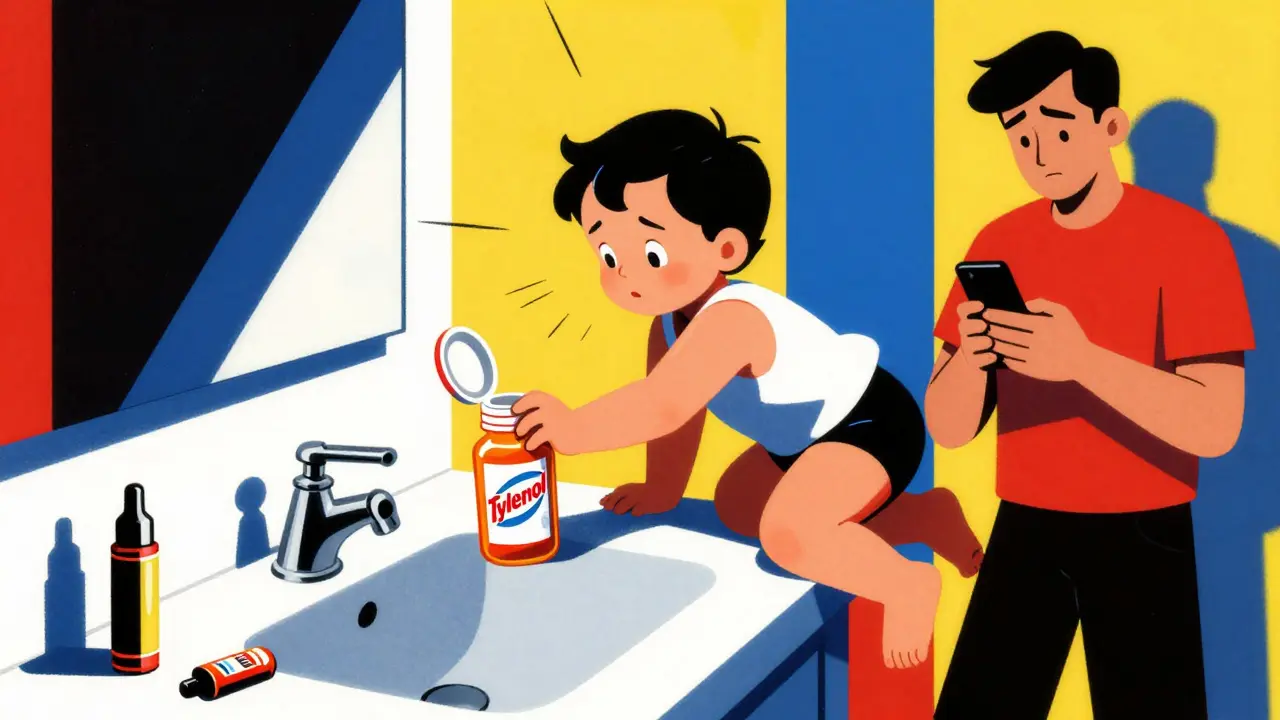
Every year, tens of thousands of kids under age five end up in emergency rooms because they got into medicine they weren’t supposed to. Most of these incidents don’t happen because parents are careless-they happen because medication safety is misunderstood. You think your child can’t reach the bottle on the top shelf. You leave a pill on the nightstand while you take a shower. You call Tylenol "candy" to get your toddler to swallow it. None of these seem like big deals. But they are.
According to Poison Control, over 2 million potential poisoning cases are reported every year in the U.S. alone. Nearly 90% of these happen at home. And the worst part? Most of them occur when a parent or caregiver is right there-distracted for just a few seconds. A toddler climbs onto the toilet to reach the bathroom cabinet. A visiting grandparent leaves their pill bottle in a purse on the floor. You hand your child a spoon of liquid medicine and turn your back to answer the door. In that moment, it’s too late.
Where Medication Poisoning Happens (And Why)
The biggest myth about child poisoning is that it’s caused by unlocked medicine cabinets. It’s not. The real problem is accessibility. A 2022 study from Nationwide Children’s Hospital found that 25% of poisonings happen because medicine was moved from its original container into a different bottle, cup, or even a snack container. Parents do this to make it easier to carry, but kids don’t care about labels. They see a colorful liquid in a bottle that looks like juice and they drink it.
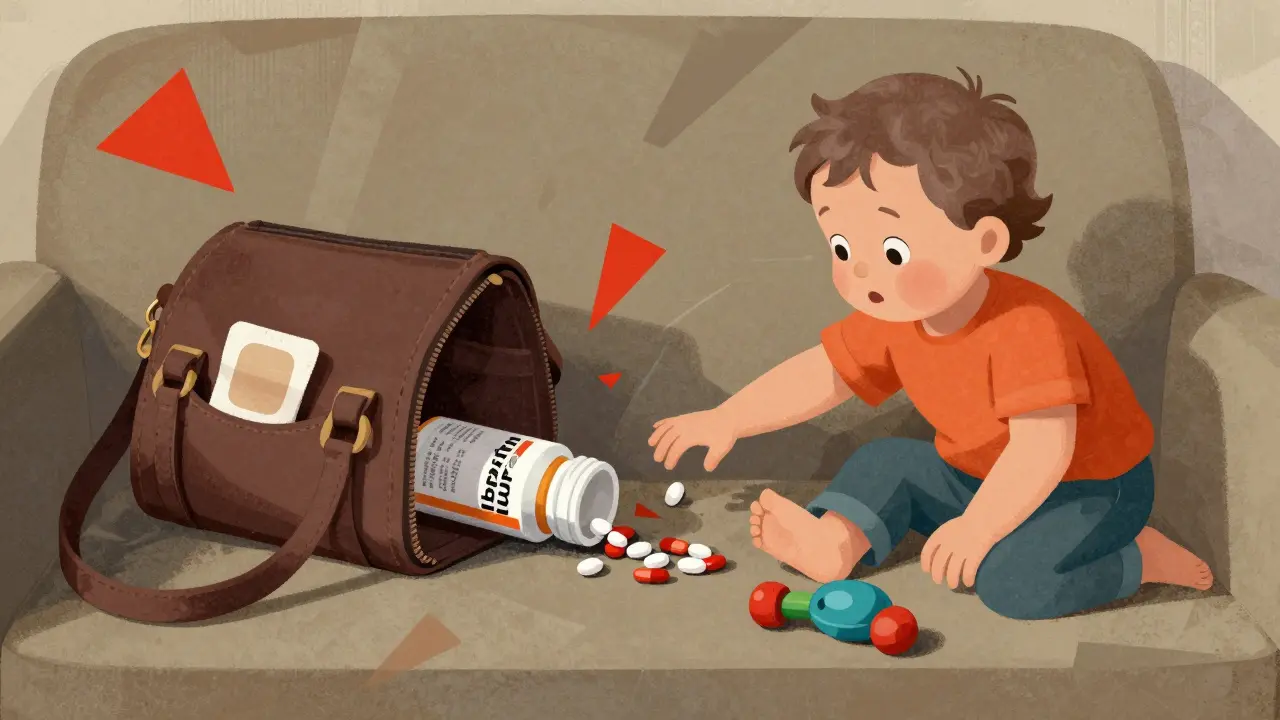
Another major source? Visitor belongings. One in three poisonings comes from medications left in purses, coats, or bedside tables. Grandparents, babysitters, or even friends might not realize how easily a 15-month-old can climb onto a couch, pull a purse off a chair, and find a bottle of ibuprofen or antihistamine. UCSF Benioff Children’s Hospital reports that households with frequent visitors have a 35% higher chance of accidental exposure.
And it’s not just pills. Liquid nicotine from e-cigarettes is a silent killer. As little as 0.5 mL-half a teaspoon-can be fatal to a toddler. These pens and cartridges are often left on counters, nightstands, or in diaper bags. If you vape, you’re not just protecting yourself-you’re protecting your child.
What Medications Are Most Dangerous?
Not all medicines are equal when it comes to risk. The top three offenders in accidental poisonings are:
- Acetaminophen (Tylenol) - Easy to overdose on. Too much can cause liver failure.
- Ibuprofen (Advil, Motrin) - Even a few extra doses can cause stomach bleeding or kidney damage.
- Aspirin - Never give this to kids under 18. It can cause Reye’s syndrome, a rare but deadly condition.
Antihistamines like Benadryl are also common culprits. Parents think they’re harmless because they’re sold over the counter. But a toddler’s body can’t handle even a small adult dose. The same goes for sleep aids, cold medicines, and patches (like fentanyl or nicotine patches). A single patch can be lethal.
Storage: Lock It, Not Just Hide It
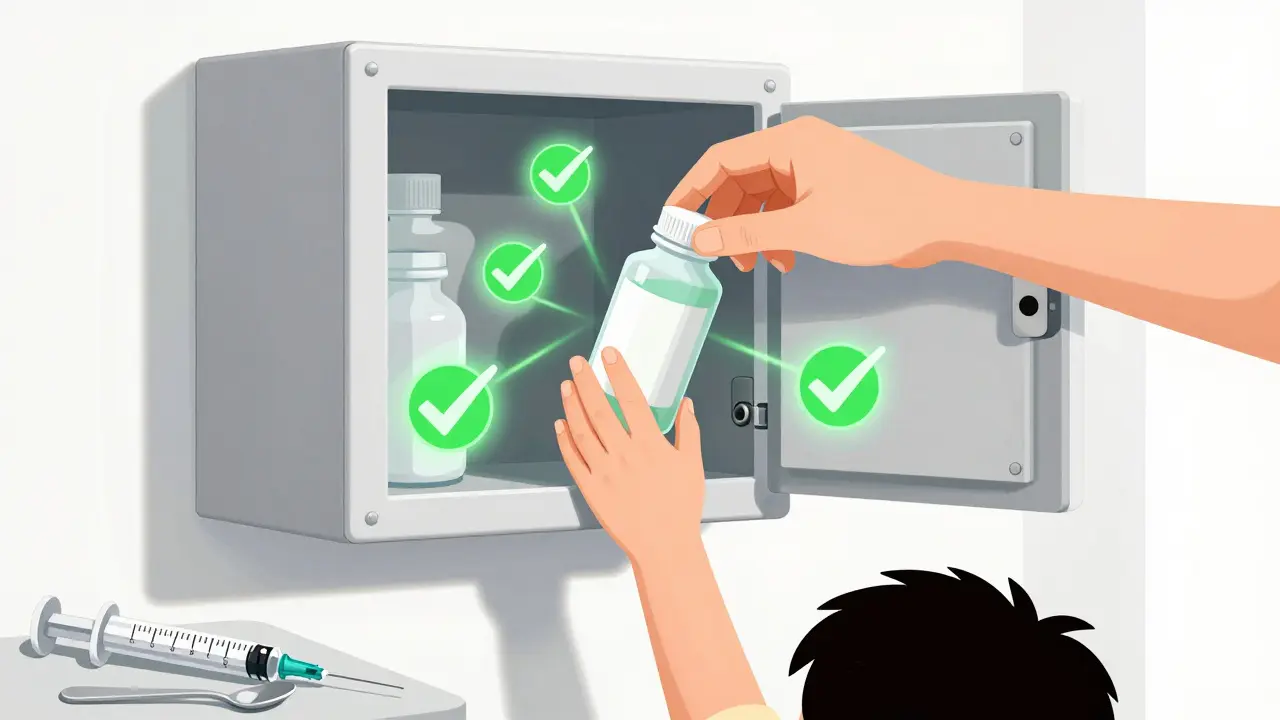
Storing medicine "up high" isn’t enough. Toddlers can climb. They use chairs, tables, toilets, and even the edge of the bathtub to reach things. The American Academy of Pediatrics says locked cabinets are the only reliable solution. Automatic-locking latches that engage when the door closes are best. But even those can be tricked by a determined child. That’s why the gold standard is a cabinet with a magnetic lock placed at least 54 inches above the floor.
And don’t forget the bathroom. It’s one of the most dangerous rooms in the house. Medicine, cleaning supplies, and even vitamins are often stored there. Get down on your hands and knees and look around. What do you see? A towel rack your child can use to pull themselves up? A medicine cabinet within reach? A bottle on the sink? Fix it now.
Use a medication lock box a small, portable container with a key or combination lock designed specifically for storing medicines out of children’s reach. Many pharmacies now offer them for free to families with toddlers. One program in Ohio saw a 41% drop in exposures after distributing these boxes.
Never Call Medicine "Candy"
This one is simple, but deadly. If you say "This is candy to help you feel better," your child learns that medicine = treat. A 2021 AAP analysis found that kids whose parents used this phrase were 3.2 times more likely to take medicine without asking. Even saying "It tastes like candy" can backfire. Instead, say: "This is medicine. It’s not food. Only grown-ups can give it to you."
Dosing Mistakes Are Common-and Deadly
More than two-thirds of medication errors happen because the wrong dose is given. The biggest culprit? Kitchen spoons. A 2023 Poison Control report found that 42% of dosing mistakes happen because parents use teaspoons or tablespoons from the drawer. But household spoons vary wildly. One teaspoon might hold 3 mL. Another might hold 5 mL. That’s a 40% difference. In a toddler, that’s the difference between safe and dangerous.
Always use the measuring tool that comes with the medicine-a syringe, dropper, or cup marked in milliliters (mL). If it’s missing, ask your pharmacist for a new one. They’re free. And never guess. If you’re unsure, call Poison Control. They’ll walk you through it.
Timing Matters More Than You Think
Most people assume poisonings happen at night, when kids are restless. But data shows the opposite. The highest number of incidents occur between 12 p.m. and 6 p.m. Why? That’s when parents are busy-preparing lunch, cleaning up, answering calls, or scrolling on their phones. You’re distracted. Your child is curious. And in that window, they act.
That’s why the rule is simple: Never leave medicine unattended while you’re using it. If you’re opening a bottle to give your child a dose, don’t set it down. Don’t walk away. Don’t answer the door. Don’t check your phone. Hold the medicine in one hand. Give the dose. Put it away. Immediately.
What About Child-Resistant Caps?
They’re not foolproof. The FDA requires them, but they’re designed to slow down kids-not stop them. A 2022 UCSF study found that 70% of toddlers under age two can open child-resistant caps within 10 minutes. Some figure it out in under a minute. That’s why these caps are a backup, not a solution.
Never rely on them alone. Always combine them with locked storage. And if your child figures out how to open a bottle? That’s your cue to upgrade to a lock box or cabinet.
Prepare for What’s Coming
Children don’t stay the same. A 15-month-old might not be able to climb yet. But in three months? They will. UCSF recommends planning ahead: anticipate milestones 3 to 6 months in advance. If your child is starting to pull up on furniture, start securing medicine now. If they’re crawling, lock the bathroom cabinet. If they’re walking, install magnetic locks. Don’t wait for them to reach the medicine. Get there first.
Emergency Plan: Know What to Do
Even with the best precautions, accidents happen. That’s why every home with kids needs two things:
- The Poison Help number: 1-800-222-1222. Post it on the fridge, next to the phone, on the bathroom mirror. Make sure every caregiver knows it.
- A working phone. Don’t assume you’ll remember the number. If you suspect poisoning, call immediately. Don’t wait for symptoms. Don’t try to make your child vomit. Don’t give milk or charcoal. Just call.
Poison Control processes over 2 million calls a year. Their webPOISONCONTROL tool lets you answer a few questions online and get instant guidance. And here’s the key: calling within five minutes improves outcomes by 89%. That’s not a suggestion. That’s science.
Also, consider taking a CPR and Heimlich maneuver class. Twelve percent of severe poisonings require immediate intervention before help arrives. Knowing how to respond can save a life.
Who’s at Highest Risk?
Children between 1 and 5 years old make up 67% of all accidental poisonings. But some families face even higher risks:
- Rural households - 22% higher rates of severe cases due to longer ambulance response times.
- Homes with grandparents - Medications left in purses or nightstands increase risk by 35%.
- Families with multiple caregivers - The more people in the home, the more chances for misplacement.
If any of these sound like your home, double down on prevention. Lock boxes, posted numbers, and consistent routines aren’t optional-they’re essential.
What’s Changing? The Future of Safety
There’s new tech on the horizon. Smart pill dispensers with parental alerts are being tested. One pilot program in 2022 showed a 63% drop in unsupervised access. These devices track when a dose is taken and send a notification if a bottle is opened without permission. They’re not everywhere yet-but they’re coming.
And Poison Control is expanding telehealth support. In 2022, 38% of medication exposures didn’t need an ER visit if families got expert advice right away. By 2025, they aim to cut unnecessary ER trips by 25% using remote guidance. That means faster help, less stress, and fewer hospital bills.
But none of this replaces the basics. Lock it. Store it. Never leave it. Never call it candy. Call if you’re unsure.
What should I do if my child swallows medicine by accident?
Call Poison Control immediately at 1-800-222-1222. Do not wait for symptoms. Do not try to make your child vomit. Have the medicine container ready when you call-they’ll need the name, strength, and amount. If your child is unconscious, having trouble breathing, or having seizures, call 911 right away.
Are child-resistant caps enough to keep kids safe?
No. Child-resistant caps are designed to slow down kids, not stop them. Studies show most toddlers under age two can open them within minutes. Always combine caps with locked storage in cabinets or lock boxes placed out of reach.
Can I store medicine in the fridge to keep it safe?
Only if the label says to. Most medicines don’t need refrigeration. And even if they do, the fridge isn’t safe unless it’s locked. Toddlers can open fridge doors and reach items on lower shelves. Always store medicine in a locked cabinet-even if it’s supposed to be cold.
Is it safe to keep medicine in a purse or bag?
No. One in three poisonings comes from medicine left in purses, coats, or diaper bags. Always put medicine back in its locked storage after use. If you’re visiting someone, carry medicine in a secure, labeled container and keep it with you at all times.
How can I teach my child that medicine isn’t candy?
Use clear, consistent language: "This is medicine. It’s not food. Only grown-ups can give it to you." Don’t say it tastes like candy. Don’t use it as a reward. Reinforce the rule every time you give medicine. Repetition works. And model the behavior-never take medicine in front of your child without explaining why.
What if I’m not sure how much to give?
Never guess. Always use the measuring tool that came with the medicine-never a kitchen spoon. If you’re unsure, call your pharmacist or Poison Control. They’ll help you calculate the right dose based on your child’s weight. It’s better to ask than to risk an overdose.
Do I need to lock up vitamins and supplements too?
Yes. Even children’s vitamins can be dangerous in large amounts. Iron supplements are especially toxic and can cause severe poisoning. Treat all supplements like medicine: lock them up, keep them in original containers, and never leave them out.
Is it safe to give medicine to my child without a doctor’s advice?
Only if it’s an over-the-counter medicine and you’re following the label exactly. But even then, check with your pediatrician if your child is under two, has other health conditions, or is taking other medicines. Mixing medications can be dangerous. When in doubt, call your doctor or Poison Control.





Luke Trouten February 12, 2026
It's wild how much of this comes down to human behavior rather than design flaws. We think we're being careful because we put the medicine "up high," but toddlers are tiny engineers-they’ll build a tower out of books and a chair to reach that bottle. The real solution isn't just locking it-it's rethinking the entire system. What if medicine came in non-retrievable, single-use blister packs that auto-destruct after one dose? Or smart containers that beep when opened without a fingerprint scan? We’re treating symptoms, not the root cause.
Kristin Jarecki February 14, 2026
Thank you for this comprehensive and evidence-based overview. I would like to emphasize the importance of consistent caregiver education. In healthcare settings, we often assume that caregivers are familiar with medication safety protocols, but this is rarely the case. A standardized, brief educational handout-provided at every pediatric visit-could significantly reduce accidental exposures. Additionally, pharmacies should be required to offer free, standardized lockboxes to all families with children under five at the time of dispensing any oral medication. Prevention is far more cost-effective than emergency intervention.
Jonathan Noe February 15, 2026
Bro, I just laughed because my sister did the "it’s candy" thing with her kid and now he asks for "medicine" like it’s Skittles. Like, "Mom, can I have my medicine?" while holding a bottle of Children’s Benadryl. She thought it was cute. Now she’s got a lockbox on the bathroom counter and a 24/7 surveillance cam pointed at the medicine cabinet. I told her she should start a TikTok: "How I stopped my toddler from poisoning himself with Tylenol." She’s gonna do it. It’s gonna blow up.
Jim Johnson February 16, 2026
Y'all are overthinking this. Lock it. Don't leave it out. Don't call it candy. Simple. I've got two kids under three and I keep everything in a locked plastic tub under my bed. Yeah, it's a little weird, but I don't have to worry. I used to keep stuff in the bathroom cabinet like everyone else. Then my 2-year-old got into my ibuprofen and I had to race to the ER at 3 a.m. That was the last time I trusted "high shelves." Now? Locked. Every. Single. Thing. Even the fish oil capsules. Trust me, they look like candy too.
Autumn Frankart February 17, 2026
They don't want you to know this, but the real reason they push "lock boxes" is because Big Pharma wants you to buy their overpriced plastic containers instead of just using a Tupperware. And why? Because they make billions from ER visits. The FDA knows child-resistant caps are useless. They’ve known for years. But they won’t ban them because the industry lobbies too hard. And don’t get me started on how they downplay the dangers of vitamins. Iron supplements? That’s just the tip of the iceberg. They’re all in on this. Wake up.
Skilken Awe February 17, 2026
Oh wow, another feel-good parenting article that tells us to "just lock it" like we’re all living in IKEA catalogues. Let me guess-you also think putting a baby gate on the stairs is a real solution? The real problem? Parents are distracted by their phones. The solution? Stop being useless. Put the damn phone down. Don’t hand your kid medicine while you’re scrolling through cat videos. No lockbox, no smart container, no magnetic latch is gonna fix a parent who treats their child like a background character in their own life. Just be present. That’s the hack.
Steve DESTIVELLE February 18, 2026
When we speak of safety we speak of control and control is the illusion of order in chaos. The child does not understand the symbol of the pill but the symbol of the bottle as container of power. The parent believes that height is protection but height is only a measure of distance from the self. The child climbs not because they are curious but because they are seeking the structure that the adult has abandoned. The lockbox is a monument to failure. The true solution is not in storage but in presence. When the adult is present the child does not seek. When the adult is absent the child becomes the architect of its own demise. We must become the container not the lock.
Ernie Simsek February 20, 2026
bro i just locked my meds in a safe with a biometric lock and linked it to my phone so it texts me every time someone opens it 😎 even my wife has to scan her finger. also i made a sign that says "IF YOU’RE NOT ME OR THE DOCTOR, DON’T TOUCH THIS" and taped it to the safe. my 18mo is now scared of the bathroom. i love it. 🤖💊 #parentinghacks #notsorry
Joanne Tan February 20, 2026
i used to think i was good at this until my nephew came over and got into my vitamin gummies. he was fine but i cried for an hour. now i keep everything in a locked box in the closet and i tell my kids "medicine is for doctors, not snacks." i even made a little chart with stickers for when they remember to ask before touching anything. they love stickers. we’re all learning. 🙌