VAERS: What It Is, How It Works, and What the Data Really Shows
When you get a vaccine, VAERS, the Vaccine Adverse Event Reporting System, a joint program by the CDC and FDA to collect reports of health problems after vaccination. Also known as Vaccine Adverse Event Reporting System, it’s not a proof that a vaccine caused the problem — it’s a safety net that catches anything unusual, no matter how rare. Think of it like a national alarm system: if someone feels sick after a shot, they or their doctor can file a report. That doesn’t mean the shot made them sick — but it means someone noticed something worth looking at.
VAERS doesn’t just track reactions to COVID vaccines — it’s been around since 1990 and covers every vaccine approved in the U.S., from flu shots to tetanus boosters. It collects reports on everything from mild rashes to hospitalizations, and even deaths. But here’s what most people miss: CDC, the Centers for Disease Control and Prevention, the U.S. public health agency that analyzes VAERS data to spot real safety signals and FDA, the Food and Drug Administration, which regulates vaccines and investigates reports flagged by VAERS don’t rely on VAERS alone. They cross-check it with other systems, like the Vaccine Safety Datalink, which tracks millions of medical records. VAERS is the first alert — not the final verdict.
Some reports in VAERS are scary. A person dies days after a shot? It gets listed. But correlation isn’t causation. If 10 million people get a flu shot and 10 die of heart attacks that week, VAERS will show those 10 deaths — even if the vaccine had nothing to do with it. That’s why experts look at patterns: is the number of heart attacks higher after this vaccine than in the general population? If not, it’s likely coincidence. That’s the real work — sorting noise from real risk.
And VAERS isn’t just for doctors. Anyone can file a report — patients, family members, even concerned strangers. That openness is why it’s so powerful. It caught rare blood clots with the Johnson & Johnson vaccine, and the spike in myocarditis after mRNA shots in young men. Those weren’t found in clinical trials — too few people were studied. VAERS found them in the real world, where millions are getting vaccinated.
But VAERS has limits. It doesn’t tell you how often something happens. It doesn’t prove cause. And it’s full of incomplete or inaccurate reports. That’s why you’ll see wild claims online — "VAERS proves vaccines kill" — but those ignore the system’s design. It’s a tool for detection, not judgment.
What you’ll find in the posts below are real-world stories and facts about how vaccines, medications, and health systems interact. You’ll see how pharmacists handle side effect reports, how the FDA acts on safety data, and why some people notice changes after switching meds. These aren’t conspiracy theories — they’re grounded in how medicine actually works, day to day, for real people. Whether you’re tracking your own symptoms, helping an elderly parent, or just trying to understand the noise — this collection gives you the facts, not the fear.
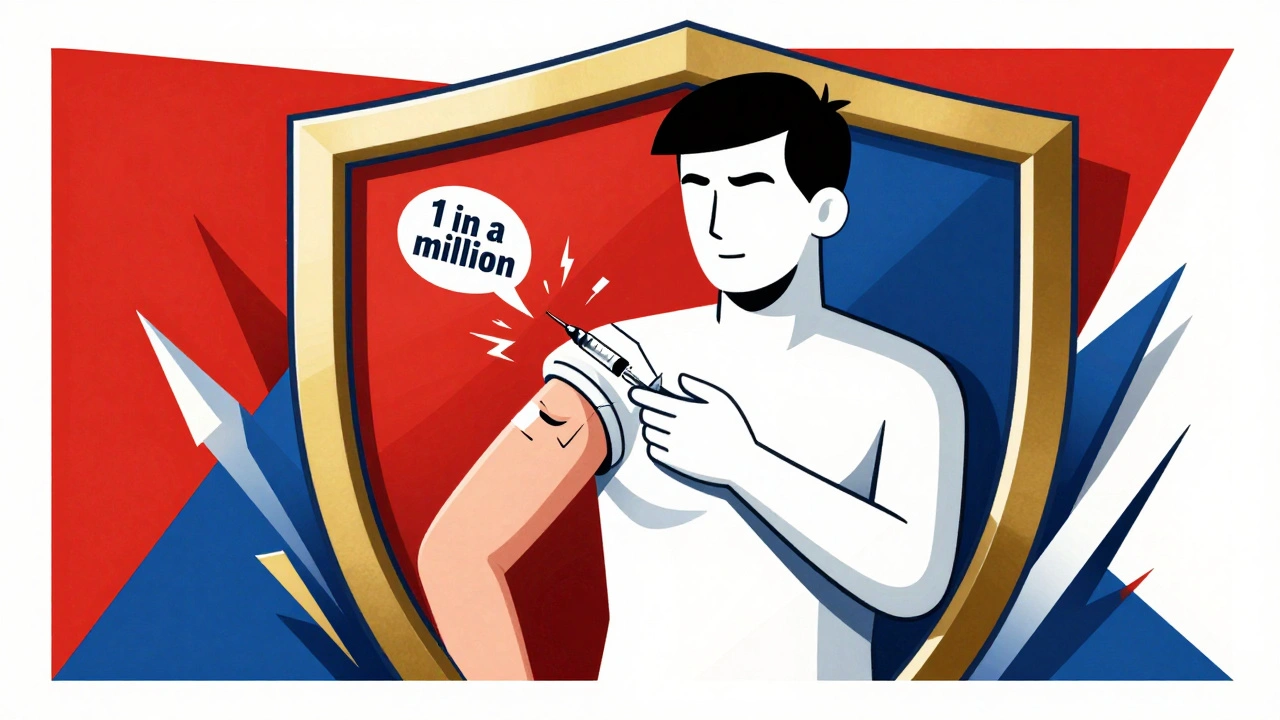
Vaccine Allergic Reactions: What You Need to Know About Rare Risks and How Safety Systems Work
Vaccine allergic reactions are extremely rare, occurring in about 1.3 cases per million doses. Learn what triggers them, how safety systems like VAERS catch issues early, and why most people - even those with egg or yeast allergies - can still get vaccinated safely.