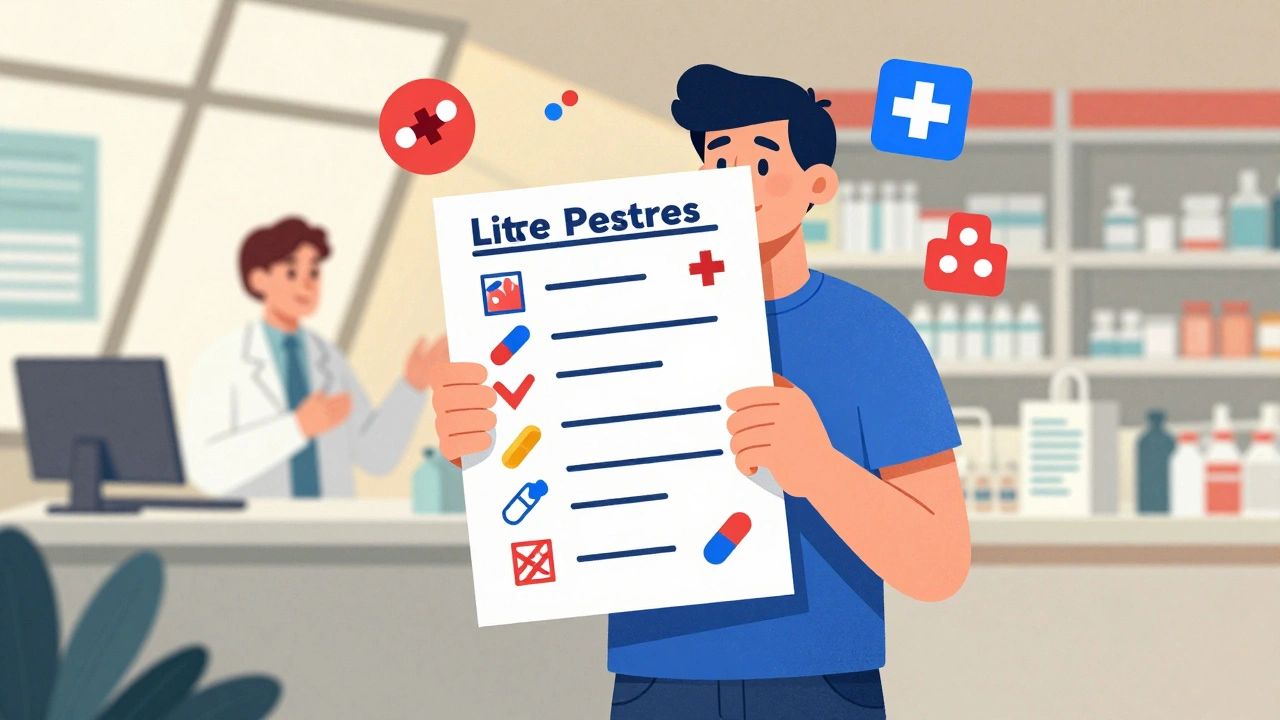
Every year, hundreds of thousands of people in the U.S. are harmed by medication errors - and many of these mistakes could be stopped before they happen. Not by doctors or nurses alone, but by the people actually taking the pills: patients.
You might think your job ends when you pick up your prescription. But the truth is, you’re the last line of defense. You’re the one who sees the pill, swallows it, feels the side effects, and notices when something doesn’t match what you were told. That’s not just helpful - it’s essential.
What You Need to Know About Your Medications
Before you leave the doctor’s office or pharmacy, make sure you can answer three simple questions: What is this medicine for? How much should I take? And when? If you can’t answer them clearly, ask again. Don’t pretend you understand just to move on.
Studies show that patients who know the names and purposes of their medications reduce their risk of errors by 35%. That’s not a small number. It means if you’re on five pills, and you know why each one is there, you’re already cutting your chance of a dangerous mistake nearly in half.
Write it down. Use a notebook, your phone, or a free app like MyMedSchedule. List every medication - including vitamins, supplements, and over-the-counter painkillers. Many harmful interactions happen because patients forget to mention they’re taking fish oil, ibuprofen, or melatonin. These aren’t “just supplements.” They’re drugs. And they can react badly with your prescriptions.
Check the Pill Before You Take It
Have you ever opened a new bottle and thought, “This doesn’t look right”? You’re not being paranoid. You’re being smart.
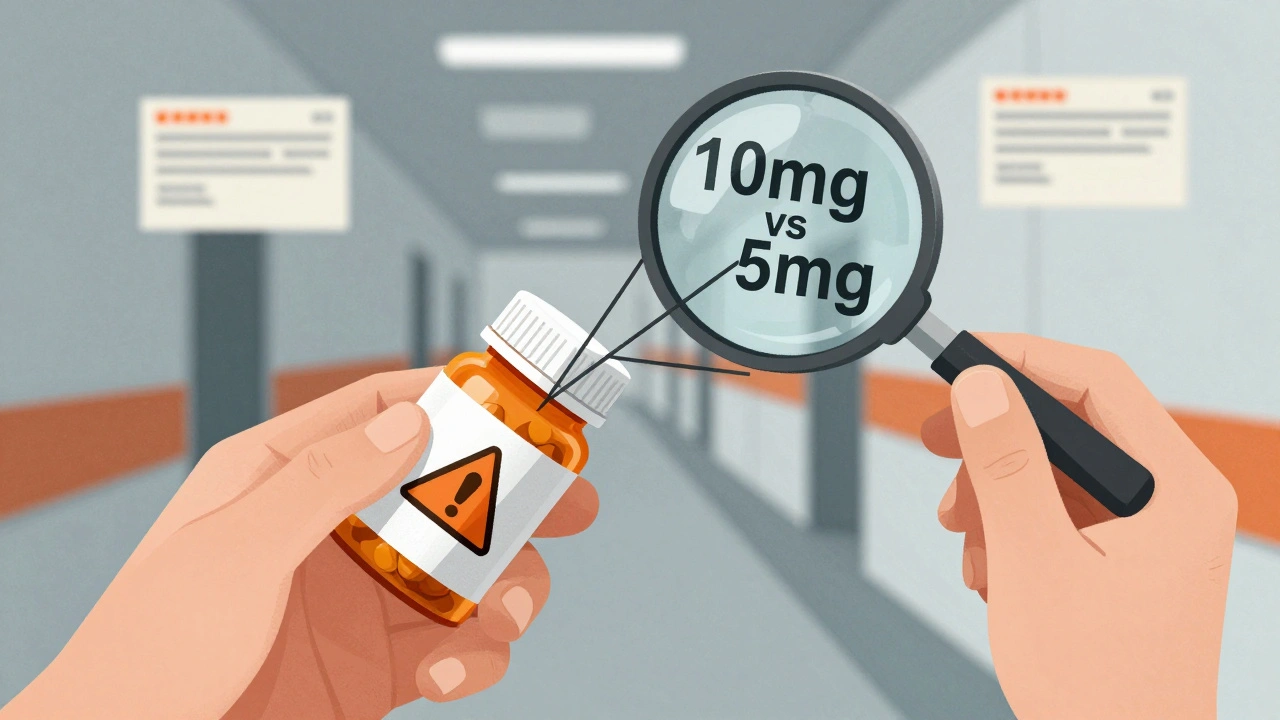
Medication errors happen at the pharmacy more often than you’d think. Pills get switched. Labels get misprinted. A 10mg tablet might end up in a bottle labeled 5mg. If you’ve taken this medicine before and the shape, color, or size looks different, ask the pharmacist: “Is this the same thing I got last time?”
One study found that patients who checked their pills before taking them prevented 19% of dispensing errors. That’s nearly one in five mistakes caught before they hurt someone.
Don’t be afraid to say: “I think something’s wrong here.” Pharmacists expect this. They’ve seen it happen. And they’ll thank you for catching it.
Ask About Changes - Even Small Ones
Doctors sometimes tweak doses, switch brands, or stop a medication without fully explaining why. A change might seem minor - “Just take one less pill” - but it can have big consequences.
Patients who question unexpected changes in their regimen catch 15% of prescription errors. That’s not just luck. It’s vigilance.
If your doctor says, “We’re switching you from Lipitor to a generic,” ask: “Is this the same dose? Will I feel different? Are there any new side effects I should watch for?” If they hand you a new bottle and say, “Take one daily,” don’t assume you know what “one” means. Is it one tablet? One capsule? One teaspoon? Confirm the exact instructions.
Use Medication Reconciliation - Every Time
Every time you go to the hospital, ER, or even a specialist’s office, ask: “Can we go over my meds together?” This is called medication reconciliation - and it’s one of the most powerful safety tools you have.
During a hospital stay, your regular meds might get paused, changed, or forgotten. A 2021 study showed that when patients actively take part in this process, medication discrepancies drop by 50%. That means fewer dangerous mix-ups, fewer allergic reactions, and fewer readmissions.
Bring your list. The real one - the one you keep updated. Don’t rely on memory. Don’t trust the hospital’s system. They’ve been wrong before. You’re the only one who knows what you’ve actually been taking at home.
Know the Warning Signs
Side effects aren’t always obvious. Some start slowly. Others hit hard and fast.
Learn the common side effects of your top three medications. If you feel dizzy, nauseous, confused, or have a rash - especially after starting a new drug - write it down. Note the time, the dose, and what you were doing. Then call your doctor or pharmacist. Don’t wait.
Research shows that patients who recognize side effects early can prevent 63% of serious adverse events. That’s because catching a problem early means you can stop the medicine, adjust the dose, or switch to something safer - before it turns into an emergency.
For example: If you’re on a blood thinner and notice unusual bruising or bleeding gums, that’s not normal. If you’re on a diabetes pill and feel shaky, sweaty, or faint, you might be having low blood sugar. These aren’t “just side effects.” They’re signals. Listen to your body.
Use Tools - But Don’t Rely on Them Alone
There are apps, smart pillboxes, and online portals that help track meds. They’re useful. But they’re not foolproof.
Patients who use interactive tools - ones that let you log doses, set reminders, and message your care team - have 24.5% better safety outcomes than those who just view static lists. But here’s the catch: Only 43.7% of people over 65 use these tools regularly. That’s a huge gap.
If you’re older, or not tech-savvy, don’t feel left behind. Ask for printed materials. Ask for a family member to help. Ask your pharmacist to explain it in person. You don’t need a smartphone to be safe. You just need to be informed.
Barriers Are Real - But They’re Not Impossible
Not everyone can read medical forms. Not everyone speaks English well. Not everyone has the time or energy to manage five pills a day. Health literacy is a real problem. About 36% of U.S. adults have trouble understanding basic health instructions.
That’s why simple tools matter. The Universal Medication Schedule - which groups doses into four clear times: morning, noon, evening, and bedtime - cuts confusion by 44%. If your doctor gives you a complicated schedule like “take every 8 hours,” ask: “Can we make this easier? Can I take it with meals?”
And if you struggle with math - like figuring out half a pill or milligrams - say so. You’re not dumb. You just need help. Pharmacists can give you pre-filled pill organizers. Nurses can draw lines on pills with a marker to show where to cut. There are tools for this. You just have to ask.

What If You’re Dismissed?
Some patients report being called “difficult” or “overly cautious” when they ask questions. That’s wrong. You’re not being difficult. You’re being responsible.
One patient on Reddit shared how she caught a 10-fold overdose in her child’s antibiotic dose - and was told she was “too nervous.” That dose could have killed him.
Dr. Tejal Gandhi, a top patient safety expert, says patients are the final safety checkpoint in 83% of near-miss events. That means your voice isn’t just welcome - it’s necessary.
If you’re ignored, ask to speak with a supervisor. Request a pharmacist consult. Write down what happened. You have the right to be heard. And if you’re not, you’re not alone. Many others have been there. And many have spoken up - and saved lives.
It’s Not Just About You
When you take charge of your meds, you’re not just protecting yourself. You’re helping your family, your caregivers, and even your healthcare team.
Studies show that engaged patients with chronic conditions like diabetes have 39% fewer dangerous low-blood-sugar events. Those are hospital visits avoided. Families spared stress. Lives extended.
And it’s getting easier. In 2023, the FDA launched a Patient Safety Ambassador program that trained over 12,000 people to teach others how to stay safe with meds. Hospitals are now required to involve patients in medication reviews. Insurance companies are starting to pay providers for doing it right.
You’re not a burden. You’re a partner.
What You Can Do Today
- Make or update your personal medication list - include everything, even aspirin and vitamins.
- Before taking any new pill, ask: “What is this for? How much? When?”
- Check the pill’s color, shape, and size every time you refill.
- Bring your list to every appointment - doctor, ER, specialist.
- If something feels off, say something. Don’t wait.
- Ask for help if you’re confused. You’re not alone.
Medication safety isn’t a job for hospitals alone. It’s a team sport. And you’re the most important player on the field.







Kathy Haverly December 10, 2025
Wow, so now I'm supposed to be a fucking pharmacist, detective, and nutritionist just to not die from my own prescriptions? Meanwhile my doctor spends 7 minutes with me and writes a script like it's a lottery ticket. Thanks for the guilt trip, buddy.
Carina M December 11, 2025
The assertion that patients are the 'last line of defense' is both pedagogically sound and ethically imperative. One must, however, acknowledge the structural inequities that preclude many from achieving the requisite health literacy. The onus cannot rest solely upon the individual when systemic underfunding of primary care and linguistic barriers persist unaddressed.
William Umstattd December 11, 2025
You know what’s worse than medication errors? The fact that people still think ‘just ask questions’ is a sufficient solution. No. It’s not. The system is broken. Doctors don’t have time. Pharmacists are overworked. Patients are exhausted. And yet we act like this is a personal responsibility issue. It’s not. It’s a policy failure. And you’re all just rearranging deck chairs on the Titanic.
Elliot Barrett December 11, 2025
I read this whole thing. I didn't learn anything. Just a bunch of ‘ask more questions’ nonsense. If I had to double-check every pill, write down every vitamin, and argue with every pharmacist just to not get poisoned, I’d stop taking meds entirely. Maybe that’s the real solution.
Tejas Bubane December 13, 2025
This is what happens when you let people with no medical training think they’re experts. You don’t need to know the color of your pill. You need to trust your doctor. If you’re too paranoid to take your medicine, you’re the problem, not the system. Also, why do Americans treat every pill like it’s nuclear material?
Ajit Kumar Singh December 14, 2025
In India we dont have this problem because we dont have 15 pills a day we have one thing called ayurveda and we trust our grandmas and the local chai-wala pharmacist and we dont need apps or lists or reconciliation or whatever this is i mean come on man this is too much for normal people
Anna Roh December 14, 2025
I’ve been on 7 meds for 8 years. I never checked the pill color once. Never wrote anything down. Never asked a question. And I’m still alive. Maybe not everyone needs to do all this.
om guru December 16, 2025
The principles outlined here are universally applicable and reflect the highest standards of patient autonomy. One must approach medication management with discipline, humility, and a commitment to continuous learning. The responsibility lies not in blame, but in mindful engagement with one’s own health.
Olivia Portier December 18, 2025
I just started using my phone to track my meds and honestly? It’s a game changer. I used to forget if i took my blood pressure pill or not and now i get a little ping and i feel so much less anxious. Also my pharmacist remembered my name and asked how my dog was. Small things, but they matter. You’re not alone in this.