Caffeine and Sleep: How Coffee Affects Your Rest and What to Do About It
When you drink coffee, tea, or an energy drink, you're giving your brain a chemical called caffeine, a central nervous system stimulant that blocks adenosine, the chemical that makes you feel tired. It’s not just a pick-me-up—it’s a clock-watcher for your body’s natural sleep rhythm. Caffeine stays in your system for hours, and even if you fall asleep, your deep sleep gets lighter, your cycles get disrupted, and you wake up feeling like you didn’t rest at all.
That’s why people who drink caffeine after noon often say they can’t sleep—even though they don’t feel wired. Your body doesn’t lie. A 2013 study in the Journal of Clinical Sleep Medicine showed that drinking caffeine even six hours before bedtime cut total sleep time by over an hour. And it’s not just about timing. Some people break down caffeine fast, others slow—thanks to genes like CYP1A2. If you’re a slow metabolizer, that afternoon latte might still be buzzing in your system at midnight. Then there’s sleep deprivation, a condition where you consistently get less sleep than your body needs, leading to brain fog, mood swings, and long-term health risks. Caffeine masks it, but doesn’t fix it. You’re not tired because you’re lazy—you’re tired because your body is running on empty, and caffeine is just putting a bandage on a broken bone.
And when you try to quit? caffeine withdrawal, a real, documented condition that causes headaches, fatigue, irritability, and trouble concentrating within 12–24 hours of stopping. It’s not in your head. It’s in your brain’s chemistry. Your body adapts to caffeine by making more adenosine receptors, so when it’s gone, those extra receptors are wide open, flooding your system with tiredness signals. That’s why cold turkey often fails. Most people who cut caffeine do better with a slow taper—drop by half a cup every few days.
But here’s the thing: you don’t have to give up coffee to sleep better. You just need to work with your biology, not against it. If you’re a morning person, caffeine at 7 a.m. might be fine. If you’re a night owl, even 10 a.m. could mess with your sleep. The goal isn’t to eliminate caffeine—it’s to align it with your rhythm. Track your sleep. Notice when you feel groggy. Try switching to green tea in the afternoon—it has less caffeine and L-theanine, which smooths out the jitters. Or skip caffeine after 2 p.m. and see what changes.
What you’ll find below aren’t just articles about caffeine and sleep. These are real stories from people who’ve been there: the new mom who stopped drinking coffee after her baby’s sleep schedule flipped, the college student who realized their 3 p.m. energy drink was wrecking their night, the runner who thought caffeine helped their recovery—until they checked their sleep tracker. Each post gives you a piece of the puzzle: how caffeine affects your hormones, how it interacts with other meds, how to spot hidden caffeine in foods, and how to reset your system without crashing. No fluff. No hype. Just what works.
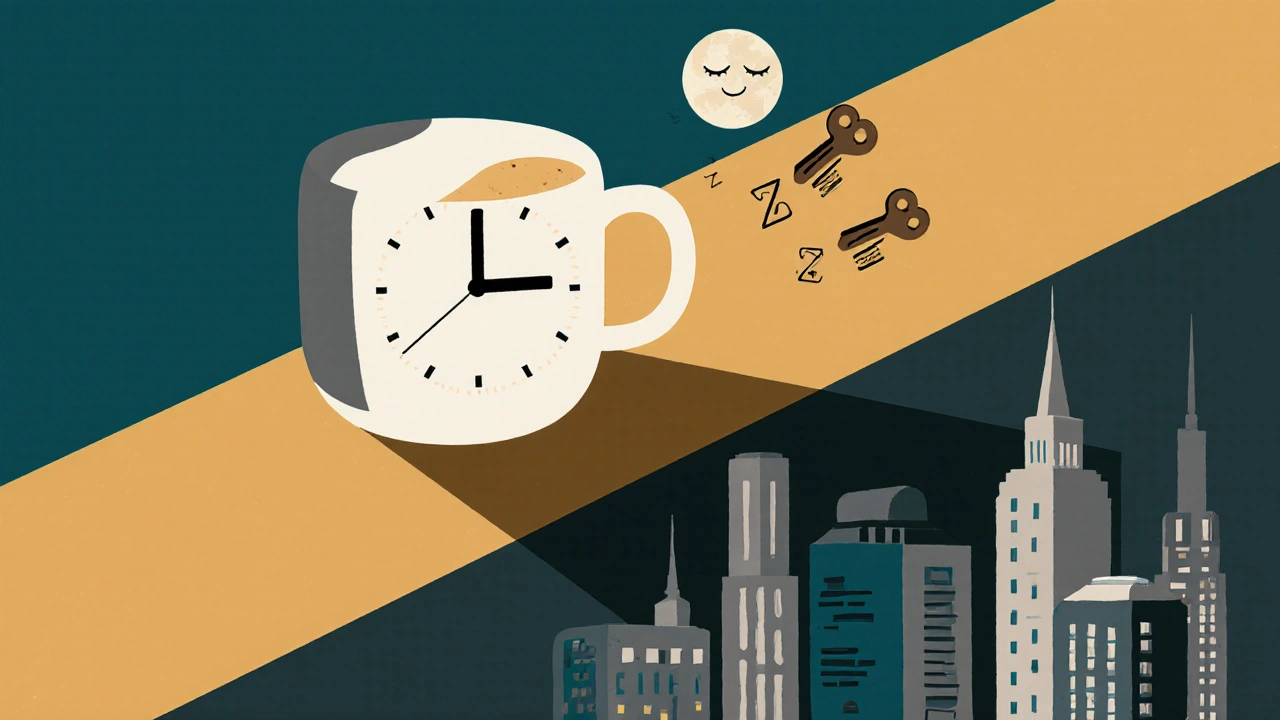
Caffeine Cutoff Times: When to Stop Coffee for Better Sleep
Learn the science-backed caffeine cutoff times to optimize sleep onset, reduce sleep disruption, and improve sleep quality. Find out when to stop coffee, energy drinks, and other sources based on your age, genetics, and caffeine intake.